
Seeing the Sacred in the Stories We Wear
Religion and tattoos go way back. Sacred texts like the Bible mention them, albeit not always positively. Yantra tattoos have been popular with Buddhists in Southeast Asia for centuries. Mehndi, or temporary henna tattoos, are associated with a variety of religious traditions in the Indian context. Tattoos have also been an integral part of many Coptic Christians’ experience of religion for centuries. And, if you ask any American tattoo artist about the most frequent symbols they tattoo, you won’t have to wait long to hear the word “cross.”
Sacred Ink, a collection of photographic art and stories exploring the intersection of spiritual life and tattoos, leans into this long-standing relationship and looks for the sacred in the ink we put on our bodies. The project, which is housed at the Wesley Foundation at the University of Michigan, engages campus and community audiences in deep conversation about the meaning of tattoos and their relationship to personal experiences of the sacred. The traveling gallery tries to make sense of the sacred stories so many people wear “on their sleeves.”
The project was stewarded by Rev. Tim Kobler. Tim, ironically, doesn’t have any tattoos himself (at least, he doesn’t have any yet) and spends most of his time as the chaplain of Wesley Foundation.
He first had the idea for Sacred Ink after observing a trend in younger generations. “I noticed that many young people, including my daughter, have been getting tattoos,” he said. “Many of those tattoos had deep or sacred meaning to them. I wanted to do a photographic art exhibit to feature their tattoos and stories to help bridge the gap between generations.”
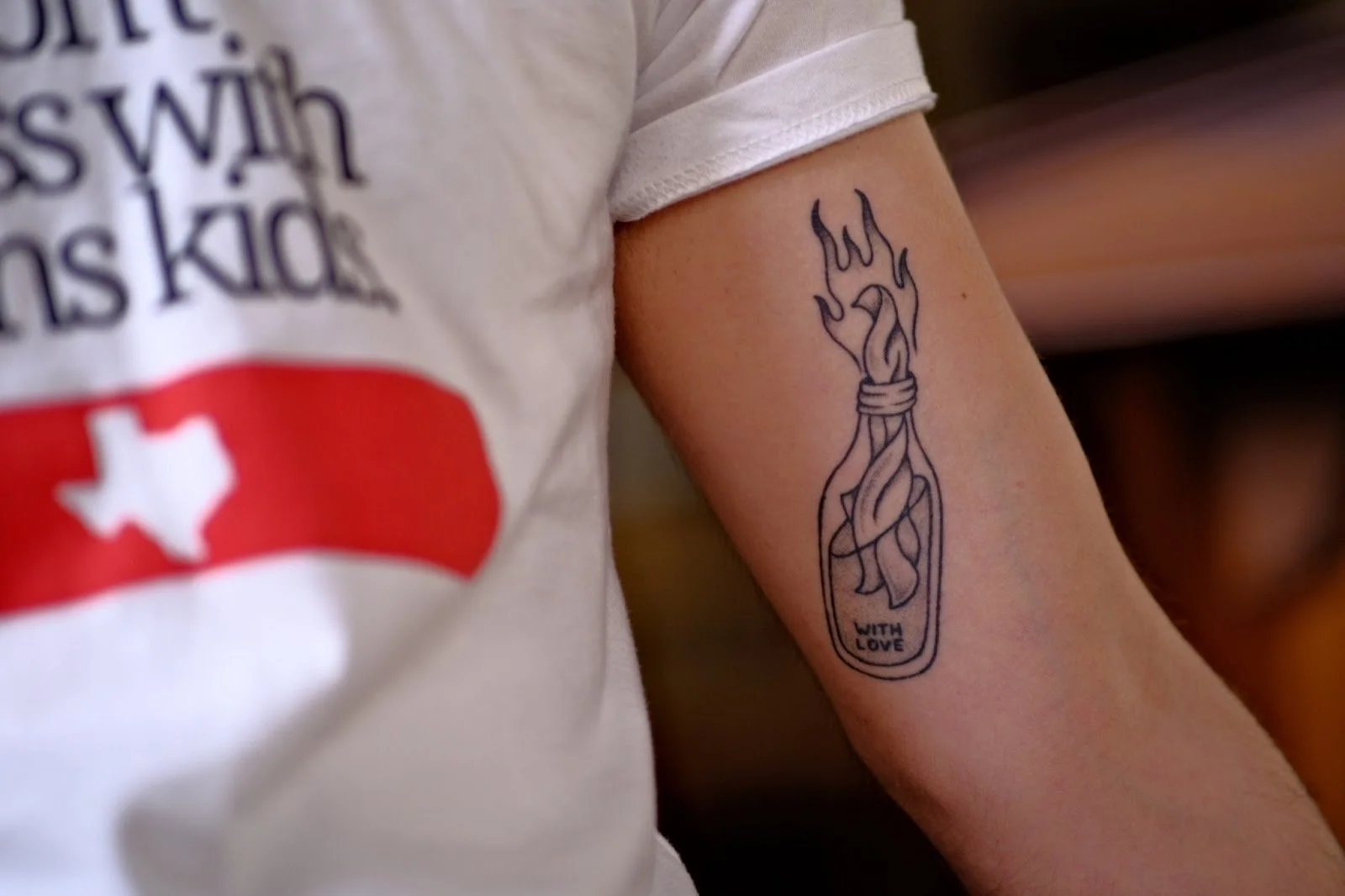
People came with all sorts of stories, all sorts of artwork. One young man named Daniel was photographed with his tattoo of a Molotov cocktail bearing an inscription to the Church that reads “with love” (shown above). To Daniel, his tattoo of holy rebuke speaks to his desire to transform the church into a more inclusive and safe space for LGBTQIA2S+ individuals.

Another photo features the ring finger of a young woman named Alex. Her father passed away before she married her spouse and, as a symbol of remembrance, she had an artist ink her father’s initials onto her hand forever. Every time she sees her hand, her tattoo bears witness to the sacred stories between her and her father, as well as those passed down from him.
While Sacred Ink tells the sacred stories of many individuals, one of those stories has really stuck with Tim above the rest: the story of a transgender person named Rory with indigenous heritage and the way they expressed themselves through the art on their body. “They used tattoos as a way of connecting their gender identity with their heritage and drawing upon the ancient acceptance of a wide array of gender expressions and identities,” Tim shared.
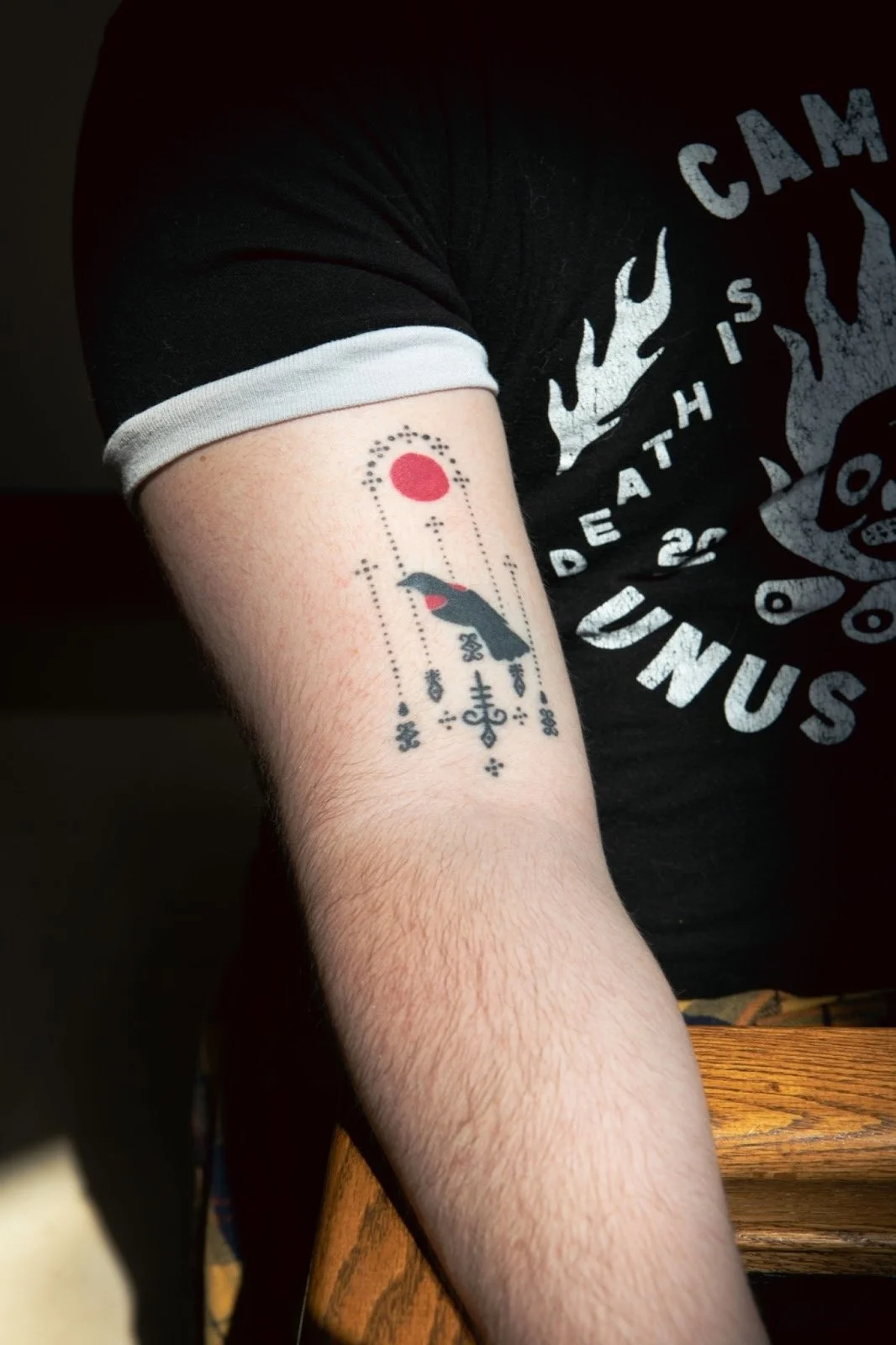
Two photographers, Gabrielle Mack and Myles McGhee, helped bring the project to life. They were both students in the Stamps School of Art and Design at the University of Michigan and now work as professional photographers in their own right. They both had the freedom to apply their own unique vision to the work and the differences in their approaches are easily visible in the exhibited work.
The exhibit has been on tour for the past year and will sometime in the not-so far off future be converted into an online gallery. Additionally, Tim shared that “we hope to do a Sacred Ink, Chapter 2, in the near future, which would feature the tattoos and stories of people who are older than 35. Our initial project focused on young adults.”
Photography and tattoos are artforms that connect us to larger stories, stories that we often want to share with others. They can both be deeply personal too—and there are many stories from this creative project that reflect the vulnerability involved in sharing the stories behind both artforms. This is a small part of what makes Sacred Ink work: the photos and the stories that go with them invite exhibit viewers into the sacred journeys of someone else.
Sacred Ink is available to exhibit in your community or on your campus. Learn more about this opportunity on their website.