
How We Frame Things Matters
I’m not a professional photographer or anything like that, but my recent experiences taking photography more seriously has taught me more than a few things about telling stories with my photographs. I’ve learned that the way we frame something—whether through a lens or in our minds—can deeply shape how we see other people, too.
While studying abroad at the University of Roehampton in London, I took a photography journalism class that deepened my understanding of visual storytelling. The course focused on mastering DSLR camera techniques, particularly how changes in aperture and shutter speed affect lighting and composition. We received hands-on training in adjusting these settings to create different effects, and I was fascinated by how small technical changes could dramatically alter a photo’s final appearance.
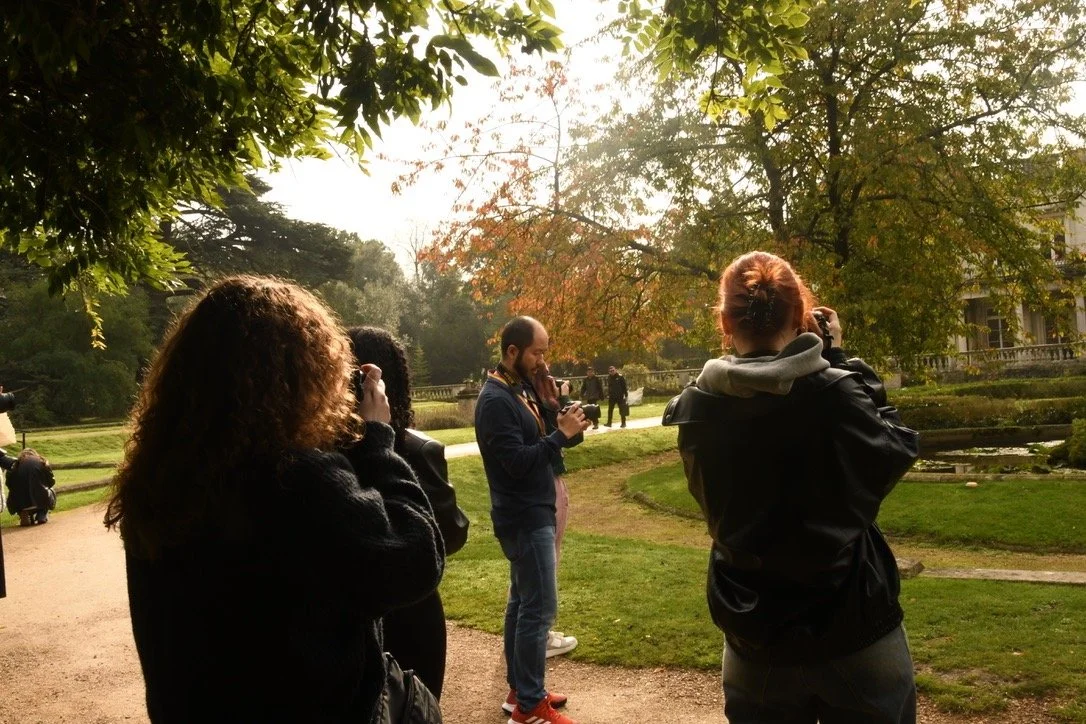
One of the most striking lessons came from shooting side by side with my classmates. Even when we captured the same subject, our images varied in hue, lighting, and mood, often transforming into entirely different interpretations of the same moment. I learned about how angles and light influence perception and reveal how our individual lenses—both literal and figurative—shape the stories we tell through our photographs.
I remember one particularly enlightening assignment where we were tasked with photographing our professor. Twenty students, twenty cameras, and one subject – yet the results were astoundingly different.
Some captured candid moments of enthusiastic teaching, others focused on the quiet moments of reflection between demonstrations. Each photograph told a different story, highlighted different aspects, and revealed something unique about both the subject and the photographer.
One of the photos I took was a turning point. It’s an image of my professor, standing in front of the sun at just the right moment—his head blocking the light, creating a glowing silhouette that makes him appear almost divine.
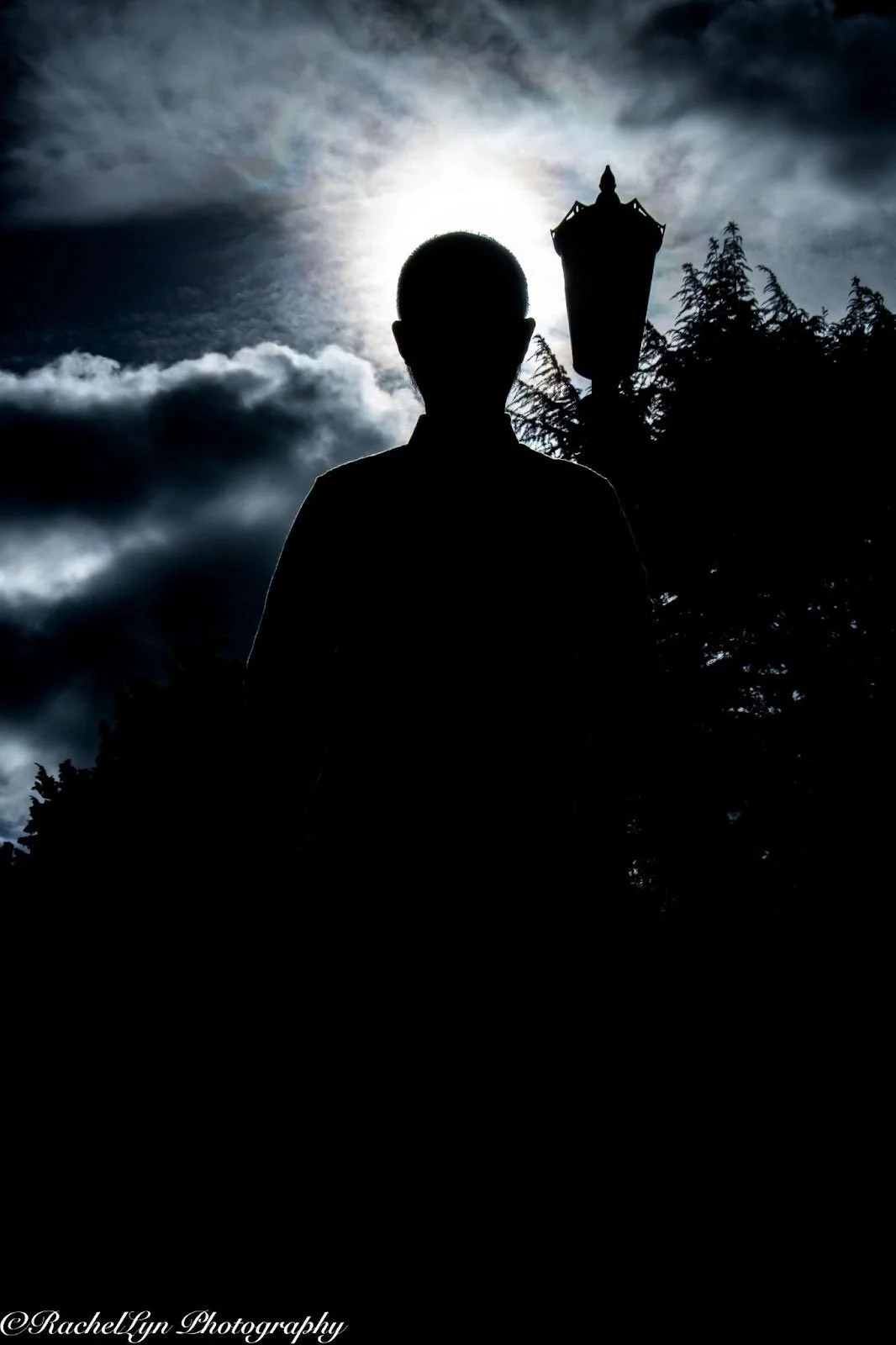
The shot was simple at first. I was crouching low, camera tilted upward, when he noticed what I was trying to capture. With a few suggestions—adjusting the aperture and shutter speed—we darkened the exposure until his facial features disappeared into shadow, leaving only his form backlit by light. The final photo was both haunting and powerful. I was in awe at how a few minor technical changes could dramatically shift not just the visual outcome but also the emotional impact of the photograph.
I love this photo because it reminds me that simple course corrections—whether in photography or life—can drastically change how something is seen, felt, and understood. Just as a shift in light or angle can transform an image, a shift in mindset or openness can transform how we engage with one another. It’s a visual metaphor for perspective: how we frame things matters.
While studying abroad, I learned that being creative isn’t about producing perfect images—it’s about seeing the world in a way that invites others to look more closely. In interfaith spaces, we often talk about listening deeply, showing up with empathy, and making space for difference. This class reiterated something that I first learned in an Interfaith Photovoice project last year: that my camera can be a bridge too.
This experience reminded me of photovoice, where participants respond to the same prompt but produce vastly different images and narratives. Just as in photography, our personal perspectives color how we see and interpret the world. Yet, each viewpoint holds value, adding depth to our collective understanding. And by sharing and discussing these photos with one another, we gain a deeper appreciation for perspectives different from our own. This is the invitation of Interfaith Photovoice. The process is not about proving one viewpoint right or wrong but about expanding our understanding and fostering genuine engagement across differences.
Learn more about how photovoice can help you and your community to see deeply, bridge divides, and instigate change by emailing us.