Our Vision
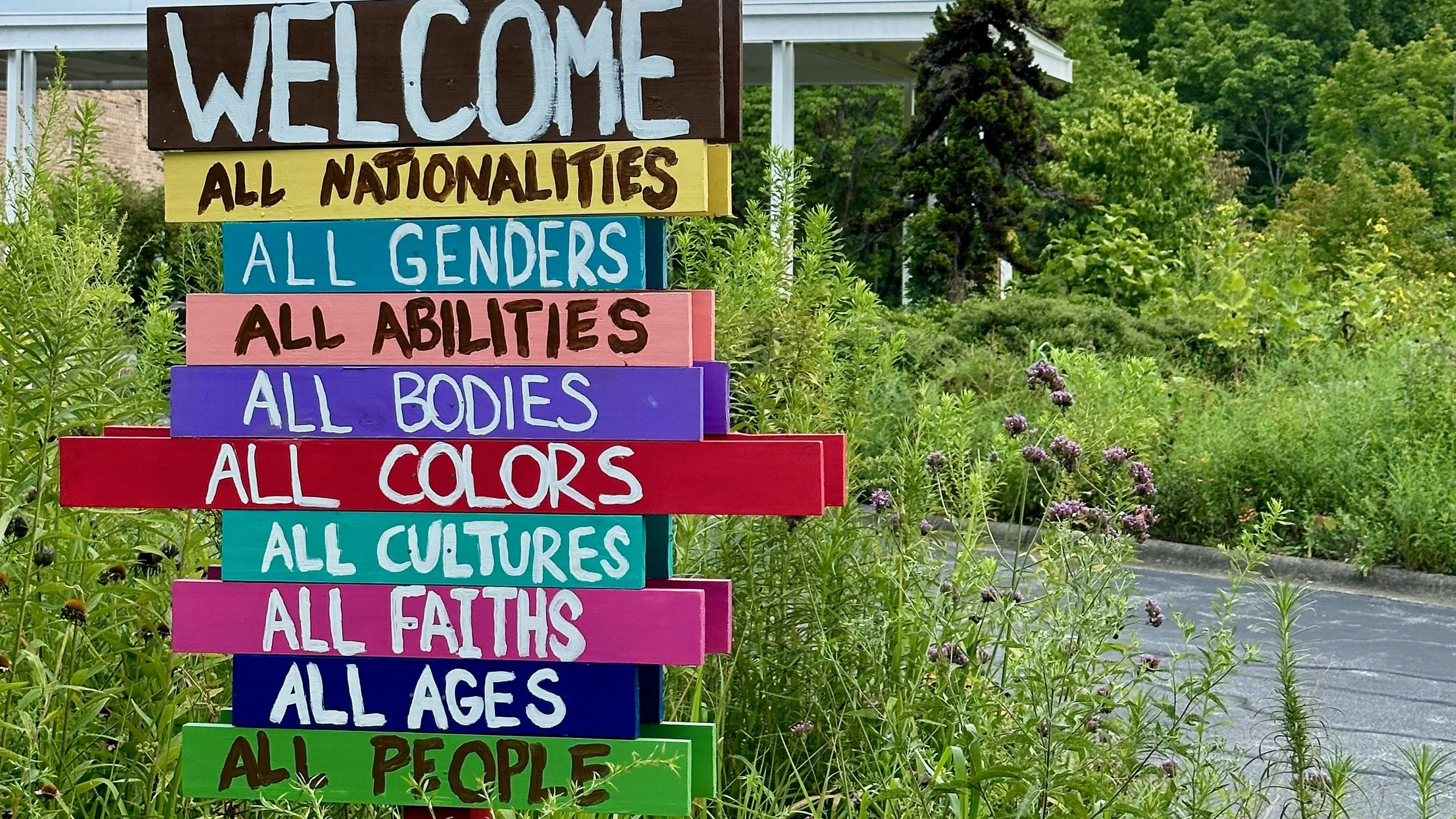
We envision a world of abundant belonging — where people of every religious, secular, and spiritual background are included, connected, seen, and empowered.
What We Do
Photovoice: The Process
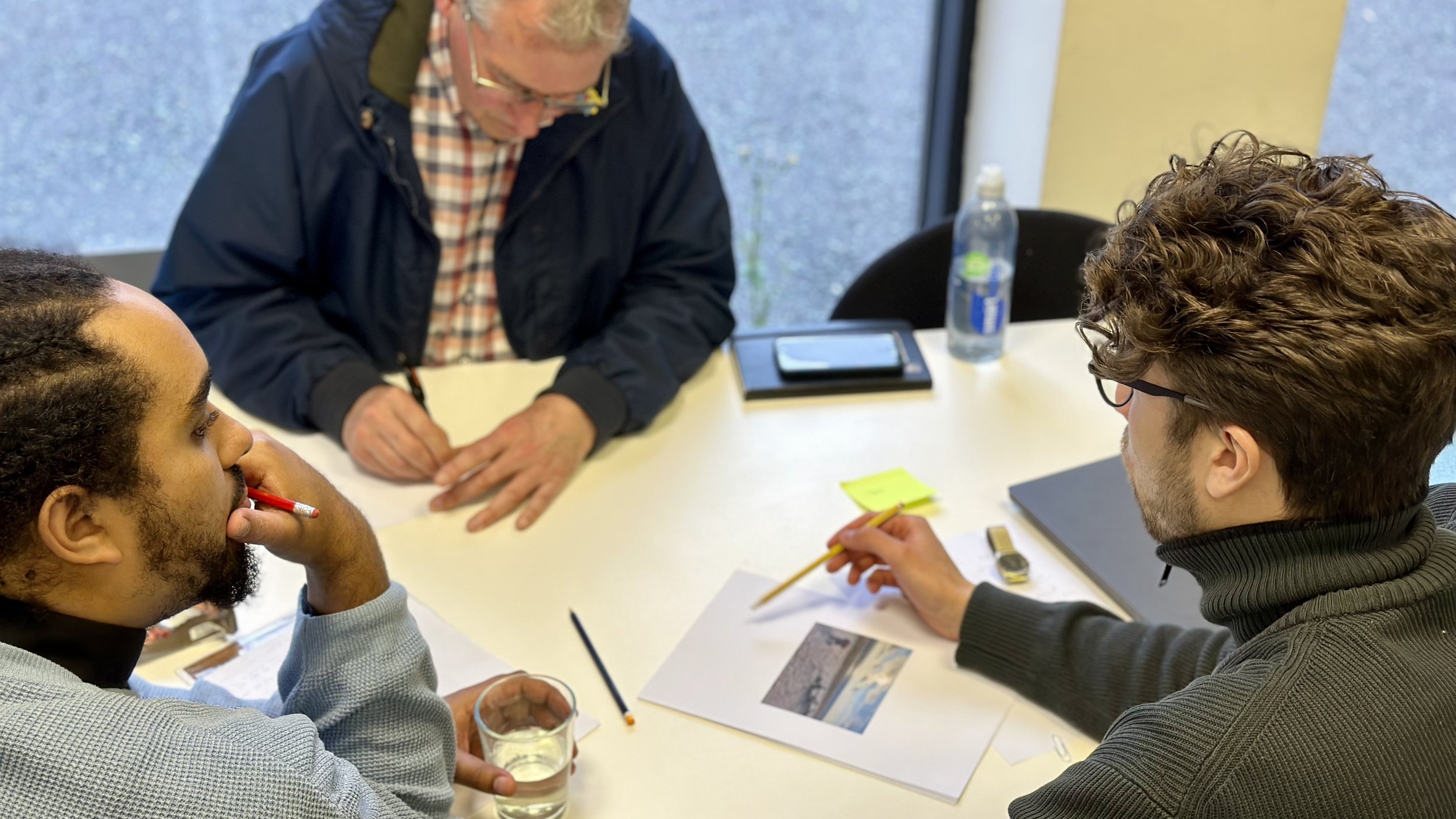
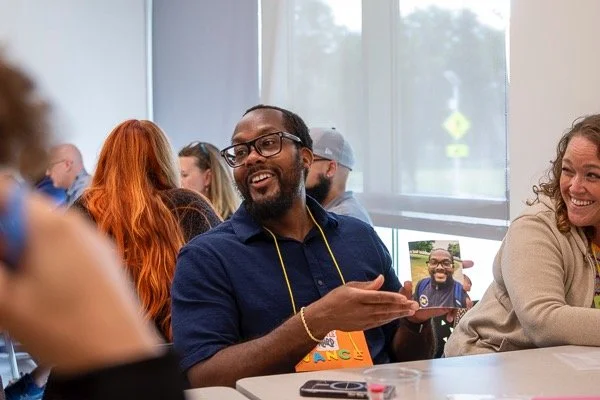
Photovoice uses photographs to give voice to people and issues in a community. It is used by participants to identify needs, raise awareness, and instigate change. Our work brings together people from different backgrounds to explore what their beliefs, practices, and values look like in everyday life. They meet together to share their photos and stories in facilitated small and large group discussions.
As conversations unfold, participants find common ground in their experiences and concerns. And they open up about the barriers they encounter as people with commitments to beliefs and behaviors they hold as sacred. Through this process, people involved in our projects develop understanding, empathy, and a shared vision for what a more inclusive world might look like.
We work in a variety of sectors—including colleges and universities, communities, individual congregations or houses of worship, and companies—to help people see deeply, bridge divides, and instigate change.

How We Do Our Work
Workshops
Our workshops are designed to build relationships across differences in one or two hours.
Projects
Projects involve people from different religious and spiritual backgrounds who meet several times to discuss their lived experiences using photos. They culminate in an art exhibition designed to engage your community.
Team Building
When employees experience belonging and they flourish. And when teams flourish, so do their organizations.
Retreats
Retreats condense the photovoice process into a two-day format to foster deep conversation and a shared vision for change
Training
Learn to lead a photovoice project designed to empower a diverse group of people to engage their communities and organizations. We offer an online course and also train teams to lead projects in their own contexts.
Everyone Deserves Belonging

A Muslim participant engaging with a member of the public in Fredericton, New Brunswick, Canada about the challenges of being Muslim in Fredericton at the opening of the exhibit.
Belonging is a fundamental human need. Feeling like one belongs directly affects health, happiness, and countless other fundamental pursuits. This need is in short supply recently. Our social networks are being torn apart, trust is at a new low, and awful trends like anti-Semitism and Islamophobia are on the rise everywhere. Social psychologist Geoffrey Cohen says we are in a “crisis of belonging.” Social minorities, including religious minorities, are the least likely to feel that they belong.
Belonging doesn’t happen in a vacuum. It happens when people feel included, connected, seen, and empowered. We envision a world where everyone experiences belonging.
Religious Pluralism is a Fact. It is also Good.
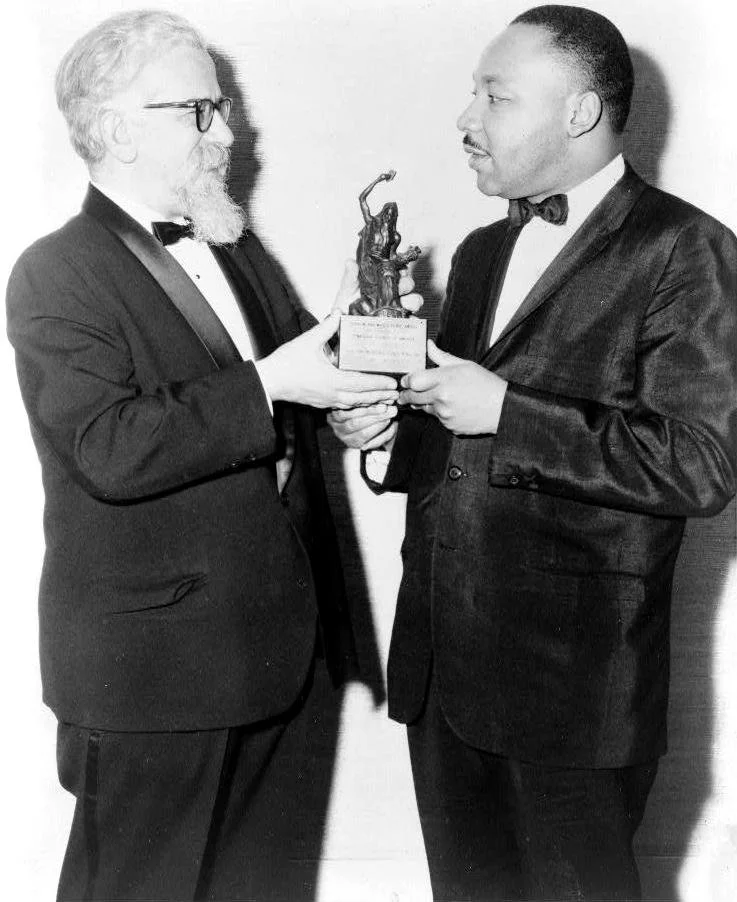
Official U.S. photograph, Public domain, via Wikimedia Commons.
Religious pluralism and pluralism more broadly aren’t opinions or simple political aspirations. They are facts: our world is diverse. Our ability to navigate diversity has real-world consequences. Our answer demands equality, respect, and mutual understanding.
We also believe religious pluralism can be a boon to society. People of all religious backgrounds (and none at all) contribute to society positively not in spite of their beliefs, practices, and values, but because of them. We see more when we can see the world with different lenses.
The photo on the left shows Martin Luther King Jr. and Rabbi Abraham Joshua Heschel, two religious leaders who marched together at Selma. Their friendship is testimony to this in practice. There is even good scholarship that attests American democracy itself wouldn’t exist without contributions from Muslim thinkers.
People also grow in their own religious practices through an experience interfaith practitioners call “holy envy.” When one experiences holy envy, they become inspired or moved by the practices of someone from another religious tradition to take positive action in a way that is authentic to their own practices. An evangelical Christian in a photovoice project, for example, may become inspired to reinvigorate their own prayer practices after hearing their new Muslim friend describe praying in Islam.
Additionally, since religion is embodied, people bring with them differences including race, class, gender, and political affiliation.
How Photovoice Creates Change
People learn to see and feel the world through one another’s lenses. And this exposure helps to develop empathy and a shared sense of purpose across lines of difference.
Contact Theory
The method is rooted in something called contact theory, which argues that prejudice and conflict between different groups can be reduced if members of the groups interact with each other. The photographs work to create encounters, to fill in the blanks and to build bridges between people that would not ordinarily meet in their daily lives. The images act as props for the participant, allowing them to set the parameters of what they want to talk about and share with others.
A new friend has the ability to change our perspective on people like them. The same holds true for gaining a friend from any other religious group. Numerous studies also show that an increase in warmer feelings toward one group leads to warmer feelings toward all groups against which a person was biased.
Initiating Social Change
We believe the most important change photovoice can facilitate is internal to the practitioners in reducing bias, fostering empathy, and creating bridges of understanding.
Photovoice can also more directly instigate social change.
At the end of a project, participants have the opportunity to give voice to important issues and concerns they experience through an exhibit. During the reception participants engage in conversations with community members, stakeholders, local leaders, the general public, and the press. Through their exhibit, the very first implementation of photovoice in Yunnan China contributed to daycare cooperatives being built.
In our own work, we have witnessed campuses make changes to their dining commons for accessibility purposes, companies navigate new pay structures for employees, non-profits report substantial increases in support for their work, and teachers empower young students navigate mental health in life-changing ways.
