
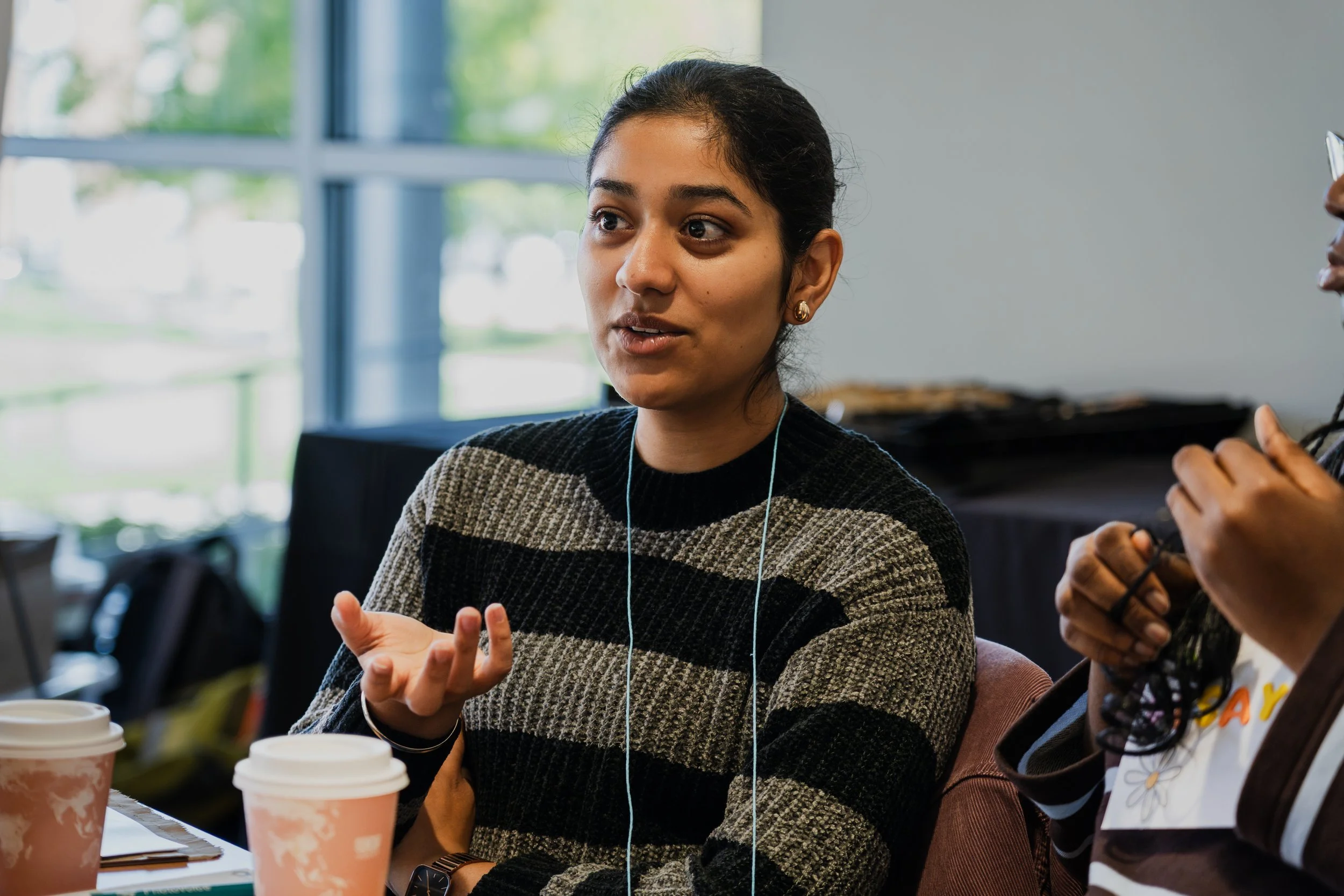
Picturing Pluralism at University of Maryland Baltimore County
UMBC is one of the most religiously and spiritually diverse campuses in the country. This makes the task of belonging and inclusive excellence part of our everyday lives. In Fall 2026, 17 students and 10 staff and faculty members from across campus—and from all sorts of religious, spiritual, and secular identities—joined Picturing Pluralism, a partnership between the Center for Religion, Spirituality, & Pluralism (CRSP) and Interfaith Photovoice. Using their own smartphones, participants composed photographs about belief, belonging, and the barriers to flourishing. They then shared the stories behind these photos in facilitated small group dialogue and collaboratively curated this exhibit.
We invite you to look closely, listen to their voices, and consider your own place in our collective story.
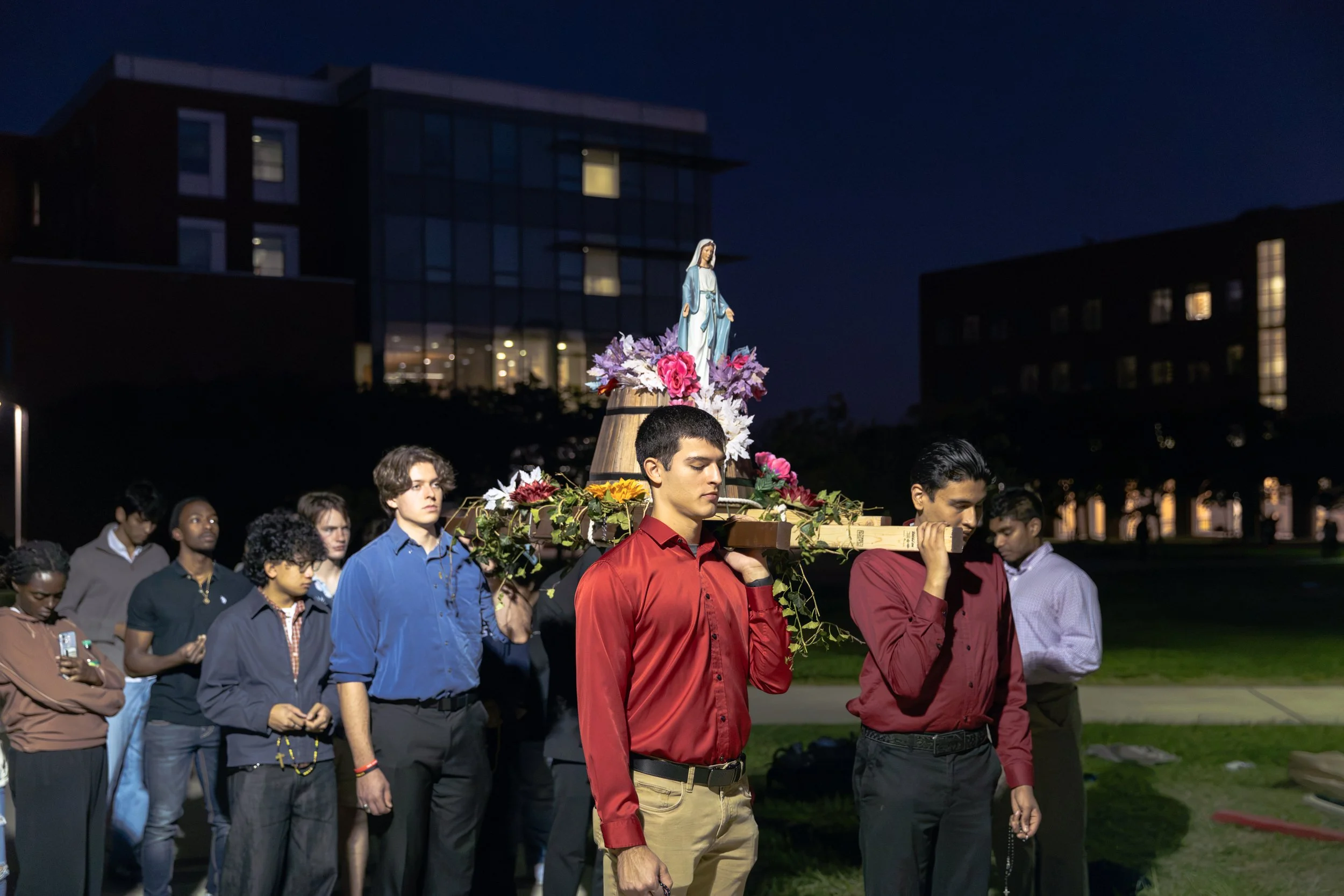
Our Lady of the Rosary Procession
This is a rosary procession to honor Our Lady of the Rosary on Wednesday evening on October 7, which was followed by adoration at the Center for Well-Being. Every year, we do this to commemorate the miraculous naval victory of Christians over the Ottoman Empire during the Battle of Lepanto in 1571. Praying the rosary together as a community in this fashion is a great way of witnessing to our faith as Catholic Retrievers on campus.
— Adaoma Iyiegbu
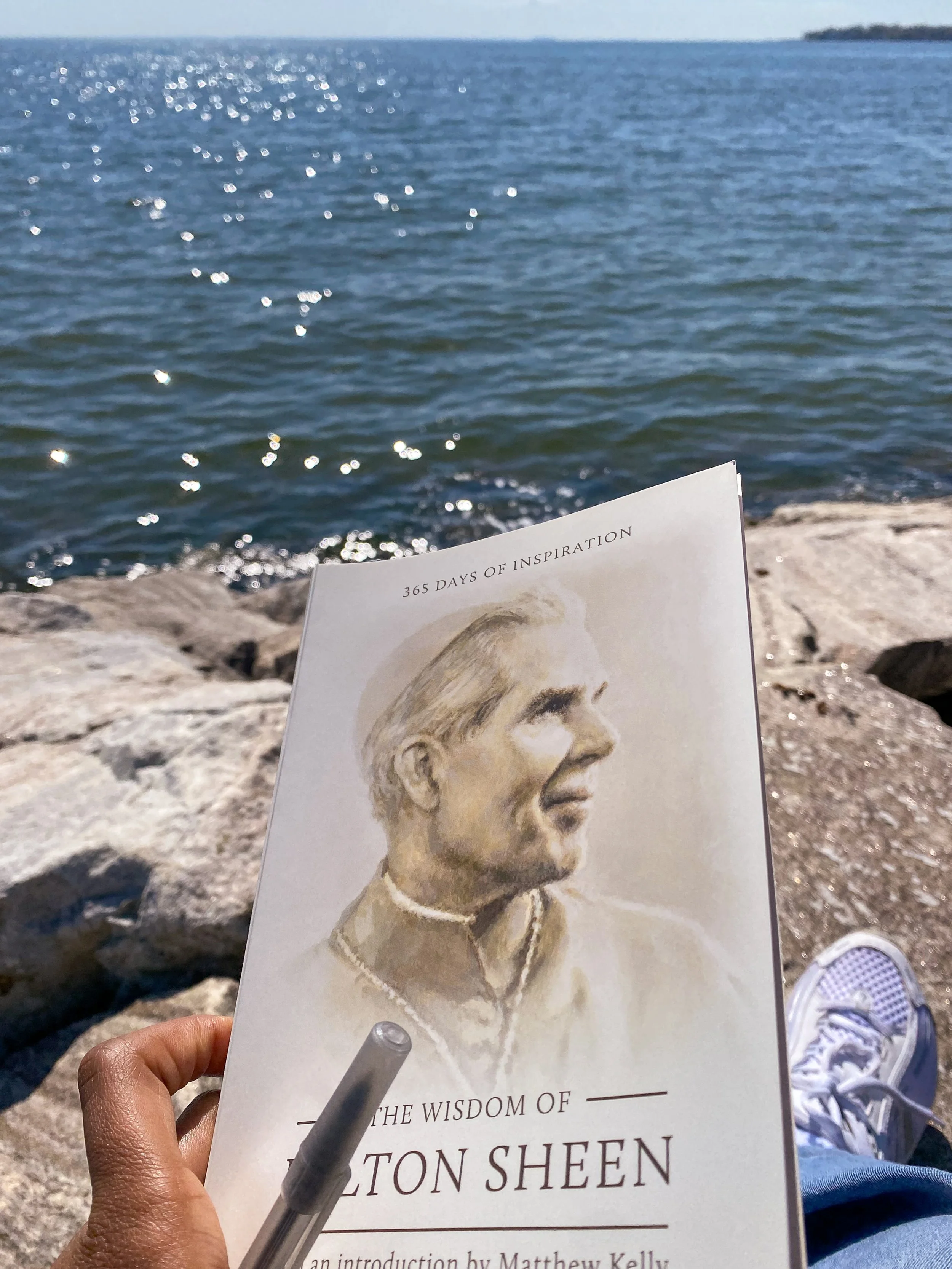
Spring Retreat ‘26
I was savouring The Wisdom Of Fulton Sheen, a book about an American Archbishop that was recently beatified and soon to be canonized as a saint in the Catholic Church. Reading about him to fuel my prayer while sitting by a river at Camp Wabanna Spring Retreat 2026 was a very refreshing moment for me. I found solitude and peace as I took a break from all that studying and homework. It was especially convenient since I had just finished writing some exams earlier.
— Adaoma Iyiegbu
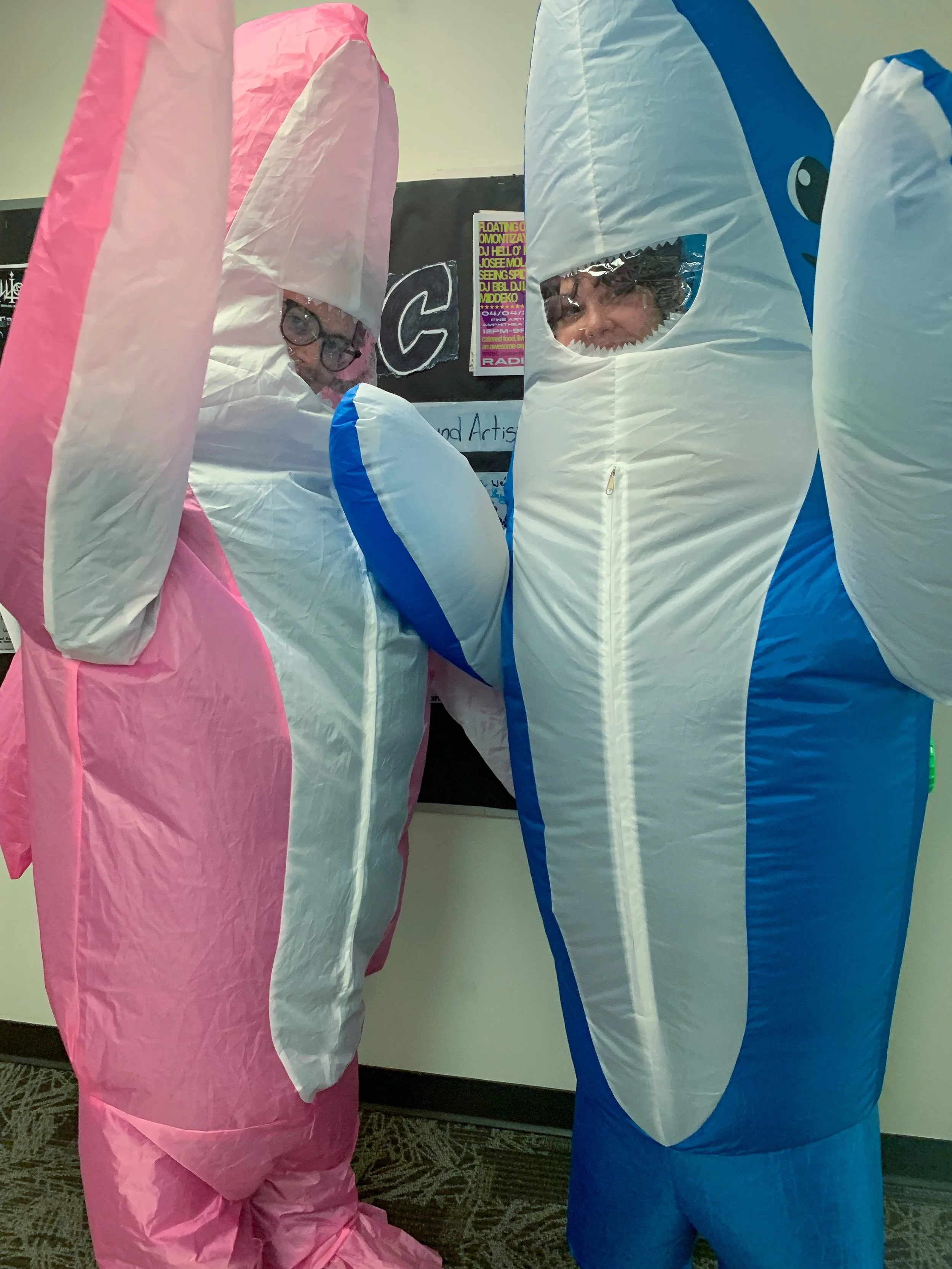
Sharks and Joy
Joy is fundamental to how I think about connecting to something outside myself. Something greater. For some, that joy comes from religion or spirituality. For me, it comes from human connection. Sometimes it’s deeply personal and emotional. But sometimes, if you’re lucky, it’s a knock on your office door from your students dressed as sharks for no reason at all.
— Ann Tropea, Assistant Director for Engaged Media, Center for Democracy and Civic Life
Somewhere In Between (1)
Somewhere In Between (2)
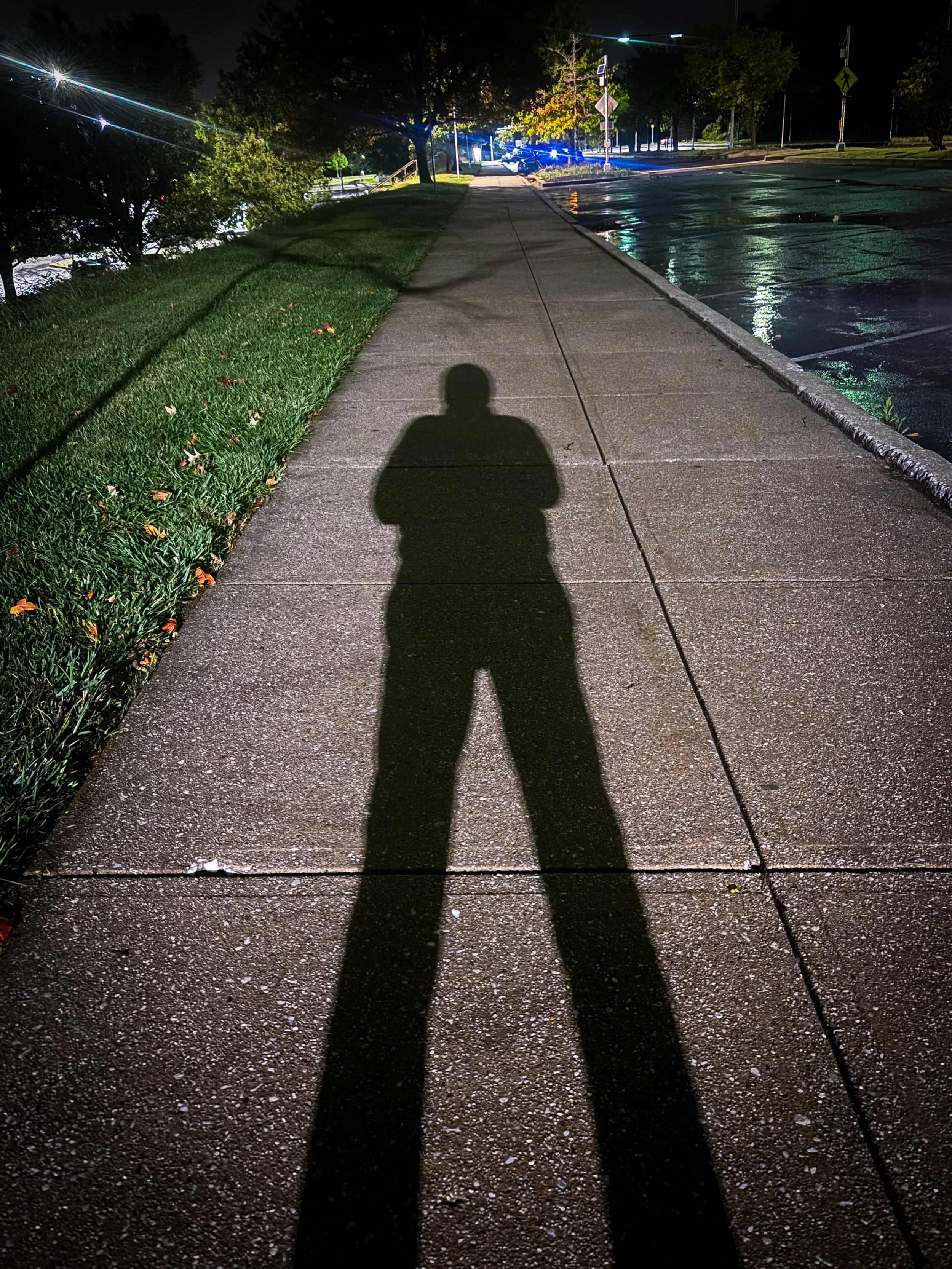
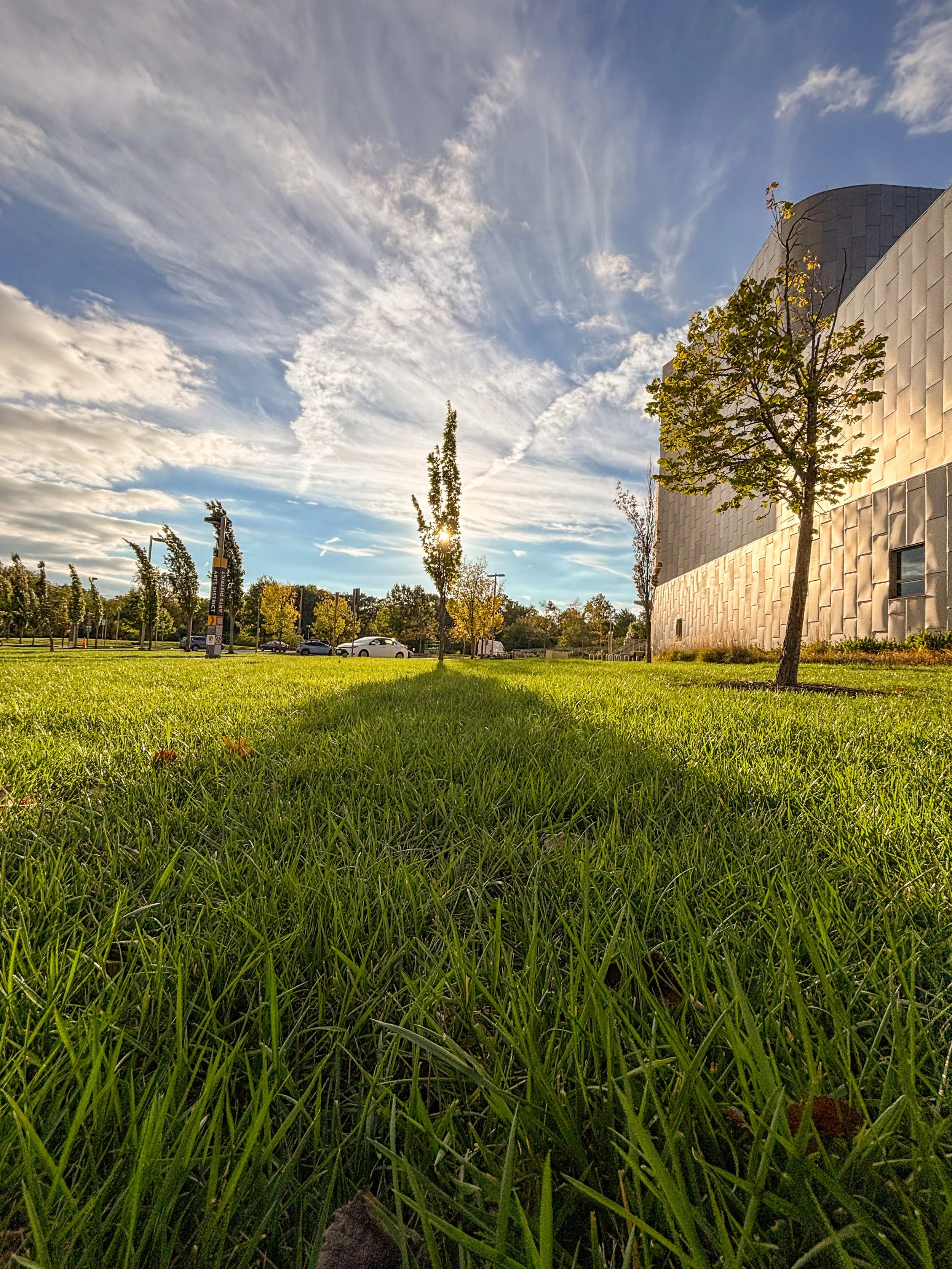
The purpose of all these photos is to show a transition: from who I was to who I am, from what I have been through to what I am becoming.
I am alive now, and I am still going through this transition. I don't know exactly what I am yet. The only thing I know is that I am neither religious nor non-religious.
I am somewhere in between, still becoming.
— Anonymous Student
Change
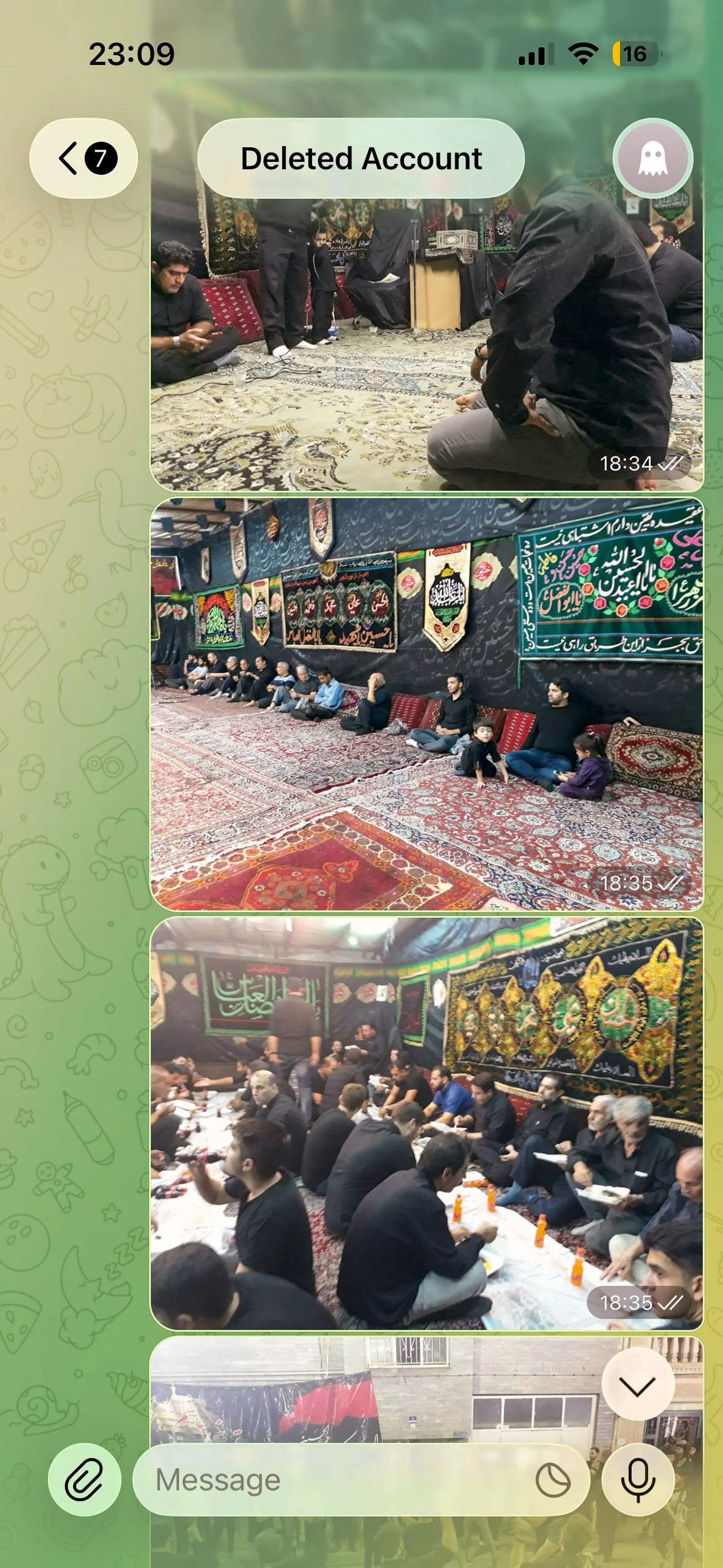
This photo comes from my past—from religious ceremonies during Muharram, a sacred month with particular importance for Shi’a Muslims. Here you see a screenshot of photos that were once sent to me, or that I once sent to people who no longer accept me. As you can see, their accounts are gone from my life, and I have been blocked. The reason is simple: I changed.
— Anonymous Student
"Seen, but Obscured"
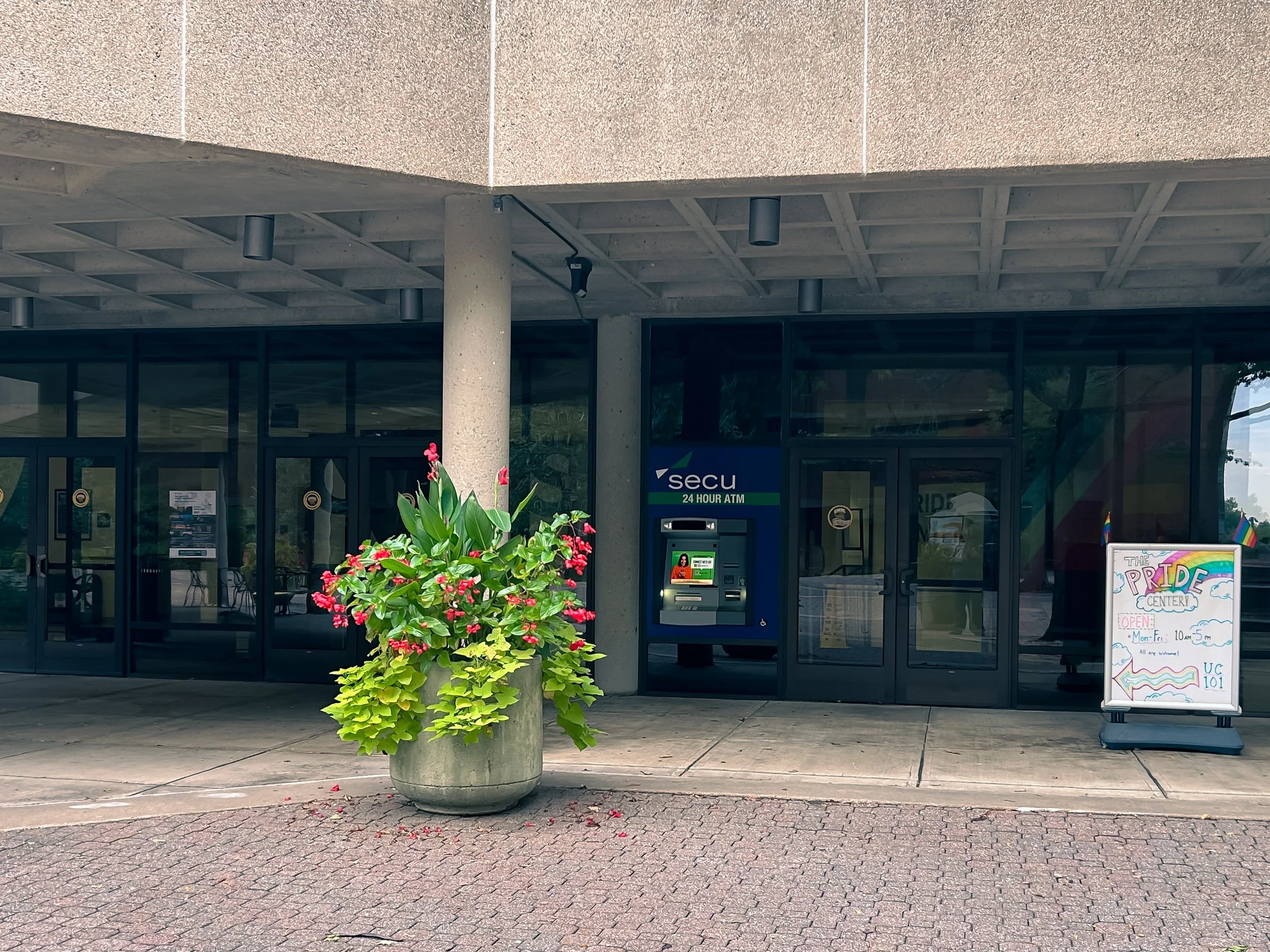
Progress is slow, but steady. The existence of a center that caters towards my needs as a queer student on campus is monumental, but it is mitigated by the fact that such a center's existence is crammed into a hidden corner of a building on campus. Making it feel almost as if it was an afterthought, like queer students were only meant to accept the relegation to the periphery with minimal complaint.
— Ari A. Cardoza, Class of 2028

The Endless Struggle of Self
My day to day self-care routine can become incredibly convoluted by the fluctuating reality of my gender identity. While many find that their birth sex aligns with how they identify—mine does not—and as a result there is an additional layer to my daily morning routine. Makeup, accessories, and other accoutrement round out my appearance. The amount of products, and specific use-case items come to add to my collection—and help me feel like myself.
— Ari A. Cardoza, Class of 2028
Abolish ICE
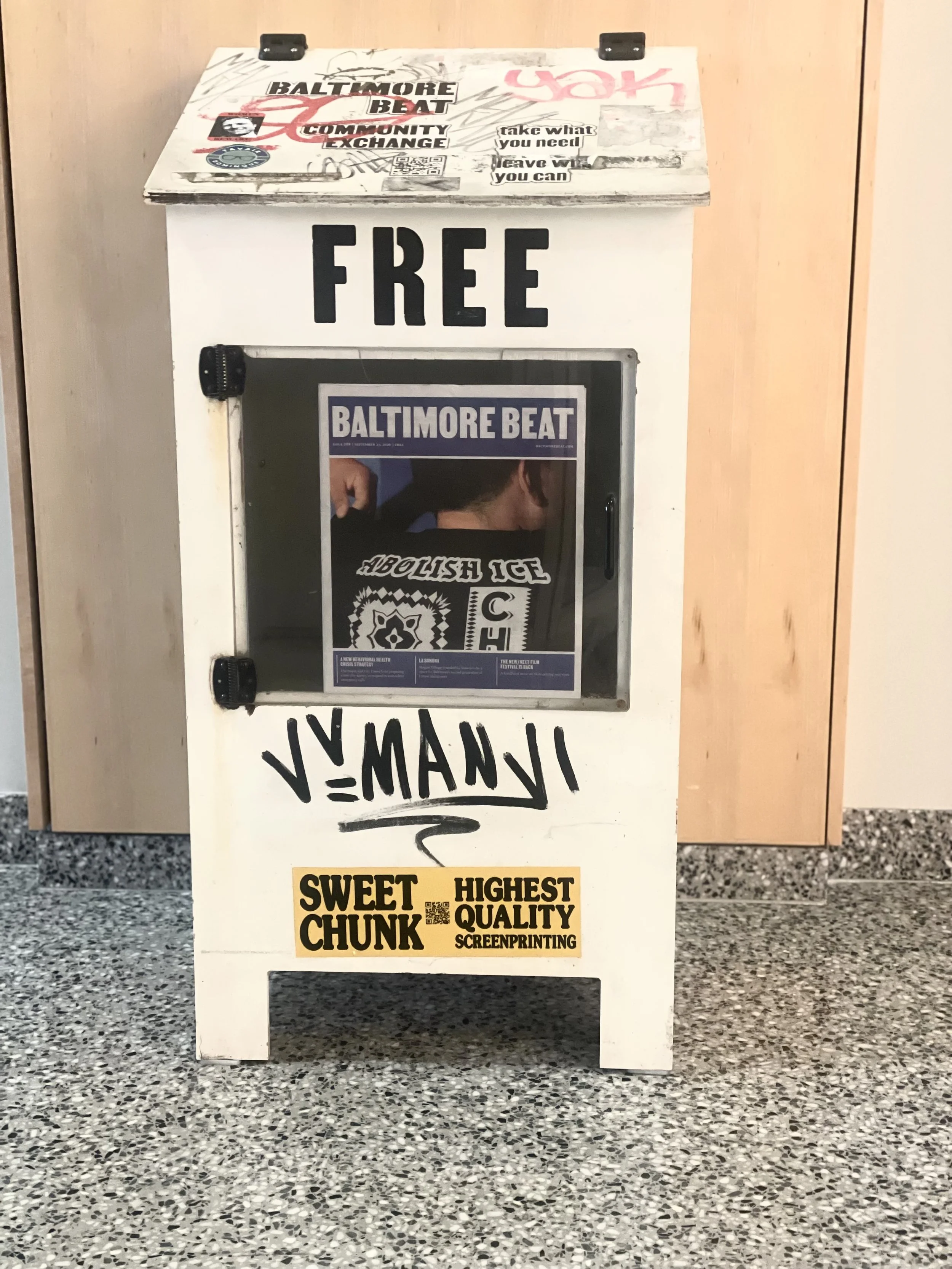
Since the current administration unleashed the aggressive and deadly Immigration and Customs Enforcement (ICE) against immigrants, especially immigrants of color, I am terrified to leave my house. I worry that ICE will come onto campus and take away students, faculty, or staff—including me. Fear has become normal. I worry about speaking Spanish. When I walk with my daughter, I worry that her brown Colombian mother can become a target for deportation. I worry that my wife and I will be pulled apart by hostility toward anything associated with diversity, equity, and inclusion. I worry that my friends and family in other states will be taken to Alligator Alcatraz or unknown locations and disappear, much like what happened under the oppressive governments many immigrants fled from. Life feels heavy and suffocating every day, and yet it goes on. On campus everything continues as though the world is safe. This silence feels deadly in so many ways. Then I saw this Baltimore Beat newspaper drop box in the PHAB, with the title "Abolish ICE" on the cover. It made me stop. I felt a wave of gratitude for whoever placed it there for everyone to see. It was a quiet, yet visible and powerful act of grace—one that made me feel human again. A reminder that there are people who care enough to make a statement without saying a word, and to say it loudly and firmly simply by making something visible. The sign above the box noted that the Dresher Center for the Humanities is a distribution location for the Baltimore Beat, a Black-led, Black-controlled nonprofit newspaper and media outlet. Thank you.
I hope more people on campus are fearless enough to make the invisible visible.
— Catalina Sofia Dansberger Duque,
University Communications and Marketing, Communications Manager, College of Arts, Humanities, and Social Sciences
Human in the Humanities
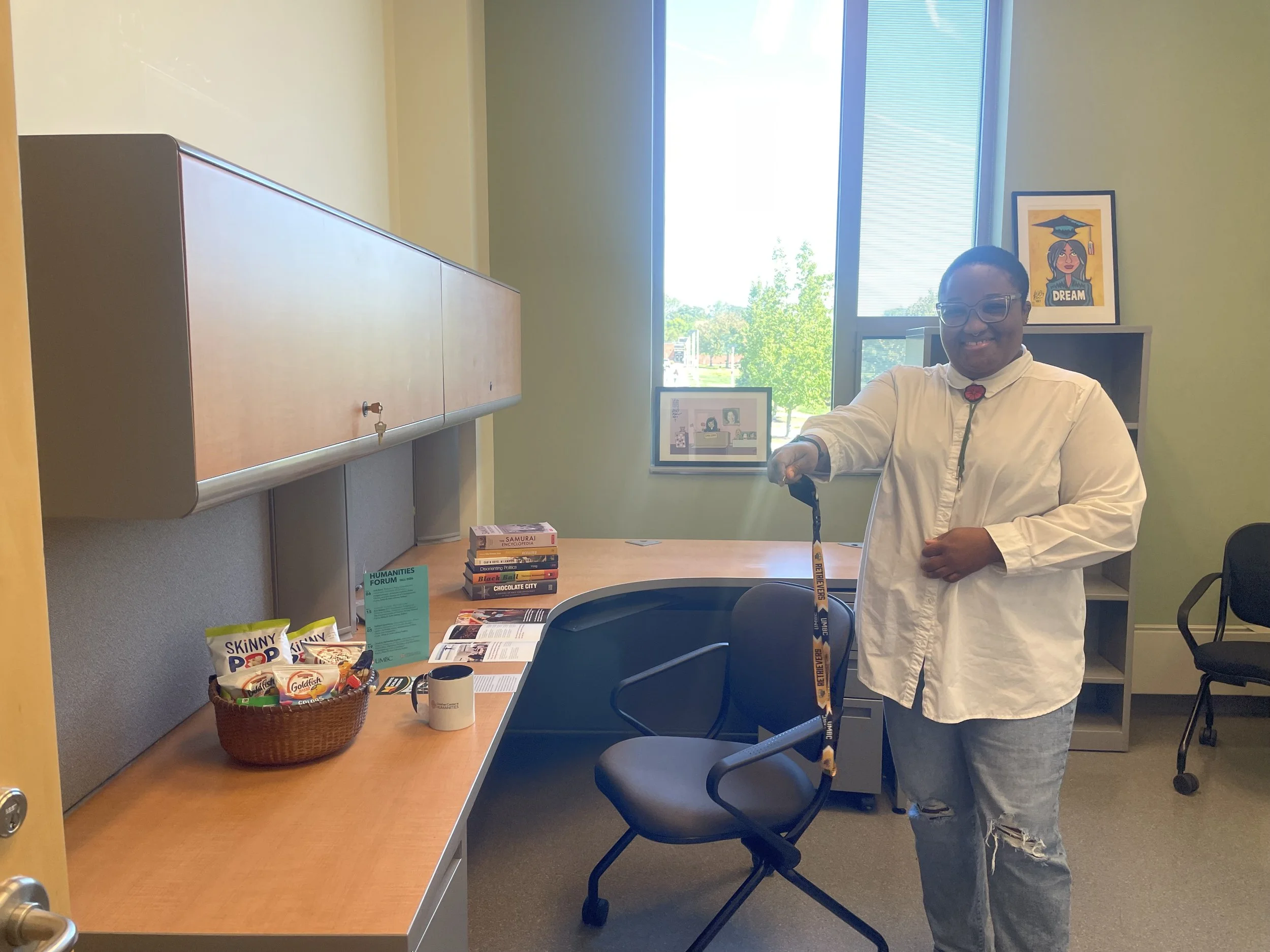
Courtney Hobson, the program manager at the Dresher Center for the Humanities, was one of the first people I met when I joined UMBC University Communications and Marketing as the communications manager for the College of Arts, Humanities, and Social Sciences. We didn’t know each other, but when I asked if there was an office I could use, she didn’t hesitate. She figured out a schedule for when one of the center’s offices was available and made sure I felt like part of the Dresher Center—not just a visitor passing through. Courtney showed me where the snacks and tea were. She shared humanities-related information that she thought would be useful for storytelling. She sent me invitations to every center event and gave me books so I could familiarize myself with the Humanities Forum speakers. Even when we had to work from home full time because of COVID-19 restrictions, she would check in. Courtney didn’t need to know me to welcome me. She didn’t need a history with me to trust that I would do the work and do it well. Nine years later, she still makes sure I’m included. And, to this day, she still points me toward the tea and snacks. That kind of kindness stays with you.
— Catalina Sofia Dansberger Duque,
University Communications and Marketing, Communications Manager, College of Arts, Humanities, and Social Sciences
On Earth As It Is in Heaven
My church was built from the ground up,
with heavenly dark basement stairs
that cracked my mother’s back,
not her faith.
My church was built from the ground up,
Loud & filled with the melody of tearful babies,
the longing of a flamenco family choir, &
the hope of an immigrant nation.
My church was built from the ground up,
filled with the glory of those who only rise up,
even on the coldest days of winter,
the heavens is all they know.
My church is sacred
with black moist earth &
the sanctity of ancient trees
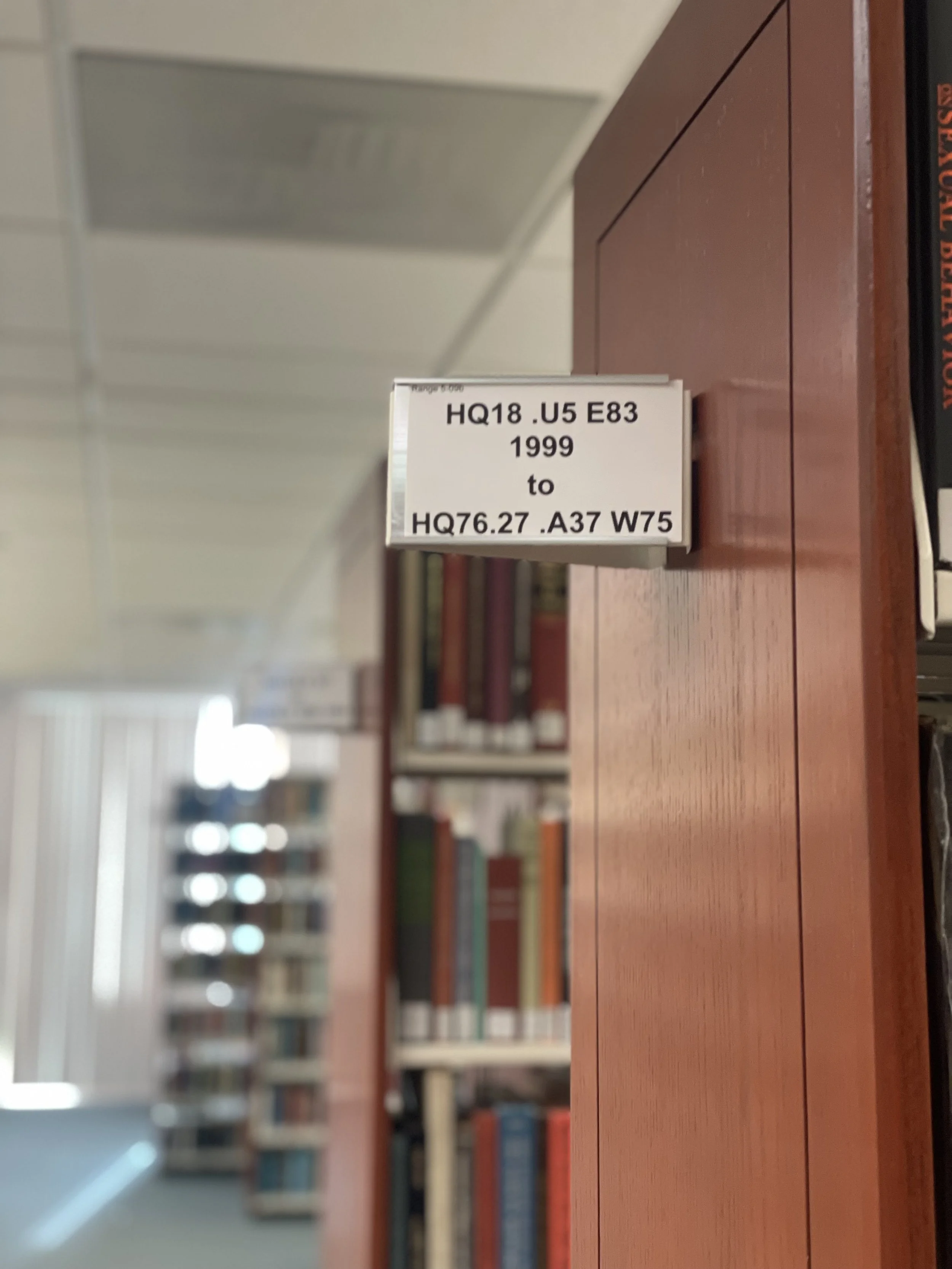
My church is filled with volumes
bursting with rows upon rows of thought,
its bosom heavy with ideas,
cataloged under HUMAN
SHE, HE, THEY sit side by side
at the pulpit in exaltation
My church is full of yesterday's dinner bits &
today’s breakfast crumbs,
remnants of our broken bread
My church is venerated
on bended knee
where I wipe this slate clean every week,
twice on snowy winter days,
where hearty concoctions feed the masses
My church is sturdy
with the brick and mortar of your arms,
linked by small curled fingers pressed together in thanks
My church
laughs with me, walks with me, breathes with me,
welcomes me, loves me, no matter whom I love or where I pray
My church
reflects my sacredness on earth as it is in heaven
— Catalina Sofia Dansberger Duque,
University Communications and Marketing, Communications Manager, College of Arts, Humanities, and Social Sciences
UMBC Hillel Sukkah
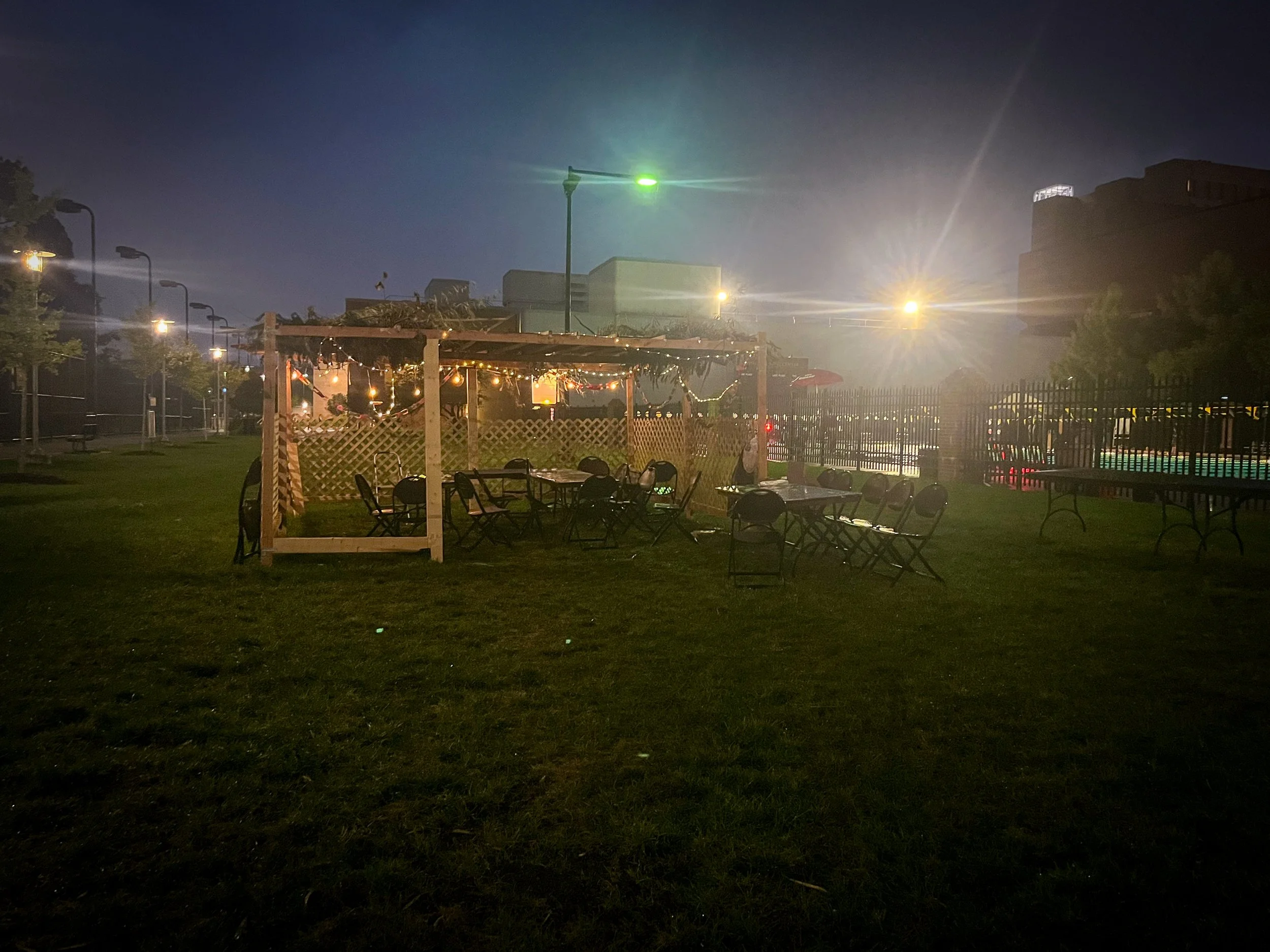
This sukkah, a temporary outdoor structure used during the Jewish holiday of Sukkot, was built by the UMBC Hillel community, which supports Jewish life on campus. Made of wood and lattice, it is very spacious and sturdy. I took this photo after a Friday night gathering with students to celebrate Shabbat, the Jewish day of rest. It reminds me that UMBC supports religious expression and allows students to create spaces that celebrate their faith and traditions.
— Danielle Baron,
UMBC Hillel
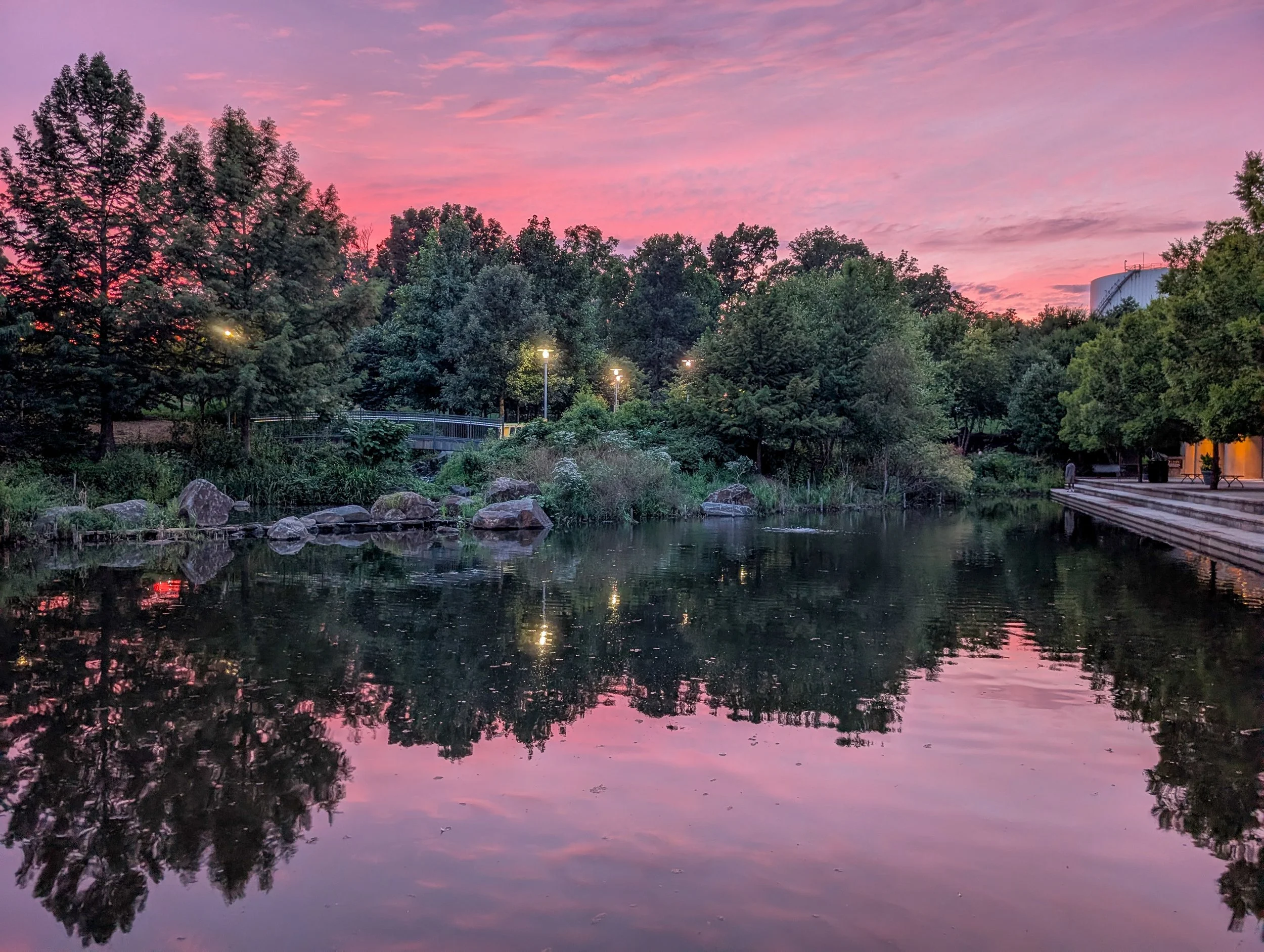
Sunset
To me, this scene represents change, rest, serenity. A place I walk by routinely made vibrantly alive for a fleeting moment of beauty. This represents a moment of attentiveness, listening to my eyes and the red of the skies I was perceiving–capturing that moment fleeting.
— Duncan Winger, Class of 2029
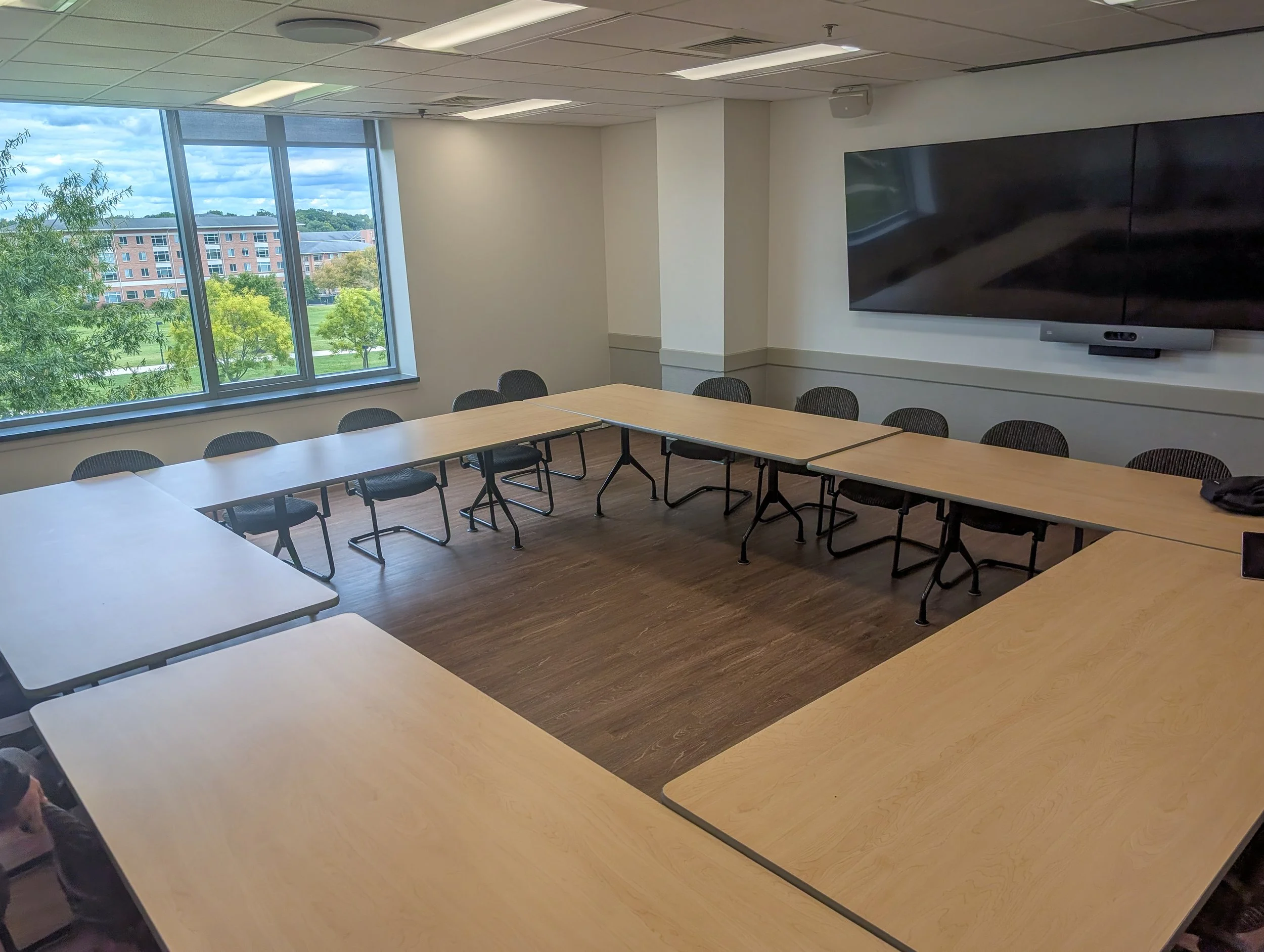
A Pool of Wisdom (1)
This circle: Senate meetings, Black and Gold student committee.
It is a convergence of stories.
A reflection of what is, and what could be.
Students laughing, chatting in moments that feel alive.
Students learning, listening toward a synergy they STRiVE
into pools of wisdom they pour
turning walls into doors.
A circle–an embodied feel,
of agency becoming real.
— Duncan Winger, Class of 2029
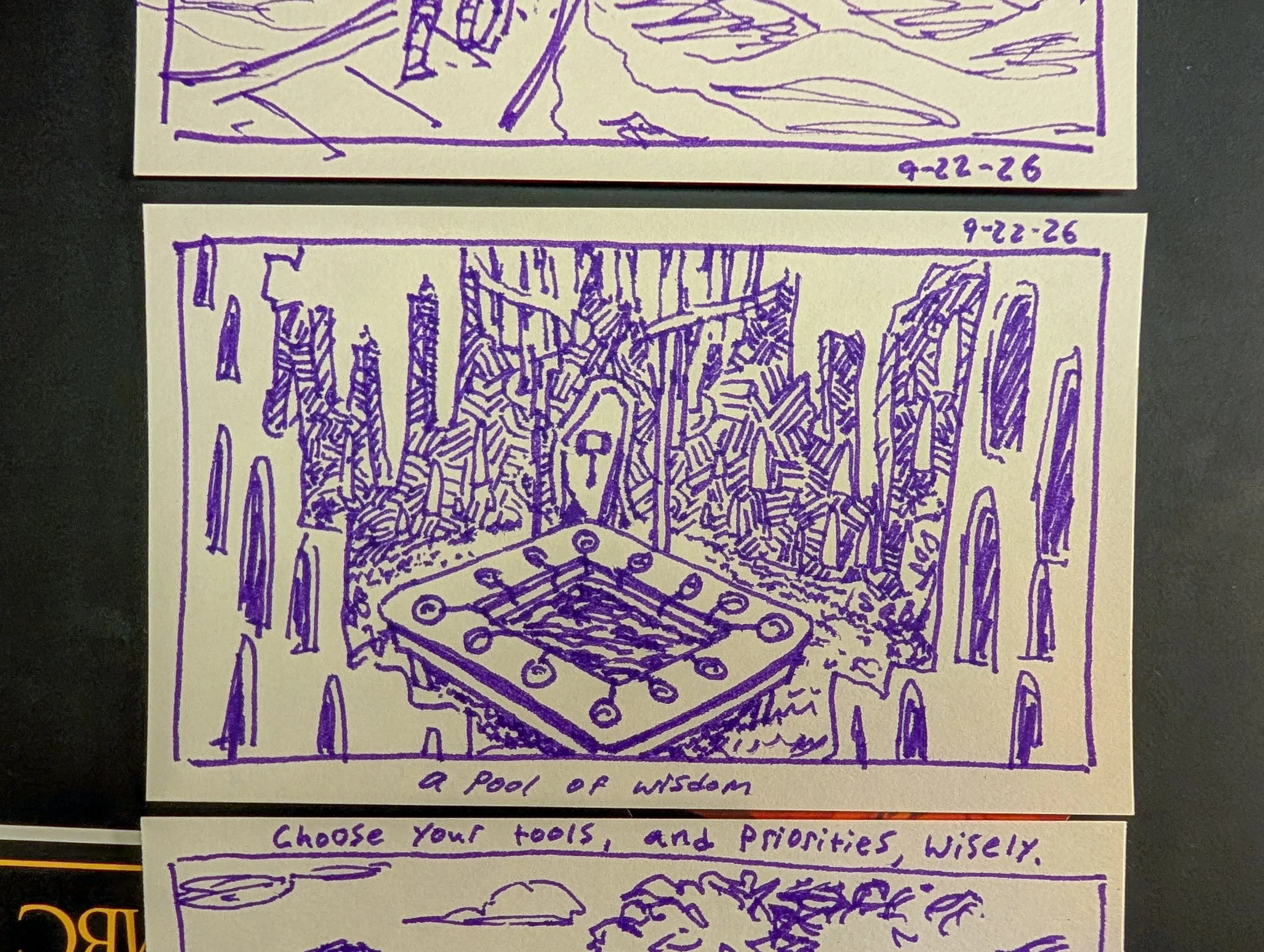
A Pool of Wisdom (2)
Context: The second image is how I imagined / experienced a moment in a Senate meeting where David Hoffman spoke to the unique power of students to pool their wisdom from all the diverse settings they inhabit. I illustrate many doors that point to possibilities of what could be and the centerpiece depicts the Senate’s “pass the gavel” ritual where everyone gives authentic feedback on what the group did well and where there are opportunities to grow. These interactions and rituals to me embody democracy.
— Duncan Winger, Class of 2029
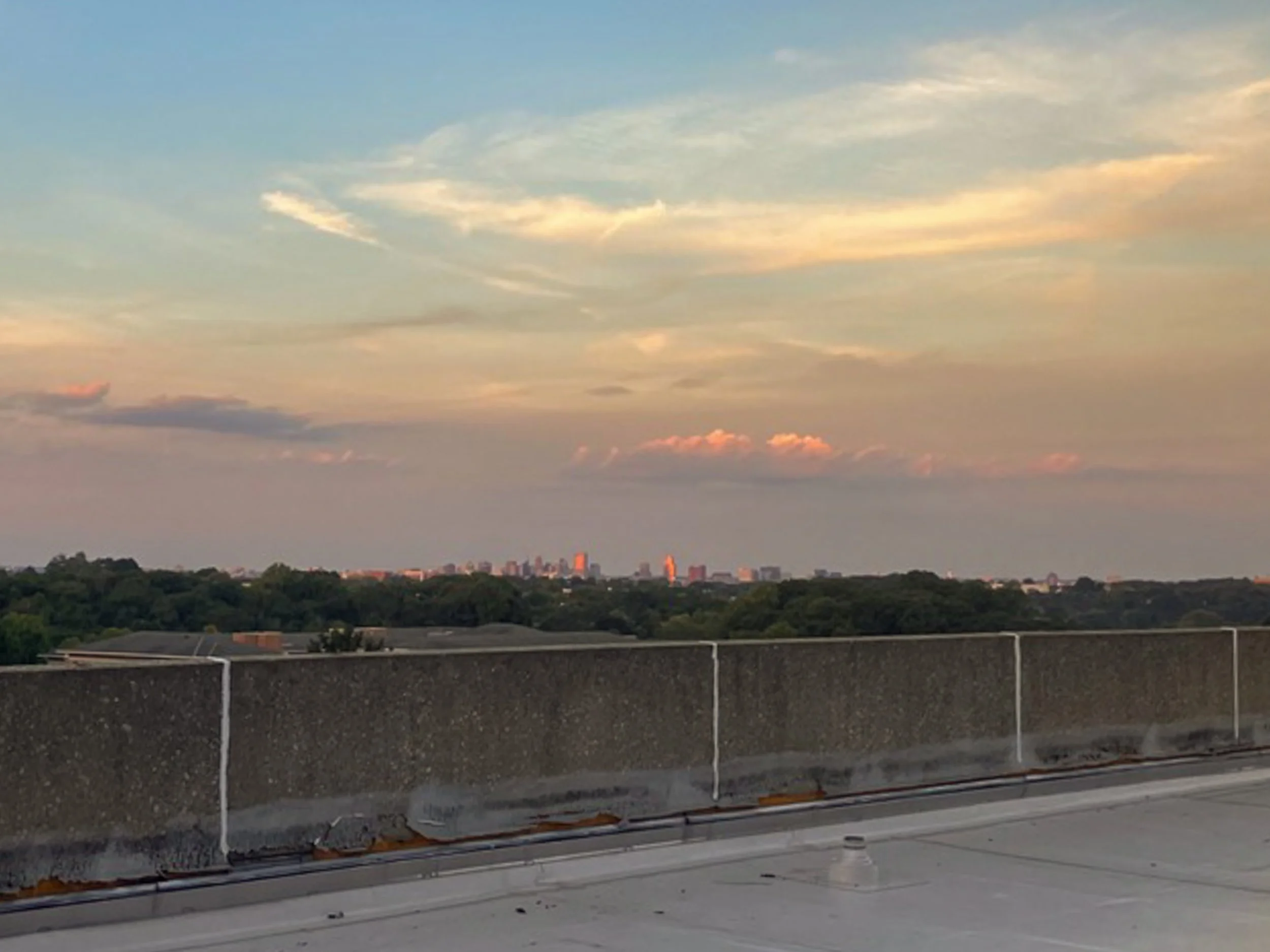
The “B” in UMBC (1)
UMBC has embraced its connection to Baltimore City, at least in theory. We call for peace, civic engagement, relationship-building, and an end to the ivory tower. And, yet, we remain outsiders looking in on the city from our hilltop circle, with relatively few city residents in our student body.
In all fairness, these gaps are acknowledged by university leadership, who seem to be seeking to close them through various initiatives. Members of UMBC faculty, staff, and students live, work, and are active members of communities in the city. It takes time to overcome the structural barriers that are much older and larger than any one university.
— Eleanor Brasfield, Class of 2028
The “B” in UMBC (2)
Accessibility When the Ground is Dry
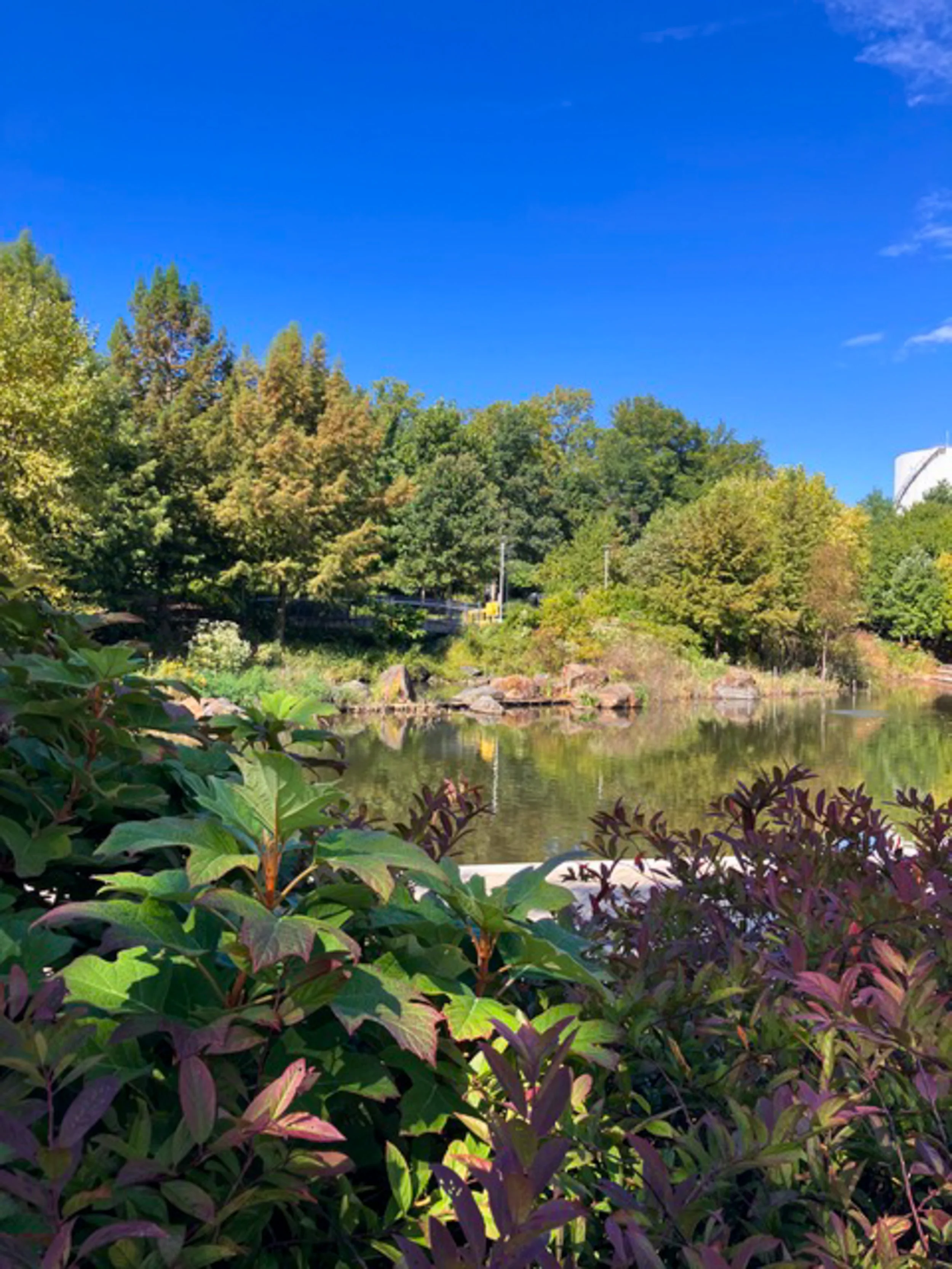
This bridge provides wheelchair accessibility access to cross campus between the Meyerhoff building and the library pond—except it is closed on any day with that there is rain in the forecast because it was resealed with materials that make it dangerous to traverse in wet conditions. This bridge could easily return to what it was meant to be for the price of the correct repavement materials, a bit of labor, and some humility.
For me, this process encapsulates the irony of accessibility and inclusion work in so many spaces. Someone has a good idea, but somewhere along the way a mistake is made, or a detail is forgotten, and the thing that actually happens—be it a program, or a project, or a bridge—is inaccessible.
— Eleanor Brasfield, Class of 2029
Creativity
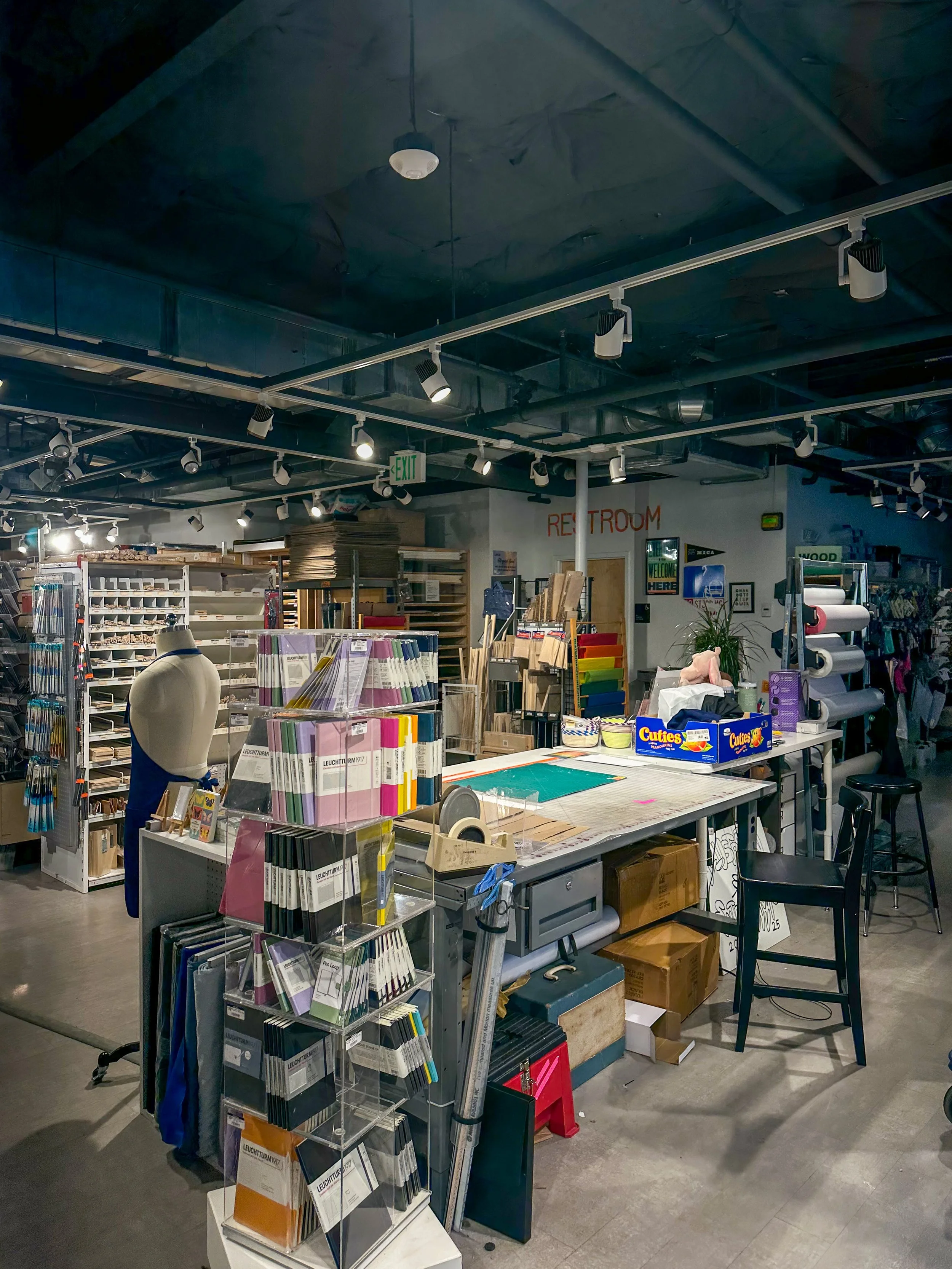
Creativity fosters unity, and representation allows people to freely express themselves, while being individual but still playing part of a whole. This setup at Maryland Institute College of Art does just that: it gives students at the university and strangers passing through the chance to share in that creative experience.
—Fatima Hafeez, Class of 2029
Community is Natural, Hate is Not
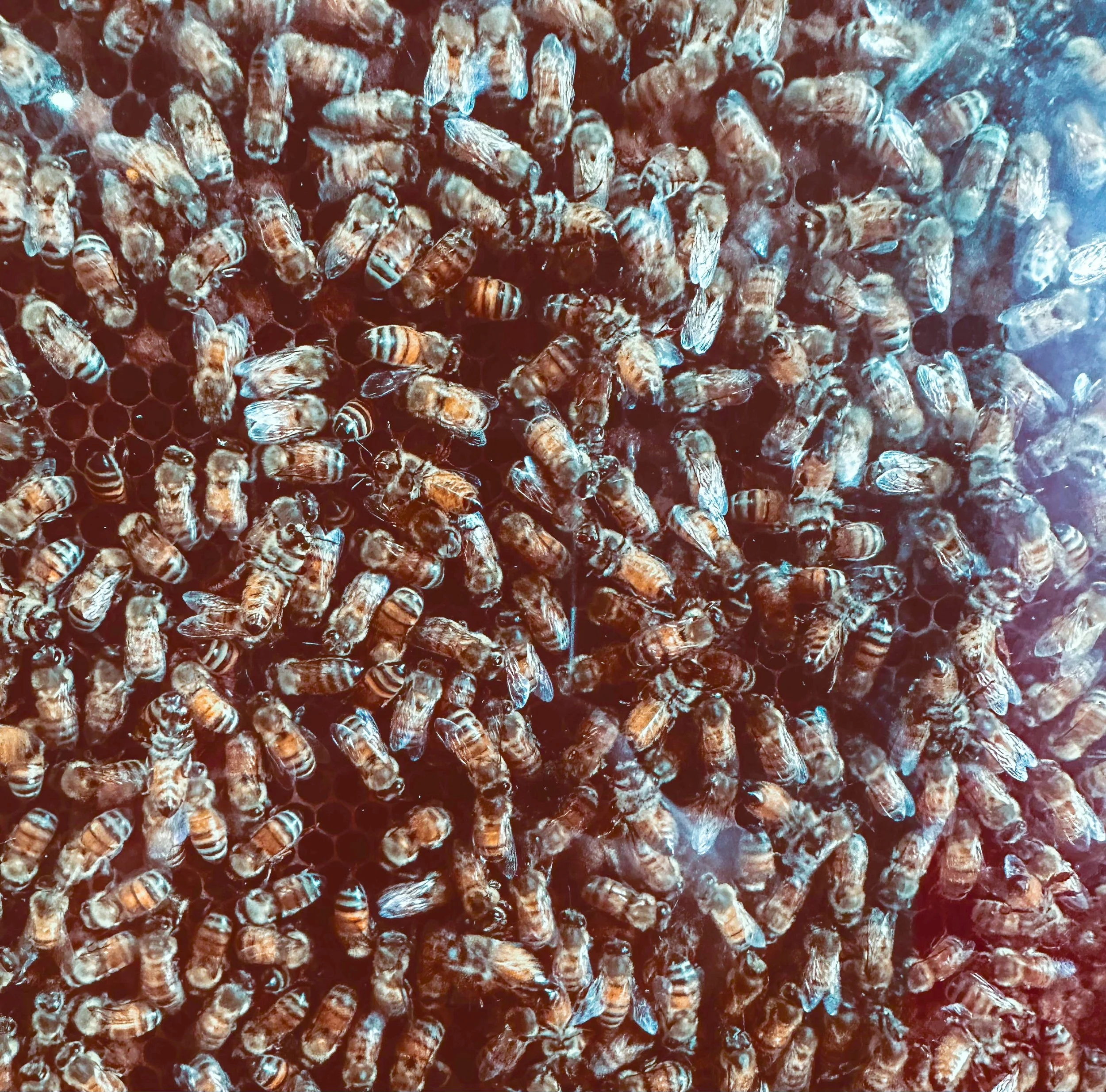
“Surley in that there is a sign for people who ponder.” — Qu'ran 16:69
— Fatima Hafeez, Class of 2029
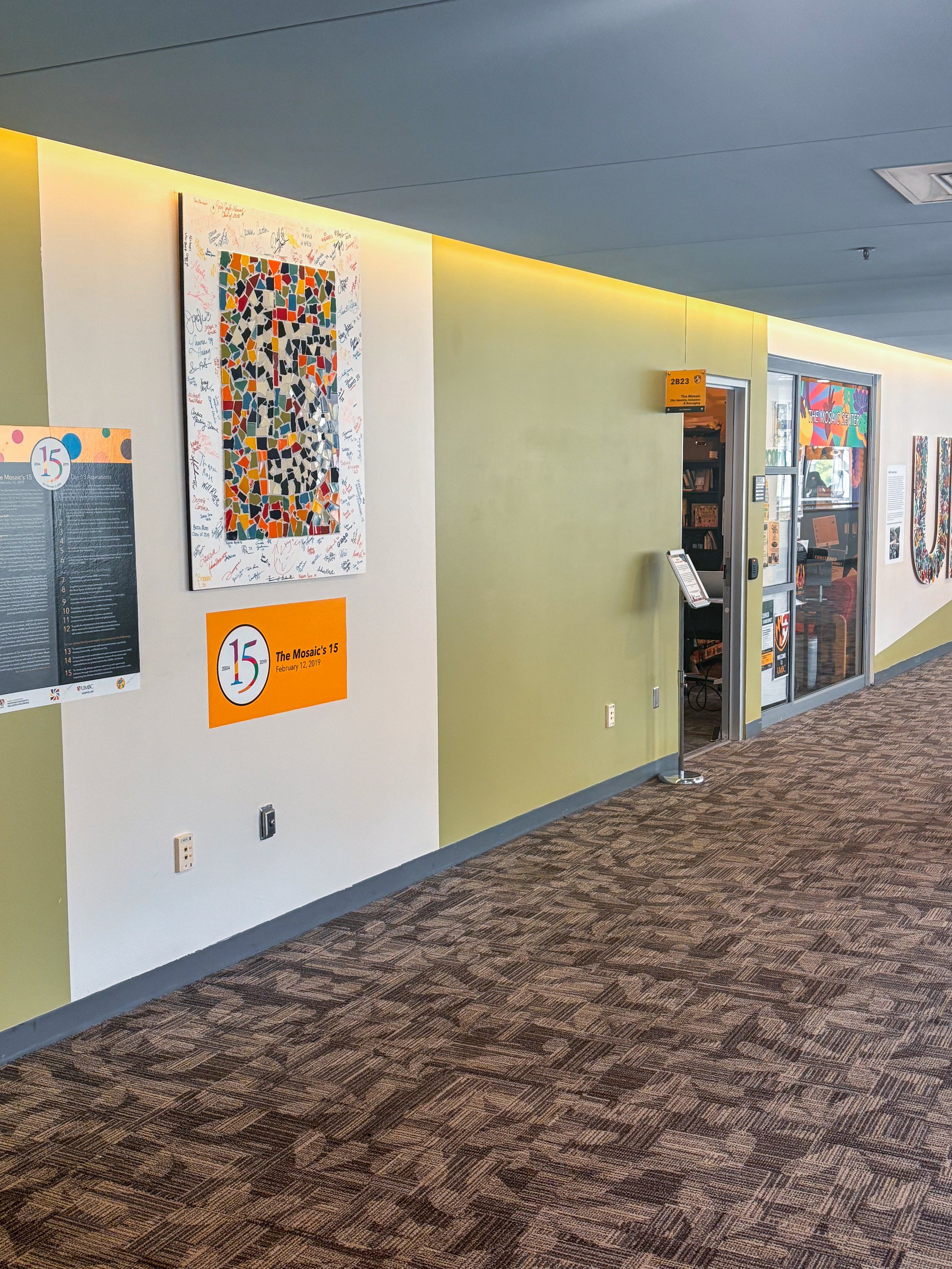
More than a Buzzword
UMBC was the first place I encountered that had such a dedicated space for intercultural exchange and discussion. Places like the Mosaic show me that my campus views diversity as more than a simple buzzword.
— Fisayo Oyolola
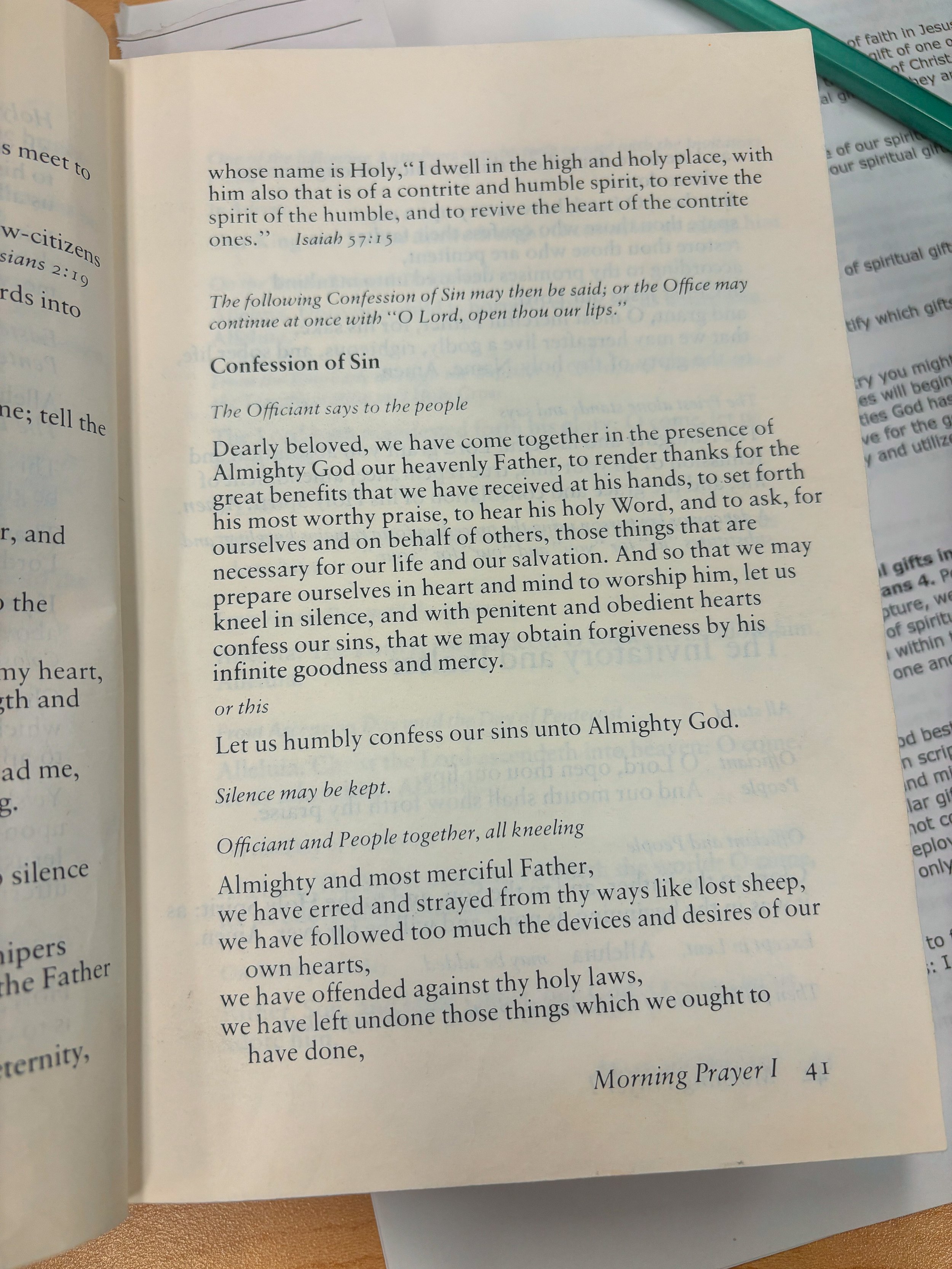
Morning Prayer
Knowing I am capable of redemption in the eyes of God is a beautiful part of my faith and practice. I know I am not perfect but there is still space for me.
— Fisayo Oyolola
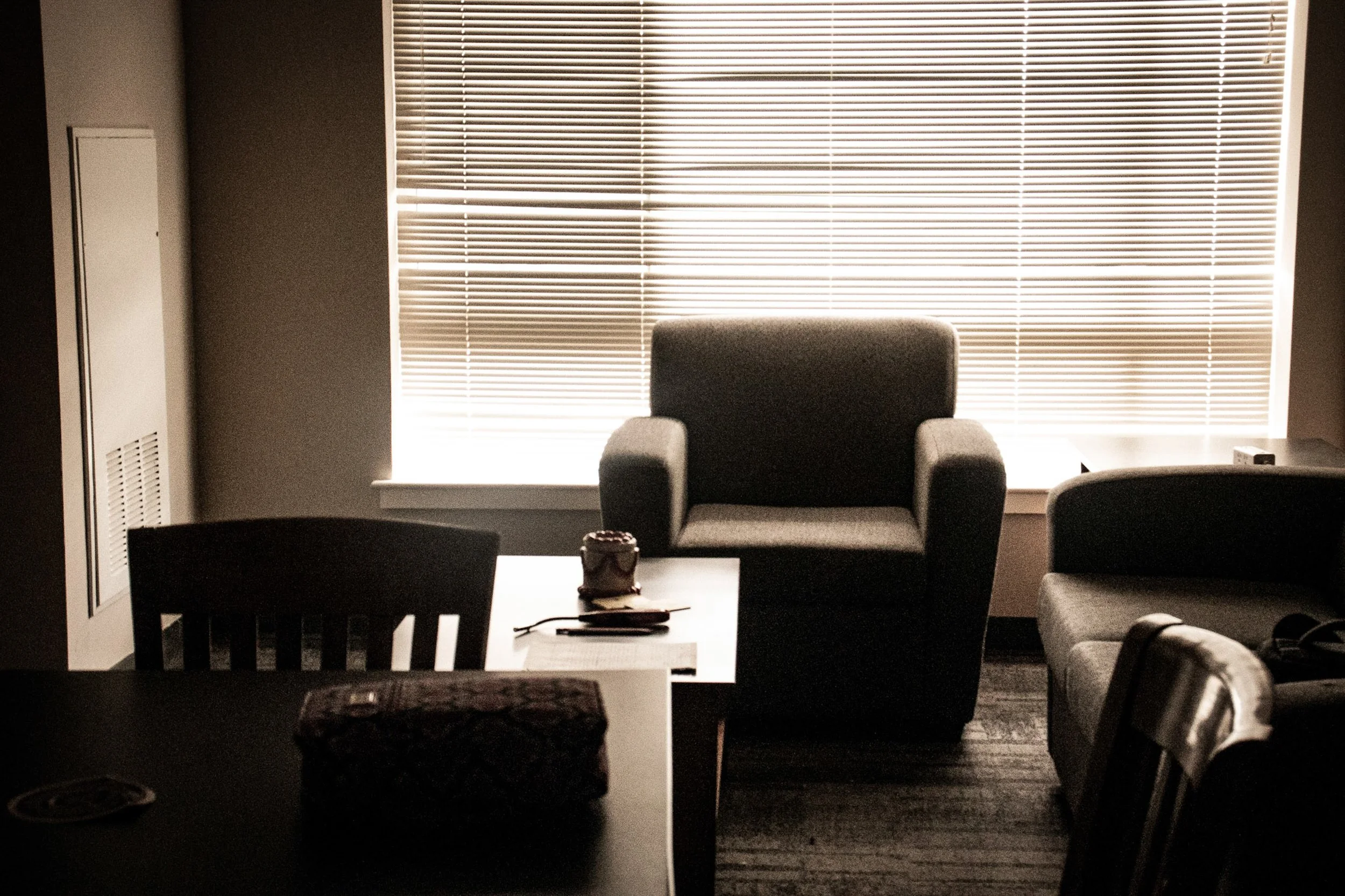
What does it mean to be a Christian?
This photo is the current representation of how I relate to how I feel believing in God. I still call myself a Christian, but certain traditions have been stopped due to my concerns with aspects of my religion and my very busy life as a college student. I still have my Bible, but everyday I choose not to read it. It just sits there. A part of me feels like a bad Christian for doing this; another part of me feels relieved. Maybe opening it is just reopening wounds that I want permanently shut.
— Grace Amond, Class of 2028
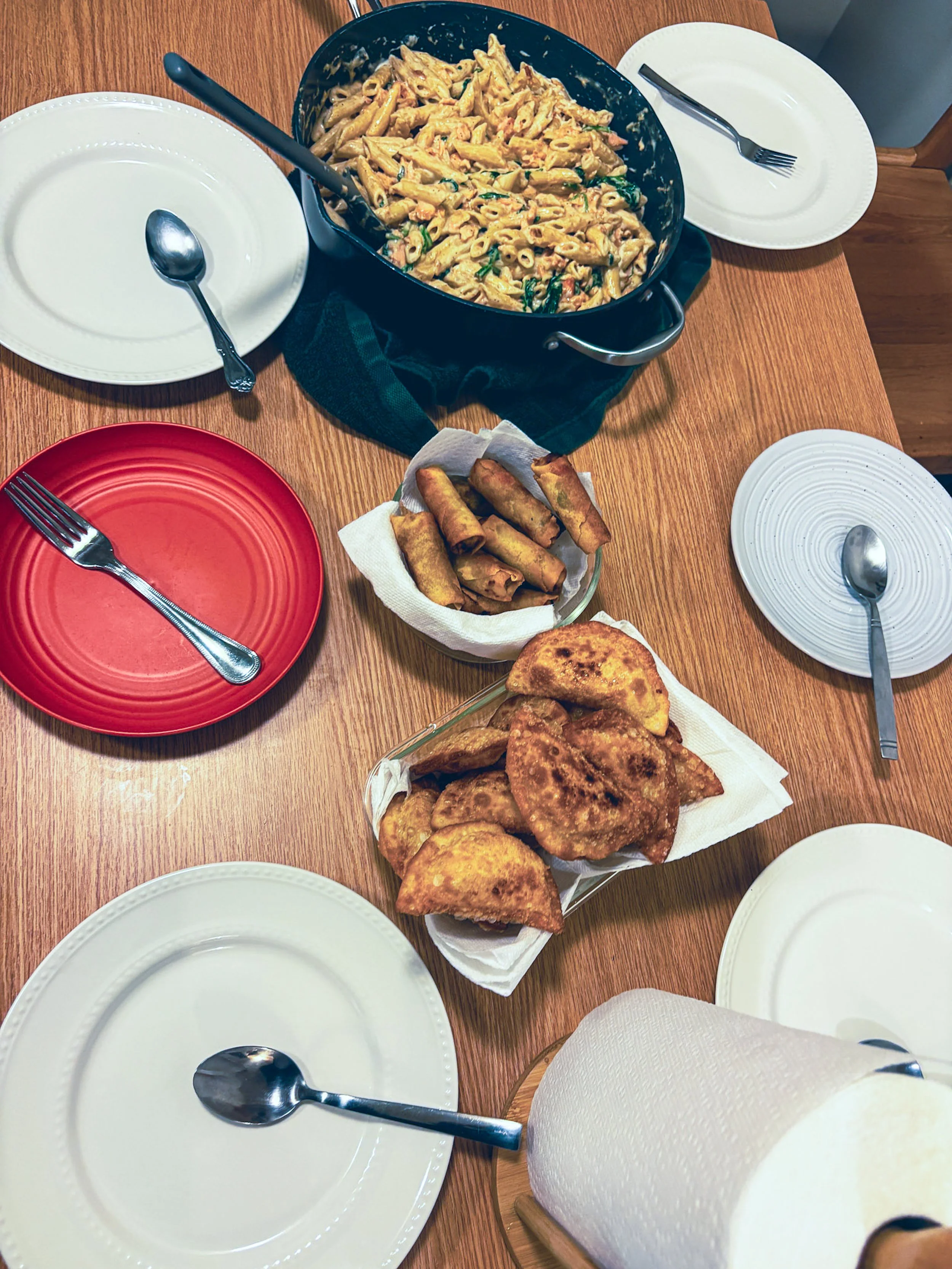
Setting the Table
When I look at this image I see a bridge between different cultures and religions in my life. This was taken at my friend's apartment and she had invited my friend and me to have dinner with her other friends. She had made pasta and her friends made empanadas and egg rolls for all of us. While we have different religious backgrounds (Christian, Agnostic & Muslim), we were able to come together to have a meal and enjoy each other’s company and cultures.
— Grace Amond, Class of 2028
Reframing
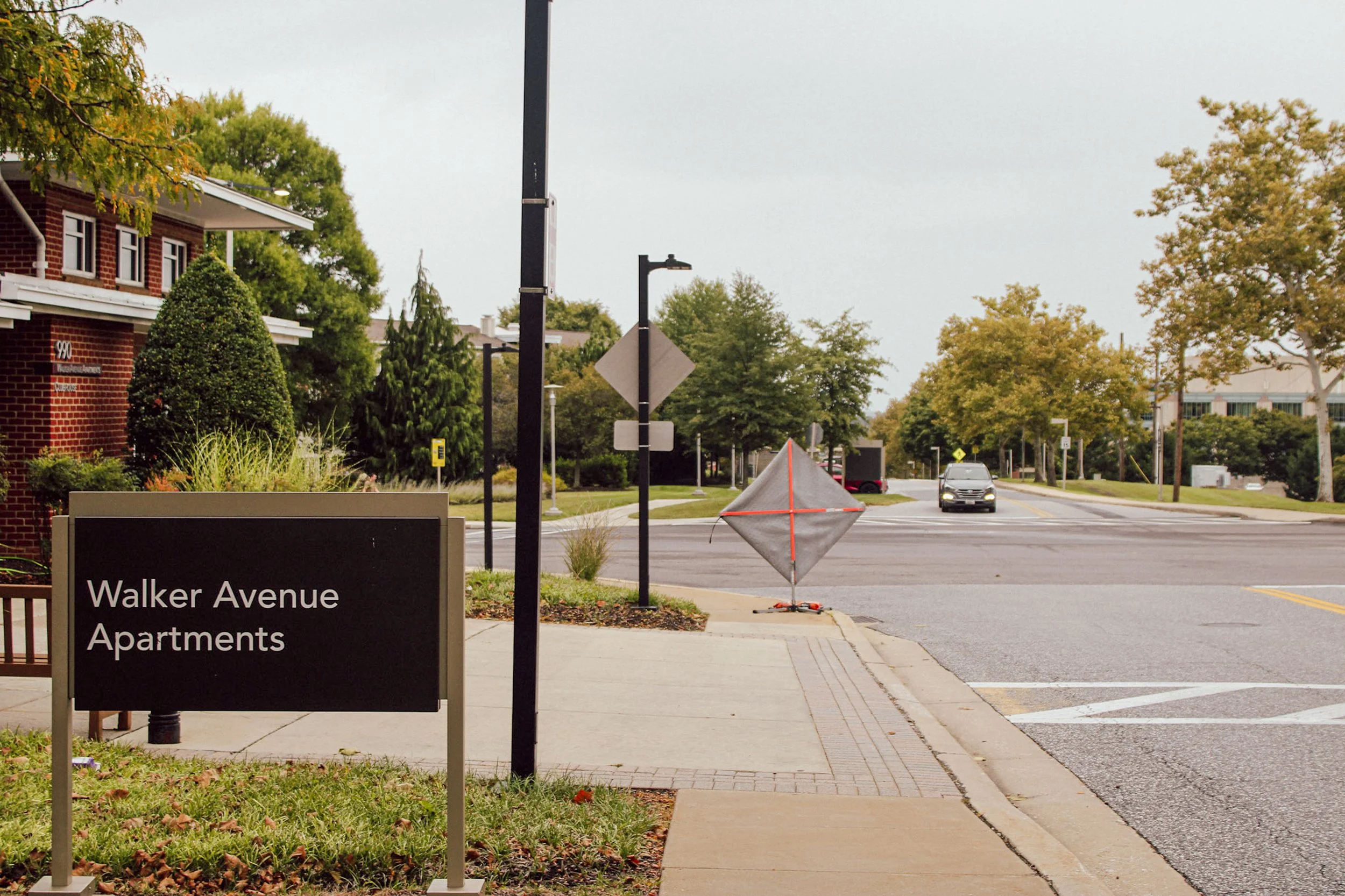
A possible barrier in my life happens to be living in an off-campus apartment. While I initially enjoyed the benefits (having my own room, cooking my own food, etc), I later noticed that there were some downsides (having to walk up a hill everyday, feeling isolated from campus, traffic safety, etc.). Despite this, I have realized that Walker Ave Apartments give me a sense of belonging with roommates, resident assistants, and the events. This barrier can turn into a bridge.
— Grace Amond, Class of 2028
Jummah Prayers (1)
— Ibrahim Ahmed, Class of 2027
Jummah Prayers (2)
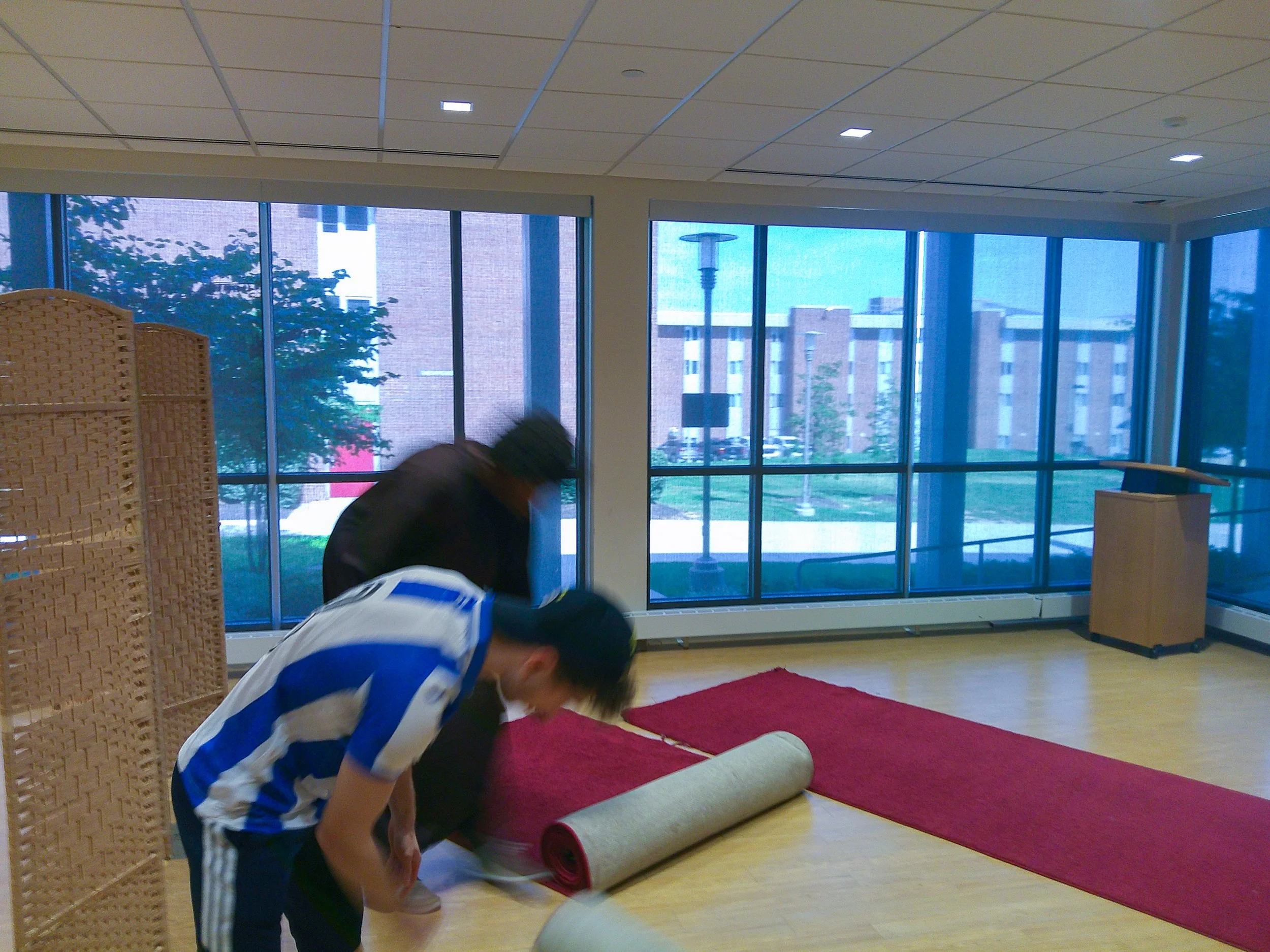
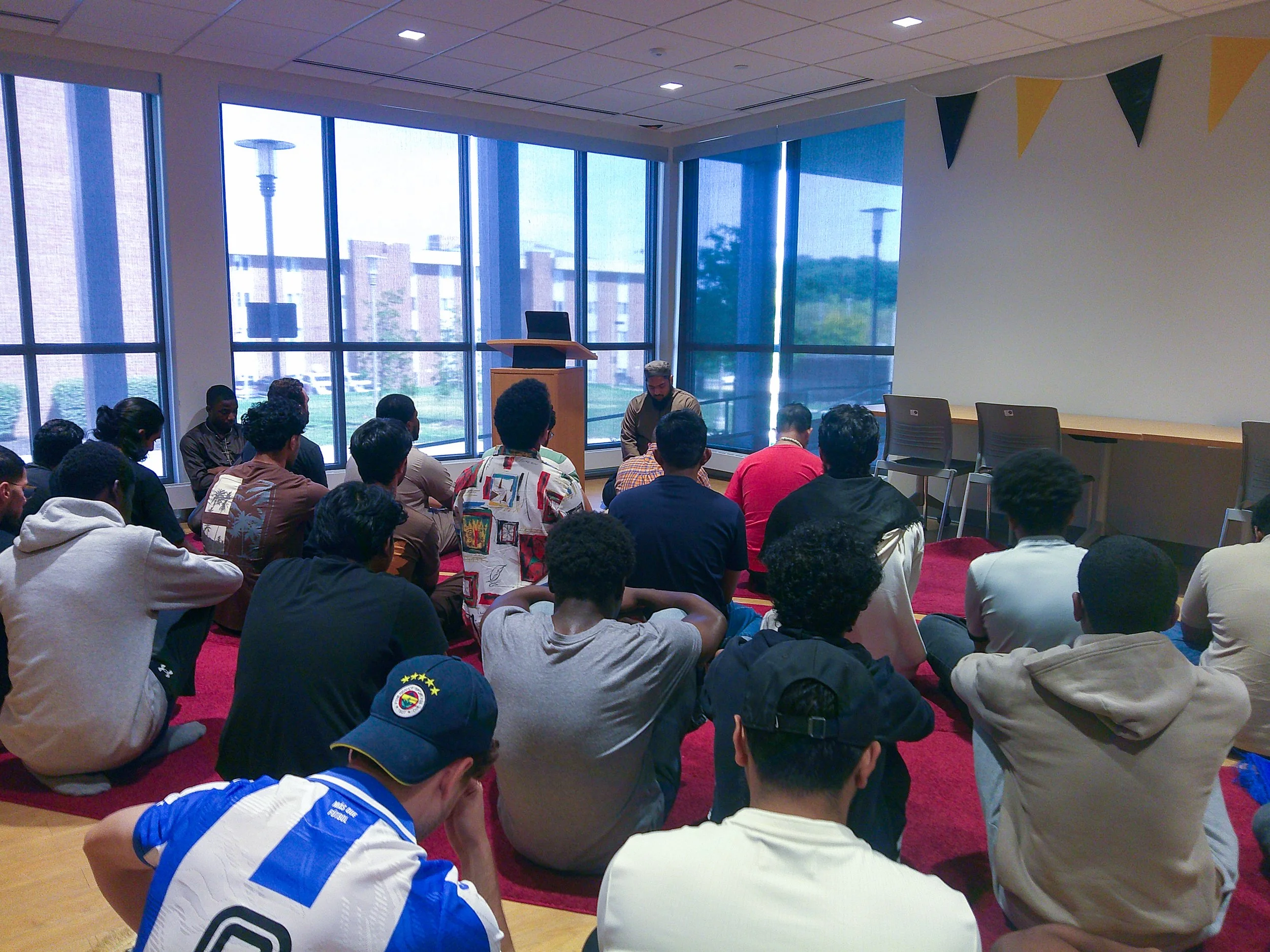
Jummah prayers are a time and space for Muslim students to worship in congregation. Islam teaches unity and faith. Here you see some of the Muslim students that helped prepare the Musallah (prayer space). Muslims believe that you share in the reward of a good deed you enable. These students are encouraged to pour into their community.
— Ibrahim Ahmed, Class of 2027
Belonging and Hope in the Uncertainty
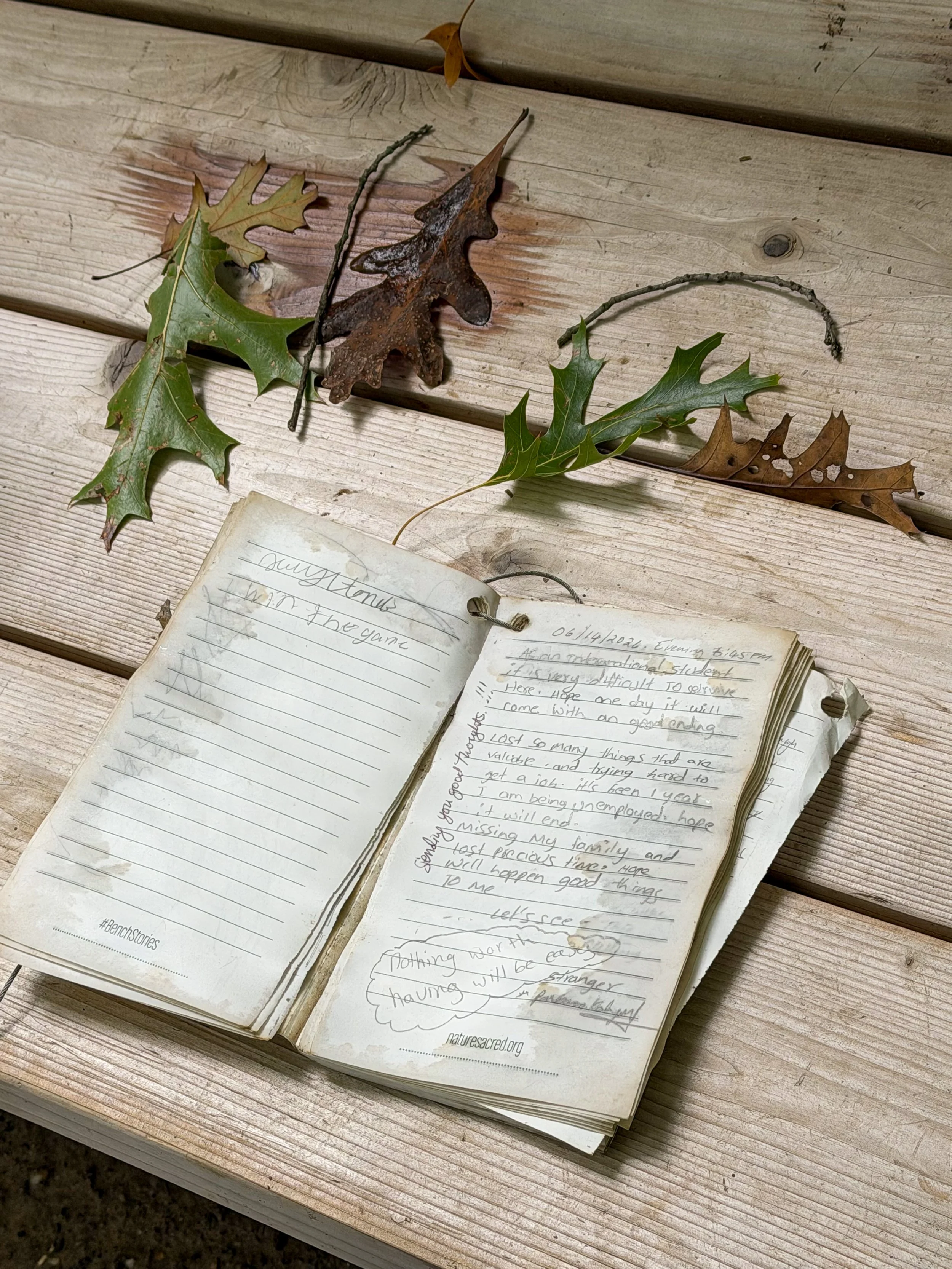
I came across this journal while I strolled for a walk. Reading through these stories helped me realize how many people have unseen struggles and hardships. The beauty of this journal was that despite everyone’s struggles, they all had hope for a better future. It taught me that sometimes faith isn't just about religion. Faith can also be a safe space to hope for a better day. Regardless of our faith, we all share the desire to be heard, belong and find hope in the uncertainty.
— Keven Guruswamy, Class of 2027

Fire
A beautiful campus tradition
allows us to feel
one night of the year,
We become moths
Drawn to the flame.
The flame that resonates
With our passion to belong.
Through the warmth,
We are connected
That night, nothing
matters.
Expect the fact that
We are UMBC Retrievers
— Keven Guruswamy, Class of 2027
Signaling Community (1)
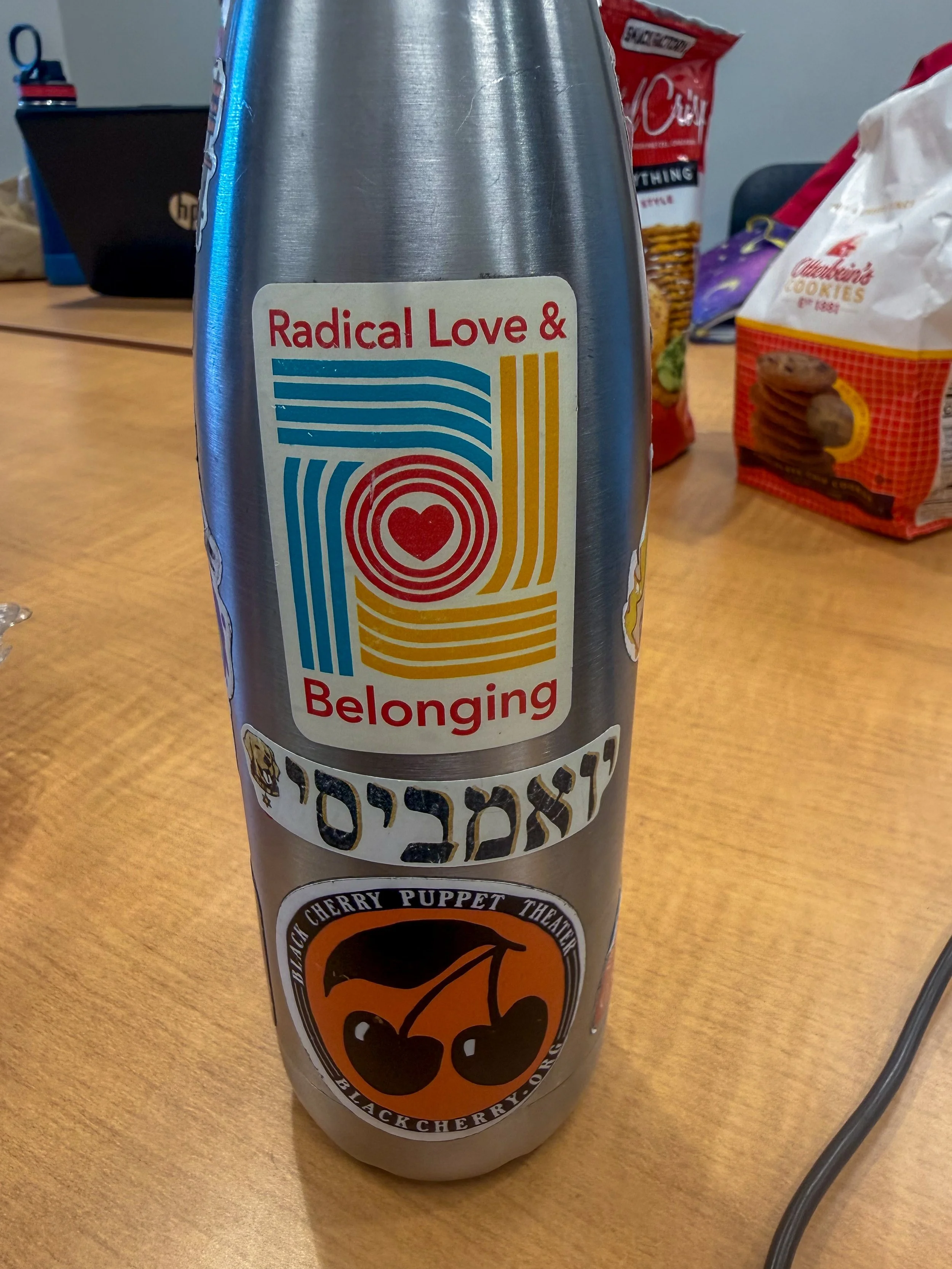
These photos represent different levels of visibility I experience as a Jewish staff member on campus. On my water bottle, I have a sticker that says “UMBC” spelled out in Hebrew letters. For people who aren't Jewish, the Hebrew letters don't register as being Jewish or connected to Hillel. But for people who are Jewish, Hebrew letters are a subtle way of signaling community at a time where some people aren’t comfortable displaying that identity for a variety of reasons.
— Lisa Huberman,
UMBC Hillel
Signaling Community (2)
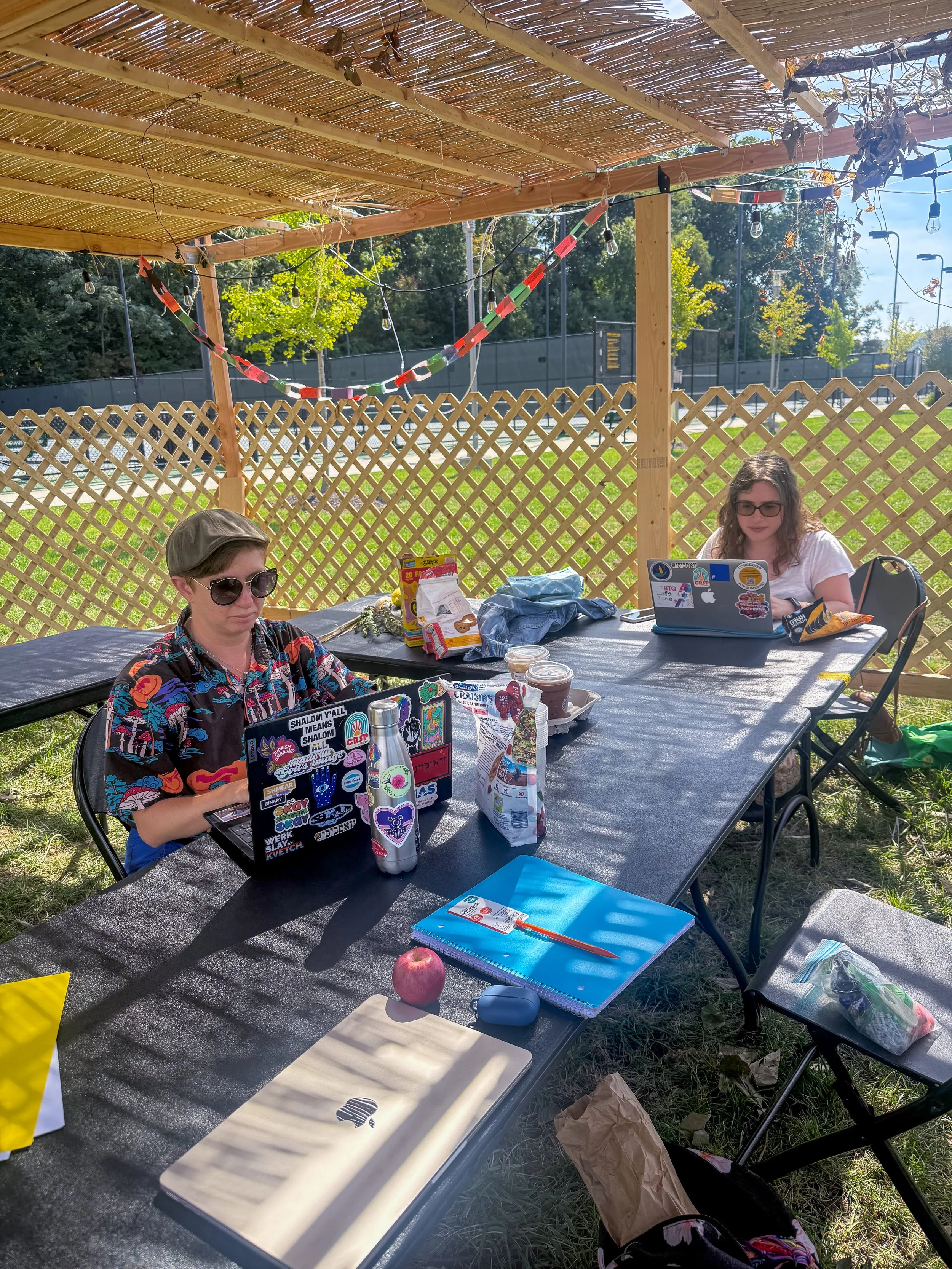
By contrast, once a year during Sukkot, we build a sukkah, a temporary hut that is very visible on Commons Field. We eat and do programming in it all week and it’s a really joyful way for the campus community to connect to Jewish life.
— Lisa Huberman,
UMBC Hillel
Backstage
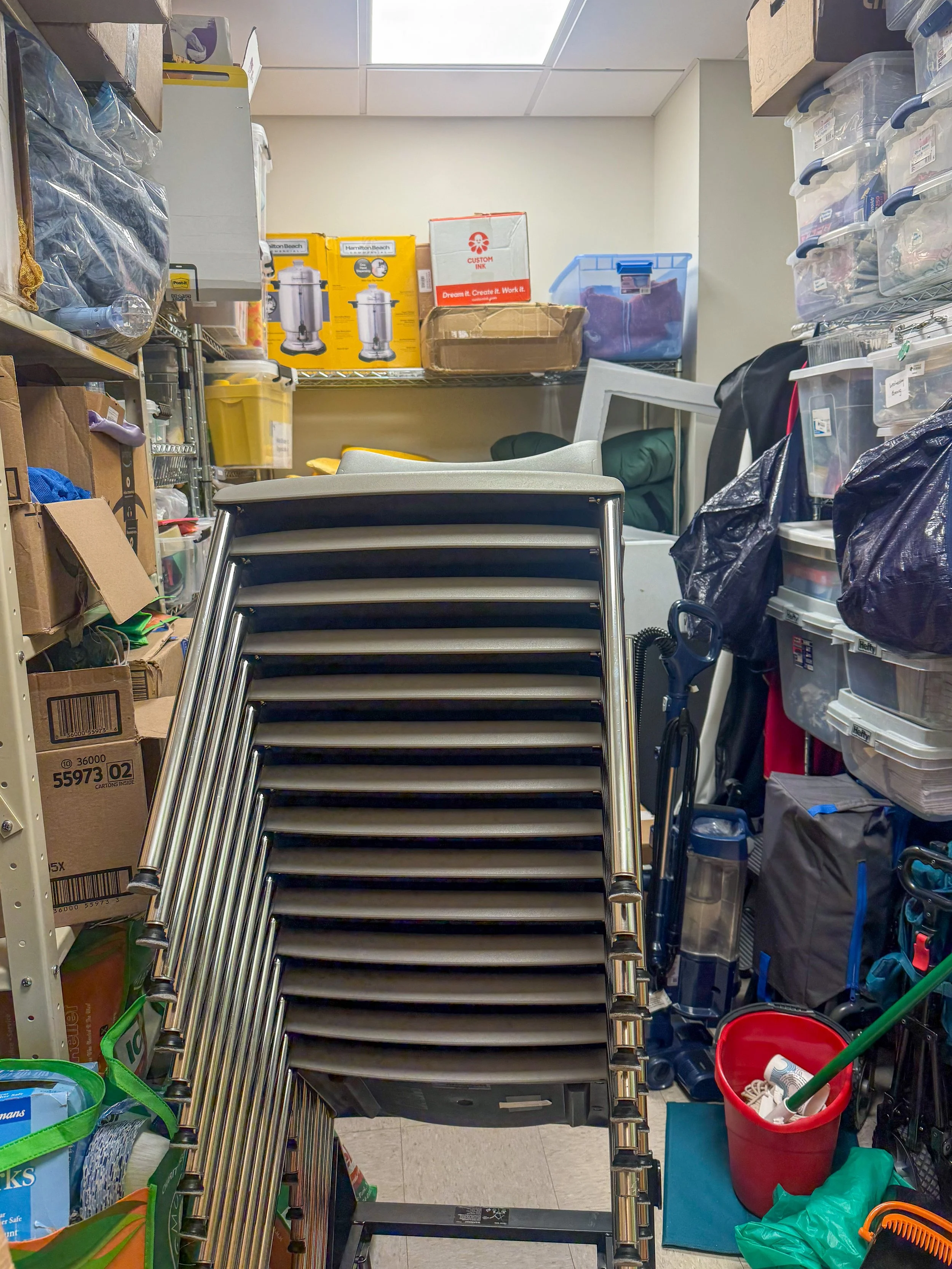
Like so much about UMBC, so many of the limitations around religious life are also opportunities. None of the religious groups here have our own spaces, so every day is a negotiation. The main storage closet is located in a room that is also the main prayer space, and so when Hillel is getting supplies for our learning fellowships or Shabbat, we have to be mindful of whether we may be walking in on Muslim students in prayer or a Catholic mass. While this negotiation can be awkward, it also pushes us to interact with students and staff from other religions on a daily basis in a way that doesn't happen on other campuses where people are siloed among their own houses of worship. While I wish we didn’t have to climb over stacks of chairs or be wary about being crushed by an avalanche of strange bins, I feel a sense of camaraderie when I see the shelves we share with the other religious orgs.
— Lisa Huberman,
UMBC Hillel
Silo
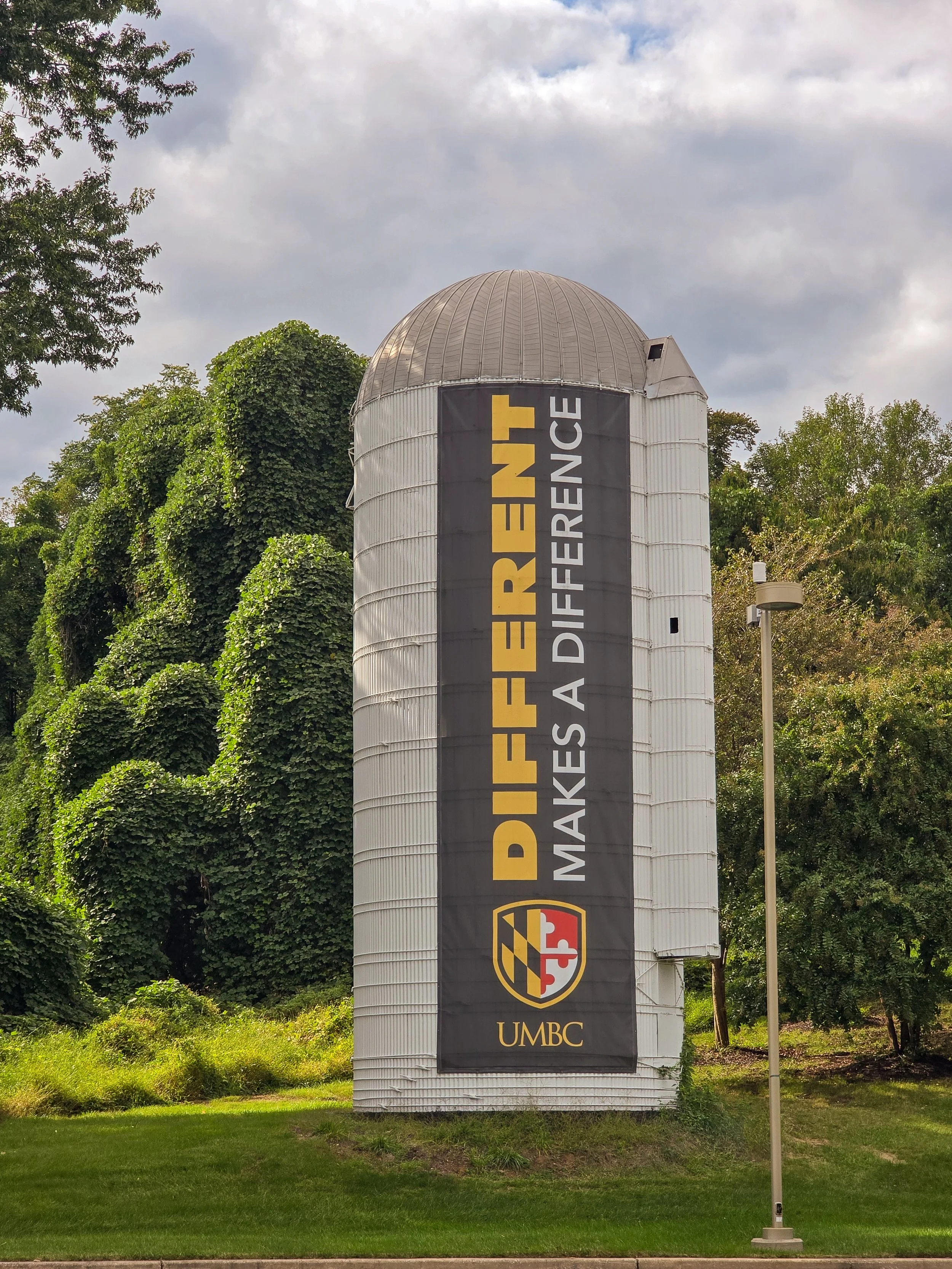
The silo in this picture greets visitors entering UMBC’s campus from the south via I-195. It represents the inherently abundant siloing that happens on a college campus. In this context, the juxtaposition of the "Different Makes A Differences” banner could be interpreted as celebrating division. I long for campus members to actively explore campus beyond themselves, to meet new people, and seek synergies for collaboration and community.
— Lori Hardesty,
Associate Director, Community Engaged Learning, The Shriver Center
Before… After…What is Next? (1)
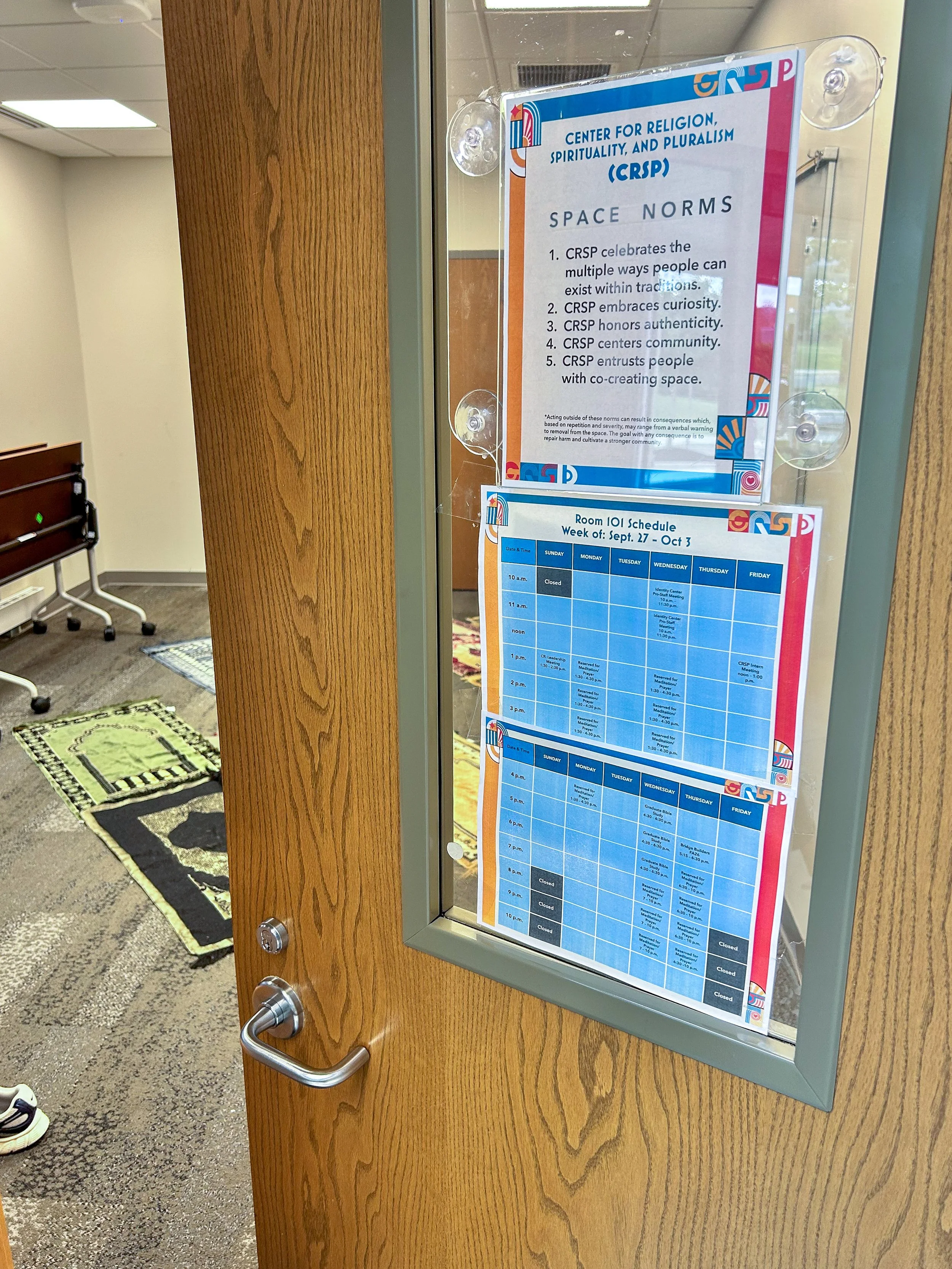
We live in a constant state of usage and busyness in the Center for Religion, Spirituality, and Pluralism. Sharing space is important, tricky, beautiful, and exhausting. With constant demands, active students, and a deeply religiously diverse community, the emails and hours and needs seem endless. And the work is life-giving and transformational.
— Matt Hoffman,
Director for the Center for Religion, Spirituality, & Pluralism
Before… After…What is Next? (2)
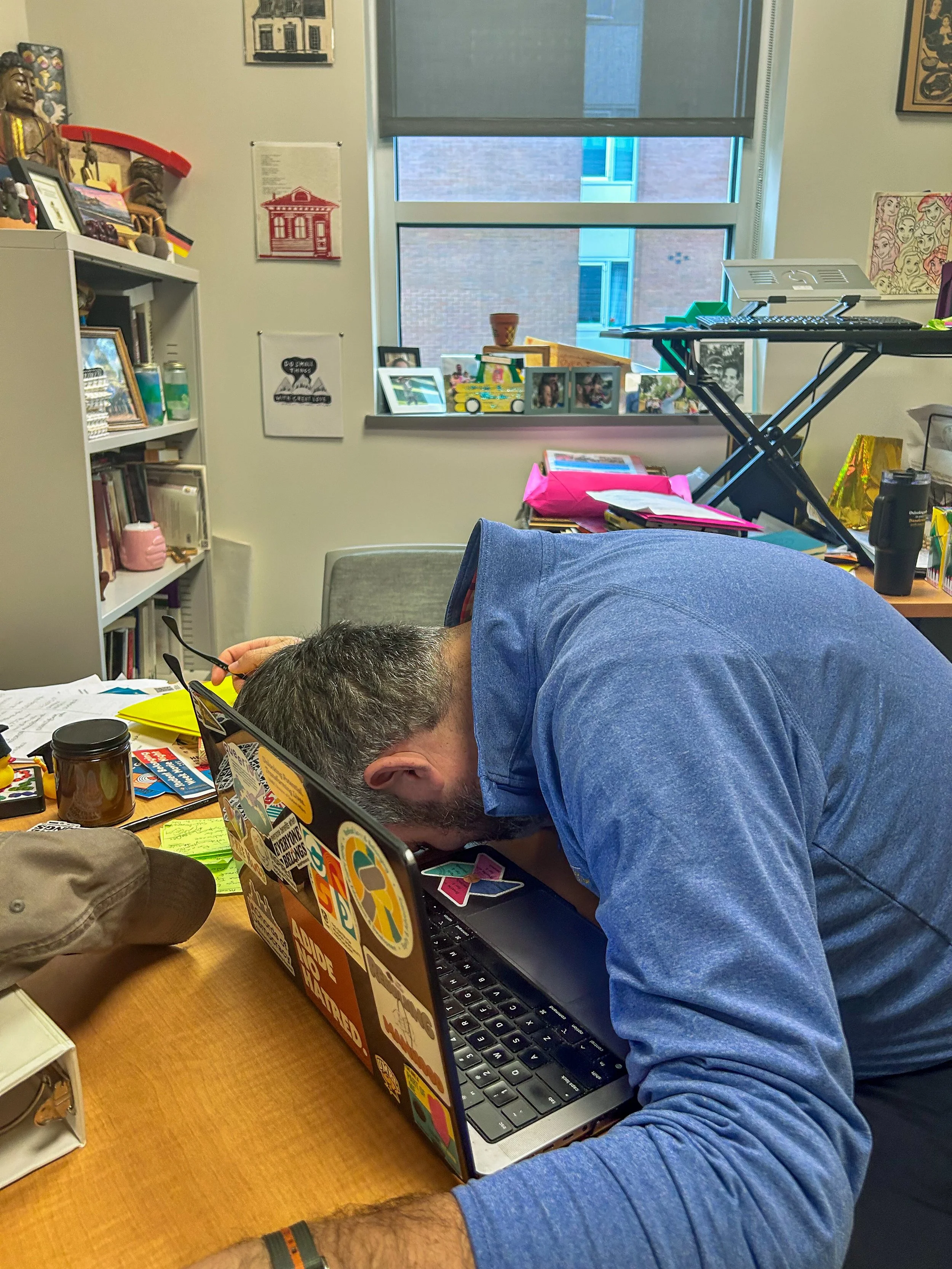
We must ask ourselves what sustainability and rest look like? How can we truly create a community of care together?
— Matt Hoffman,
Director for the Center for Religion, Spirituality, & Pluralism
Both of These Things Are True (1)
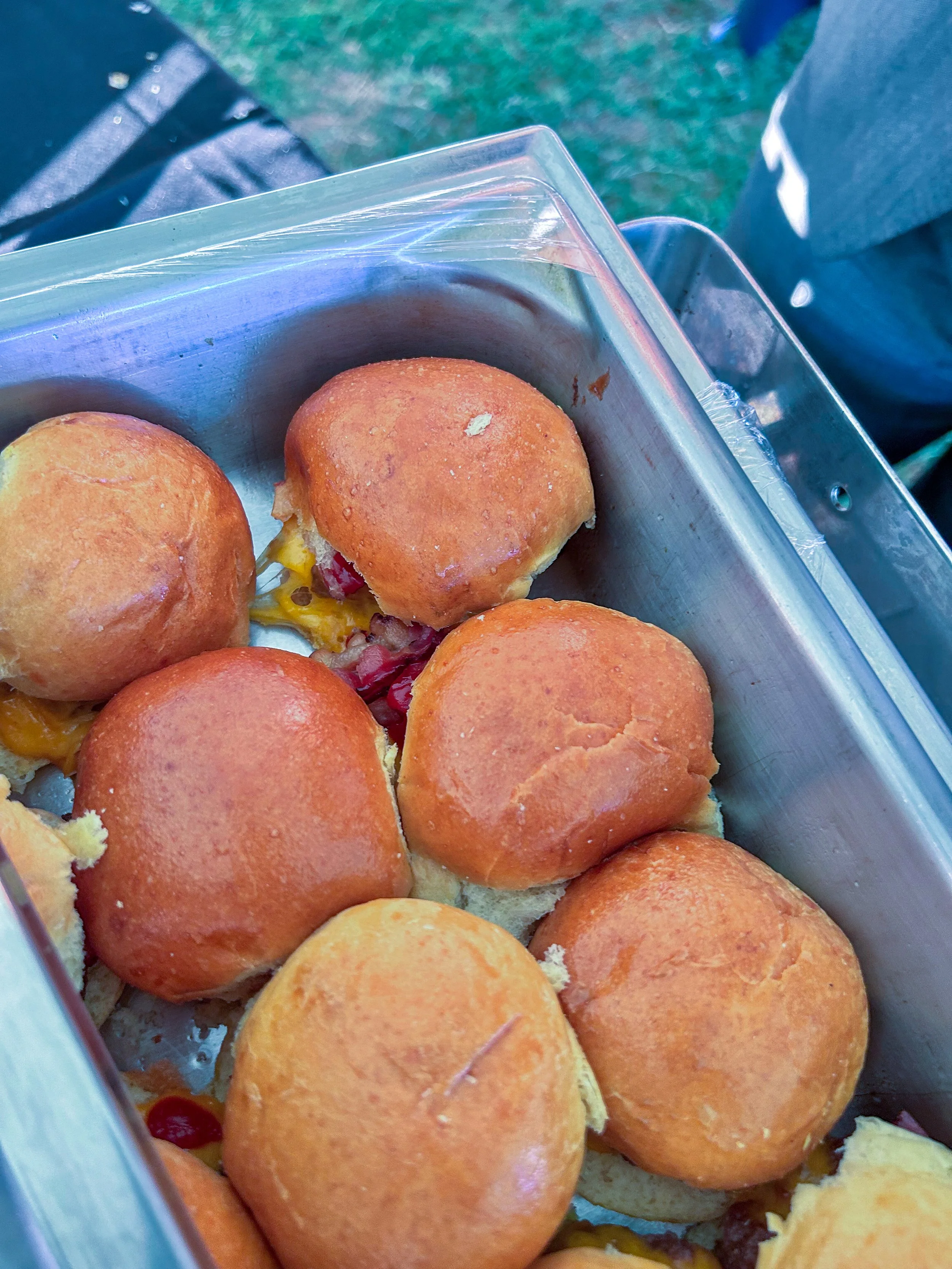
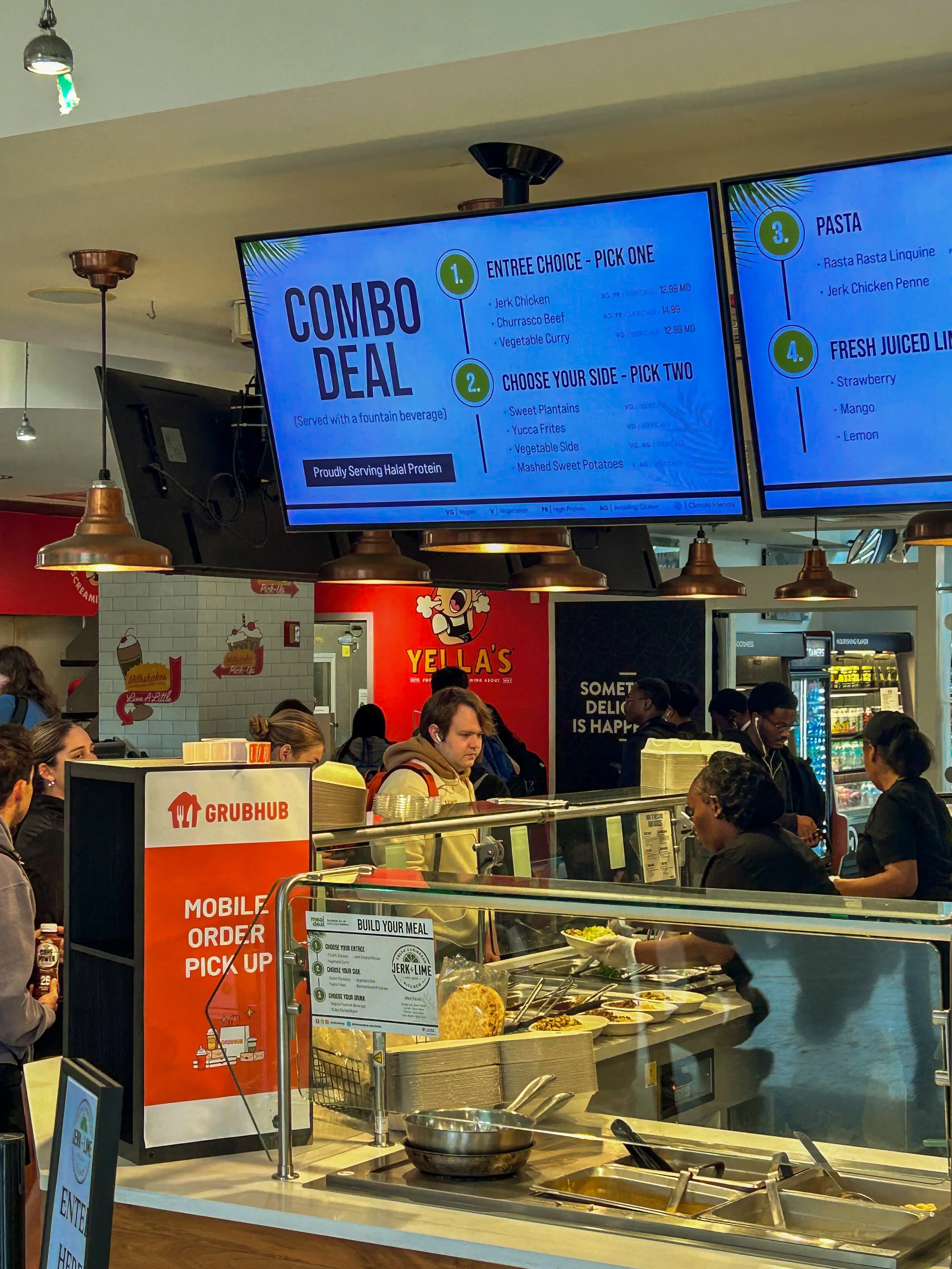
There is much work to do and also much to celebrate. At a recent event hosted by the Center for Religion, Spirituality, and Pluralism, “halal” cheeseburgers with halal beef and pork bacon were served. Yet, if you walk into many campus dining facilities, you will see signs advertising that halal protein being used.
Accommodations are a work in progress! We desire to lift up inclusive excellence–and have made great strides in doing so–but we don’t always fully pause to learn about what this might look like in every situation. Perhaps we might use mistakes as a chance to grow?
— Matt Hoffman,
Director for the Center for Religion, Spirituality, & Pluralism
Both of These Things Are True (2)
— Matt Hoffman,
Director for the Center for Religion, Spirituality, & Pluralism
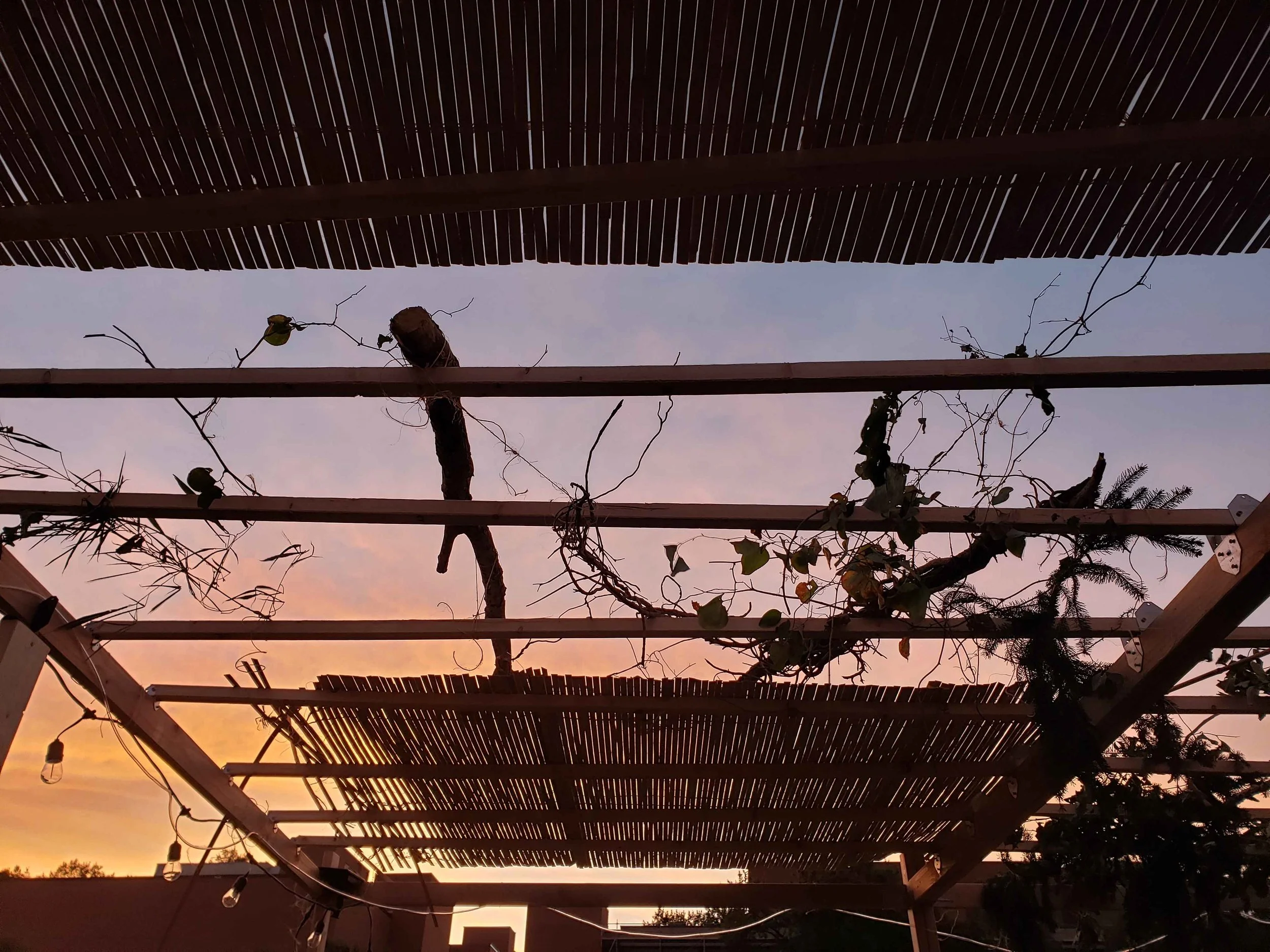
Sukkah
I began my conversion process during the lockdown of 2020. The first Sukkot I celebrated, I was sheltering in place, with my non-religious roommates, and observing alone. My first sukkah was a tarp and sticks on a cramped patio no larger than a closet. This year I welcomed the start of Sukkot with a community as secure as our sukkah, a structure built for shelter.
— Michael Hawley, Class of 2027

Hanukkah Gift Under the Christmas Tree
I am half Jewish and half German. While one side of my family is Christian, the other is Jewish. Personally, I have not found religion myself. I have always been proud of my Jewish heritage as an ethnicity, even though I do not identify with Judaism as a religion.
This disconnect has been a barrier to belonging throughout my life, including on campus. It’s difficult to navigate a space where I hoped to connect with part of my heritage but instead encountered expectations about what being Jewish was supposed to mean. I want to be able to embrace my Jewish identity without having to prove that I belong by practicing a particular religion.
— Molly E. Balkan, Class of 2028
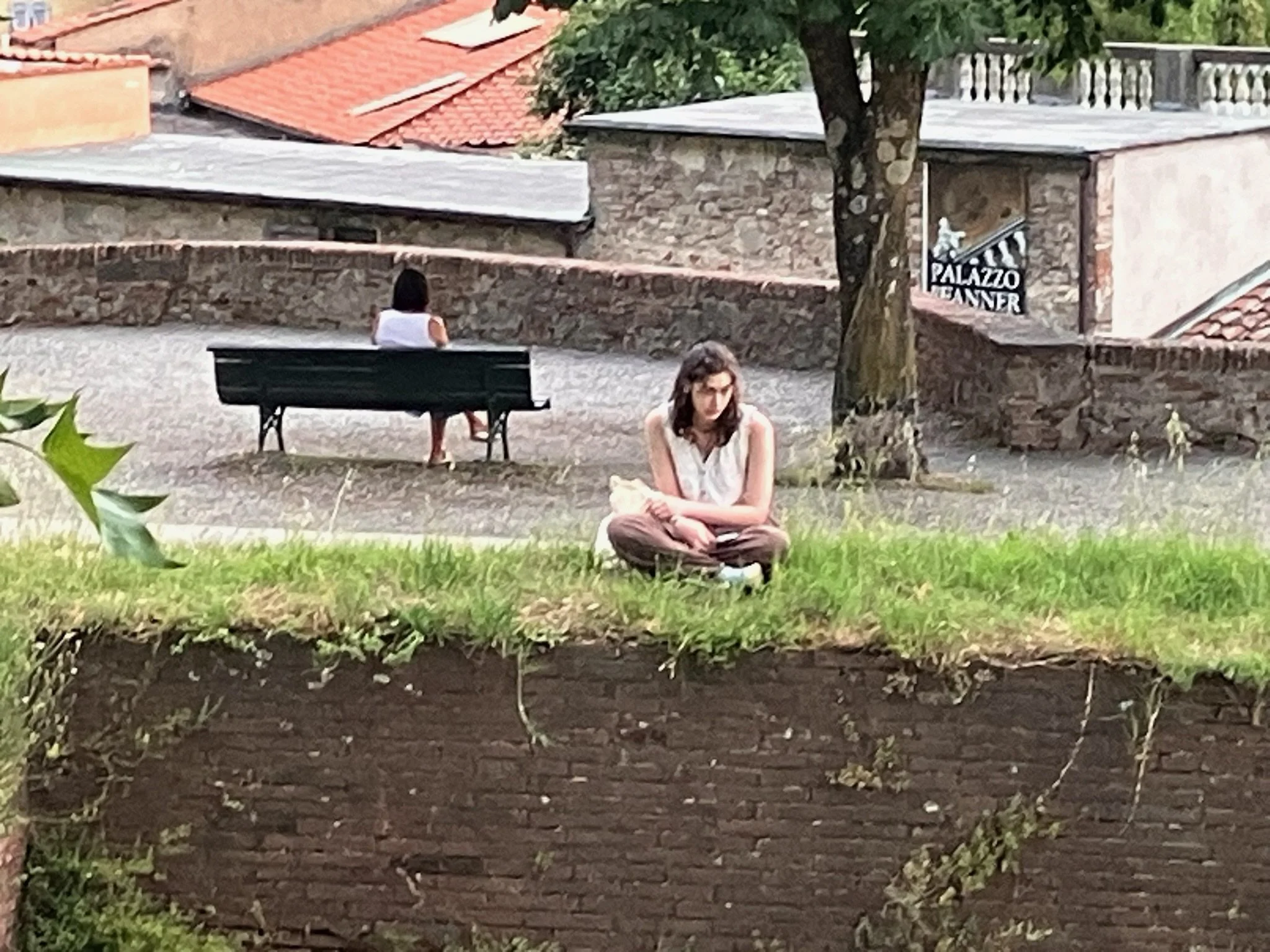
Sitting on the Walls of Lucca, Italy
Earlier in the day this photo was taken, I visited Vatican City, the center of the Catholic Church. While I appreciated the significance of the place, I did not feel particularly connected to a higher power there. That feeling came later, when I was sitting in the grass on top of the historic walls surrounding Lucca, looking out over the town and watching dogs play in a large field. In that quiet moment, I felt a profound sense of connection. It reminded me that spirituality does not always happen where we expect it to. For me, it is often found in ordinary moments when I slow down enough to appreciate the world around me.
— Molly E. Balkan, Class of 2028
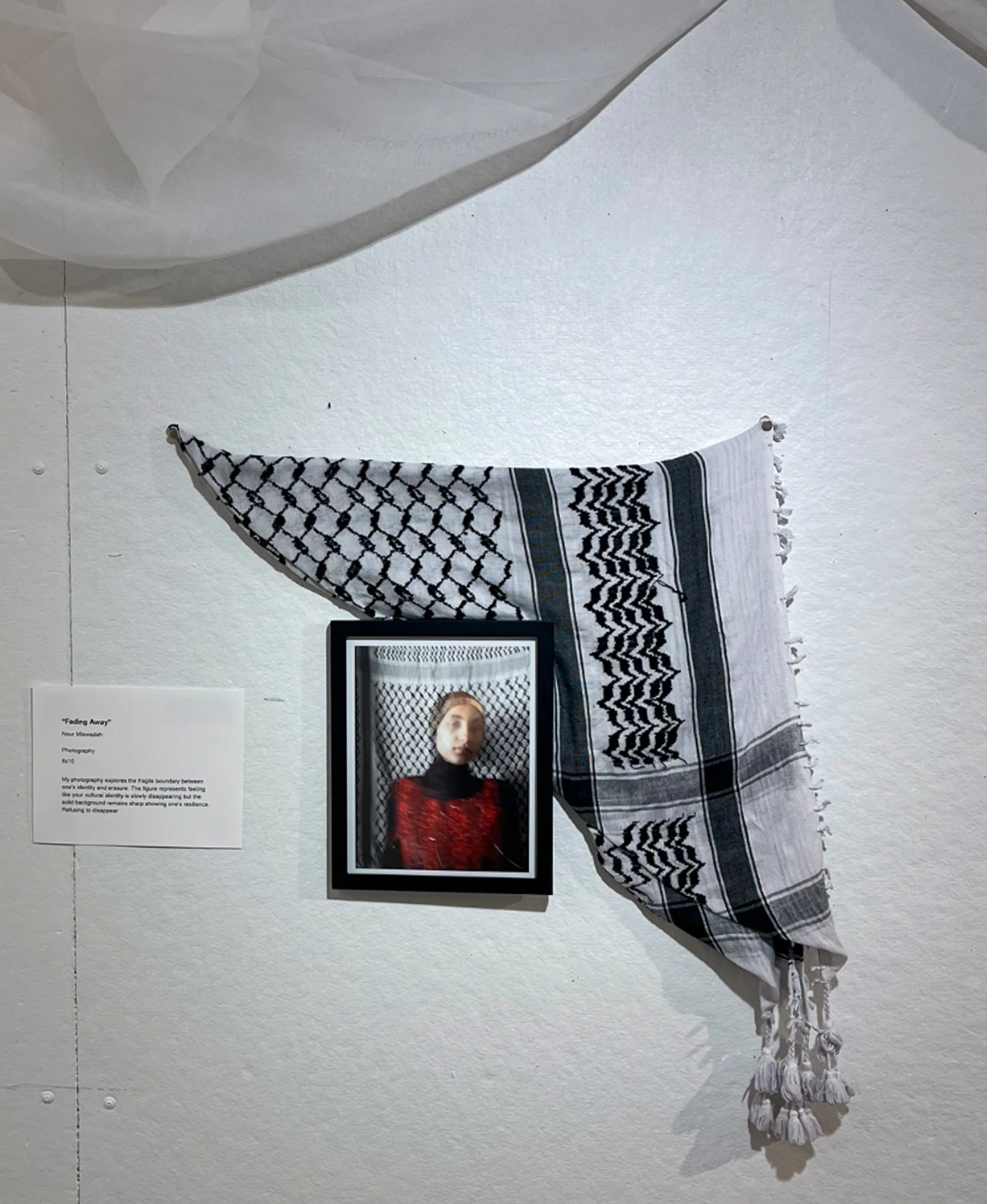
Palestinian Culture
Last semester, I had an opportunity to showcase my photograph for a student exhibition about identity. Portraying my Palestinian culture and having a spot for it on the wall was really empowering, especially when talking about how I want to display my work and deciding on adding a keffiyeh to the background. It made me feel happy and proud about being able to represent my culture.
— Nour M., Class of 2028
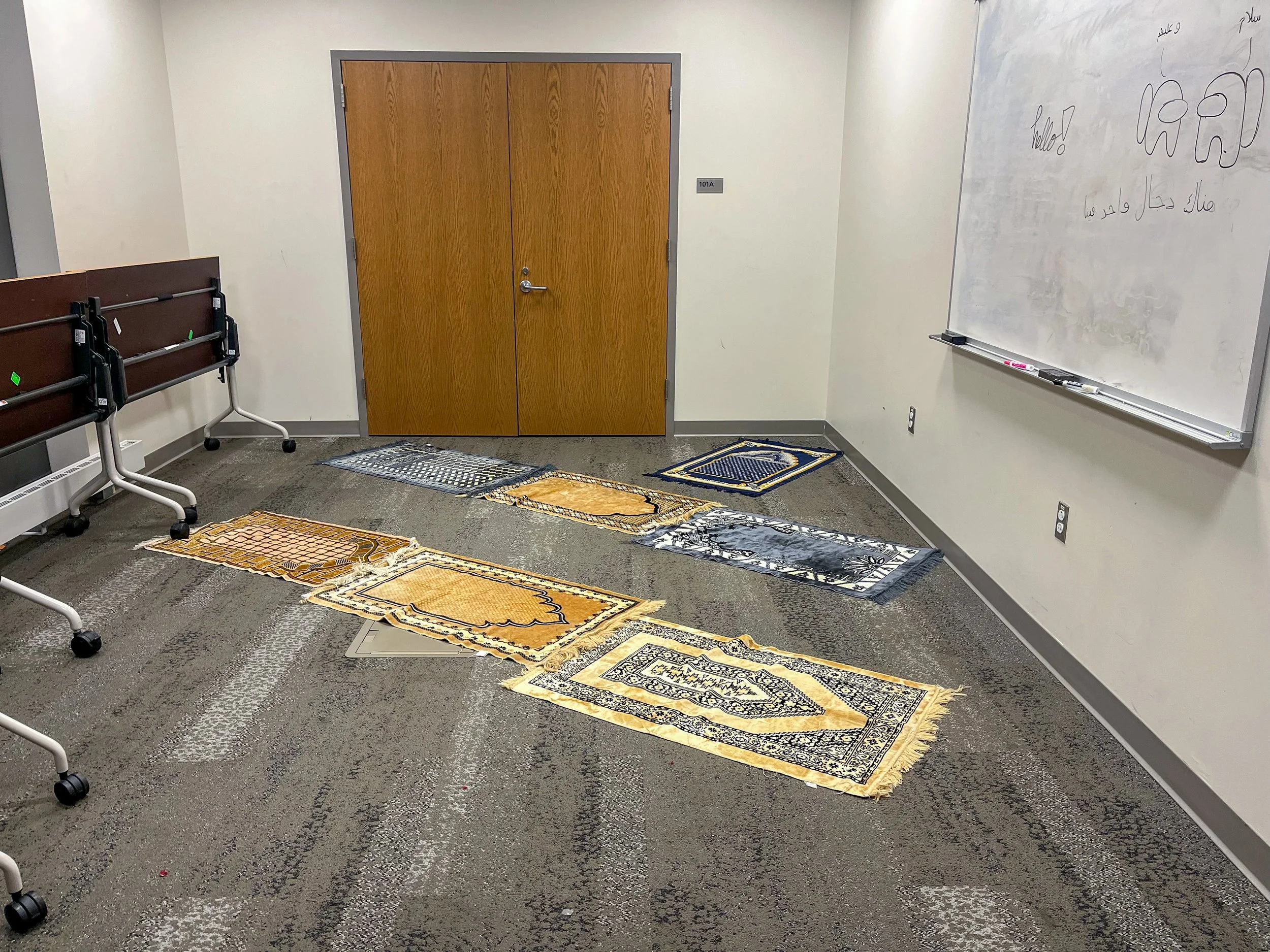
Prayer Rugs
Growing up, I used to be the only Muslim in my school or places I would go to. During prayer time, I usually had to pray in a corner of empty classrooms. So coming to UMBC and seeing a space dedicated for prayer made me feel seen and understood. Especially, when all the sisters come and pray together.
— Nour M., Class of 2028
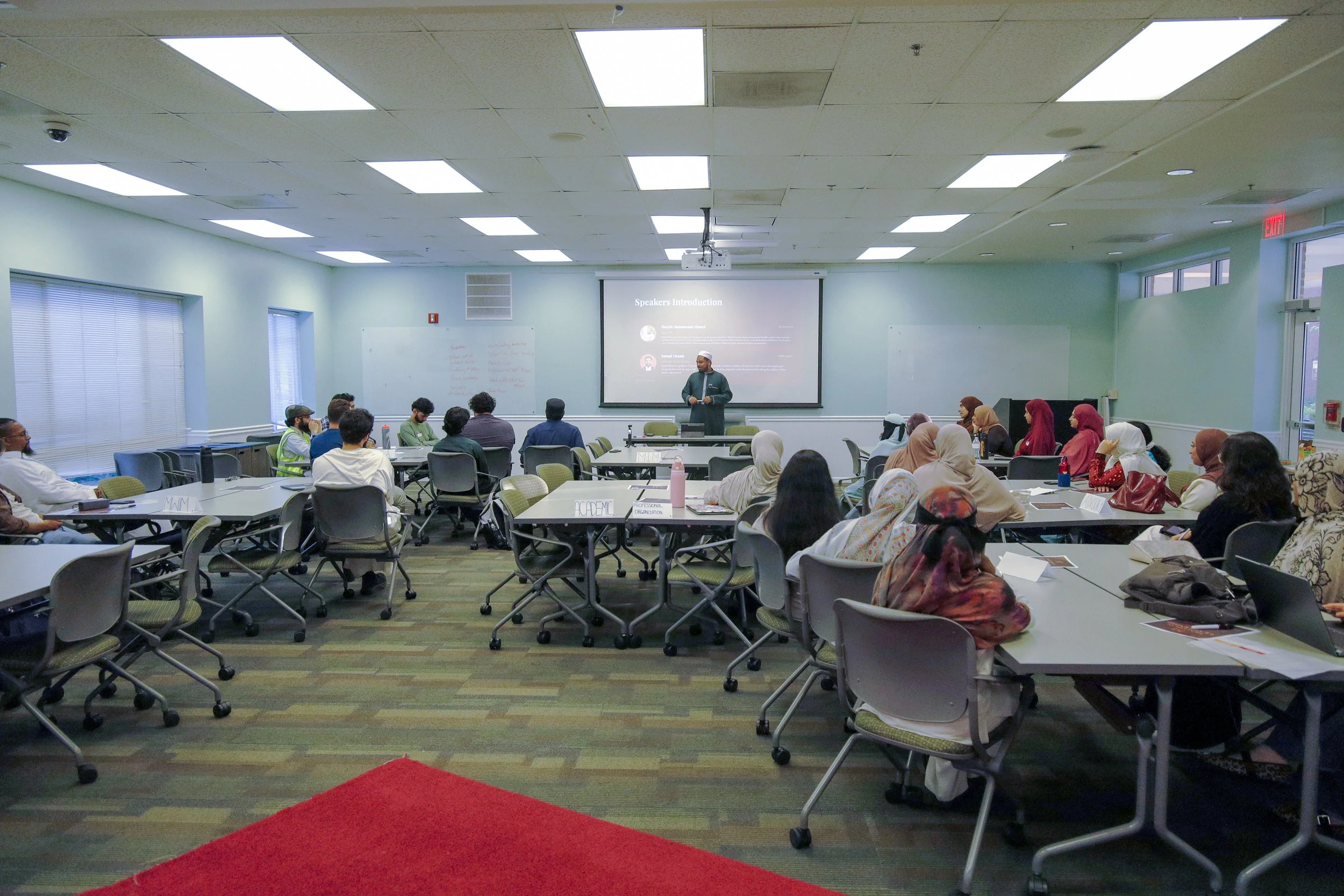
Coming Together (1)
This was taken at the first workshop for Muslims in Leadership. I went there with my club ICNA Relief and coming together with other Muslim led clubs and learning how we can work better and together was very inspiring. We had done a SWOT (strengths, weaknesses, opportunities, and threat) analysis as a group and it was very eye opening to our strengths and how we can do better as a board.
— Nour M., Class of 2028
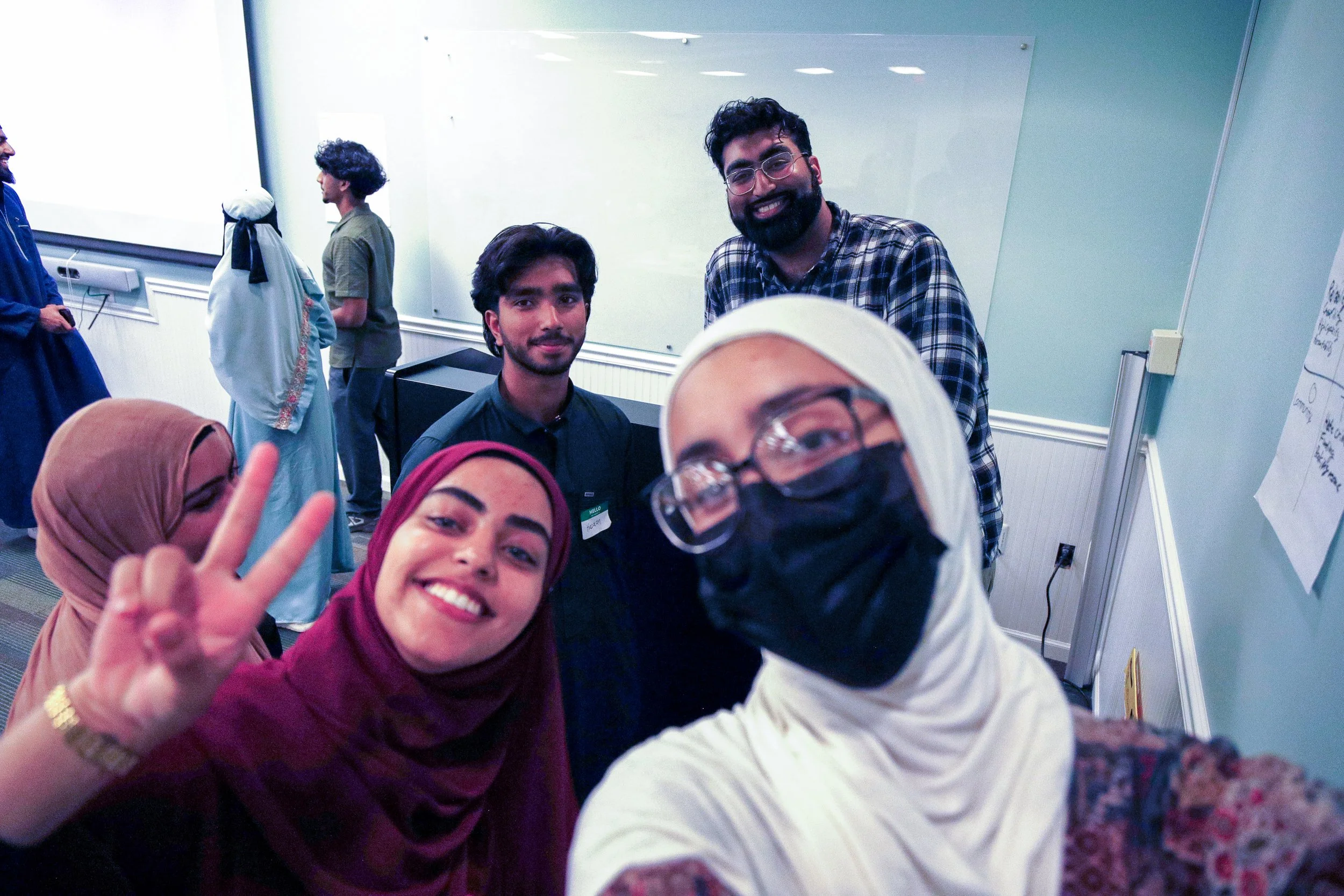
Coming Together (2)
— Nour M., Class of 2028
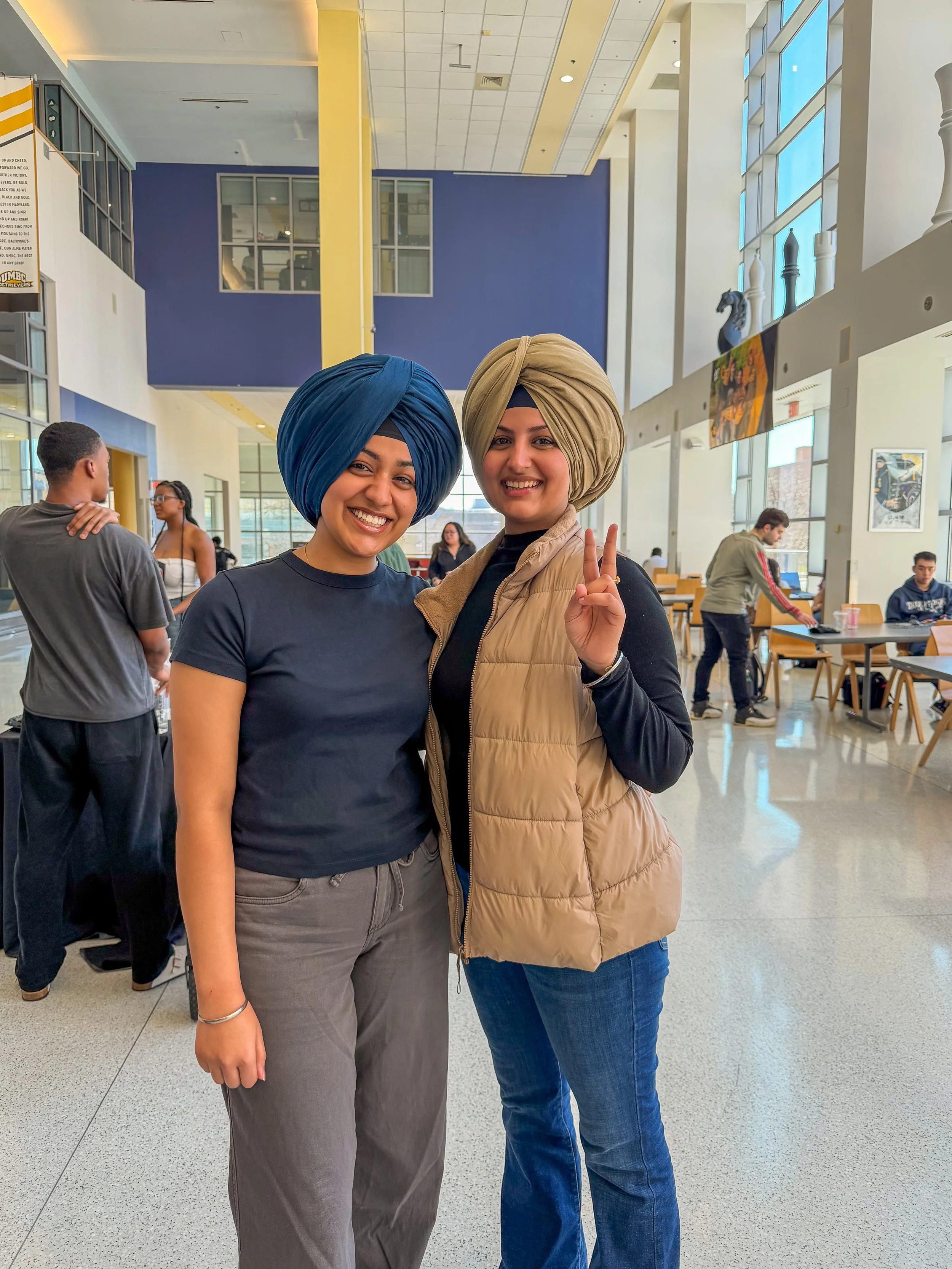
Like I Belong Here
Being far away from home, it is very hard to stay connected to your culture and these two pictures represent my identity as a Sikh on campus. The photo was taken at an event organized by Sikh Student Association called Turban Tying. In the picture, you could see me and my friend Jasmine Kaur Saini, wearing turbans. These events on campus help me feel at home. All those memories and the significance that the turban holds brings back to me. Makes me more connected and feel like I belong here.
— Onkarpreet Kaur, Class of 2028
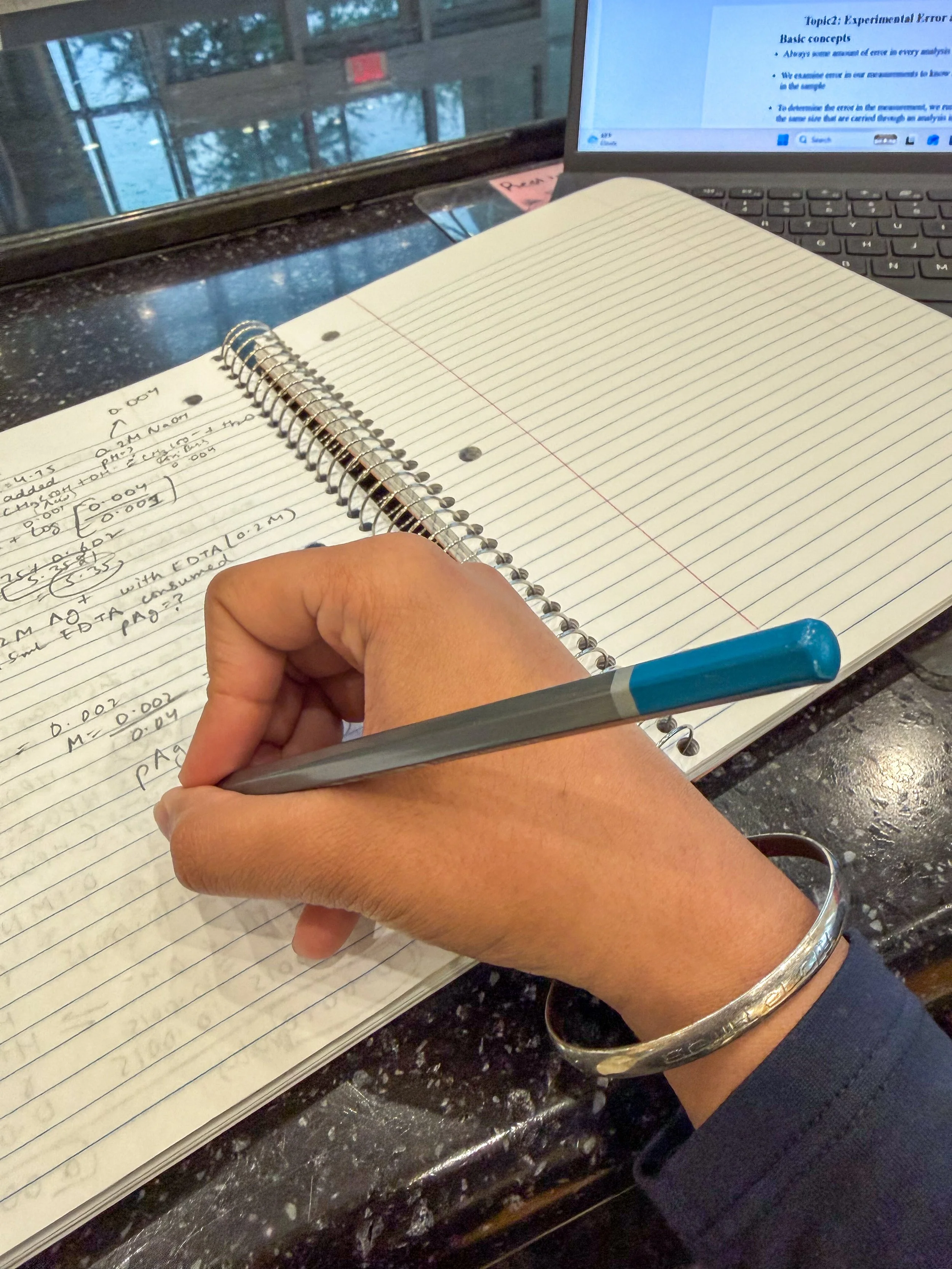
Connected to My Roots
This picture represents one of the 5 Ks in Sikhi. In this picture, I am wearing “kara,” which has a religious significance so I wear it everyday as part of my identity. It helps me get connected to my roots. Everytime I do any work, and whenever I see my bracelet, it reminds me of my Sikh tradition and core values that I always carry with me wherever I go. It is something which helps me guide the path that I take. It is something that holds me together and connects me to my roots of the Sikh religion even when I am far from home, where I don’t get the chance to go to Sikh temples (gurdwara) that much.
— Onkarpreet Kaur, Class of 2028
Curiosity
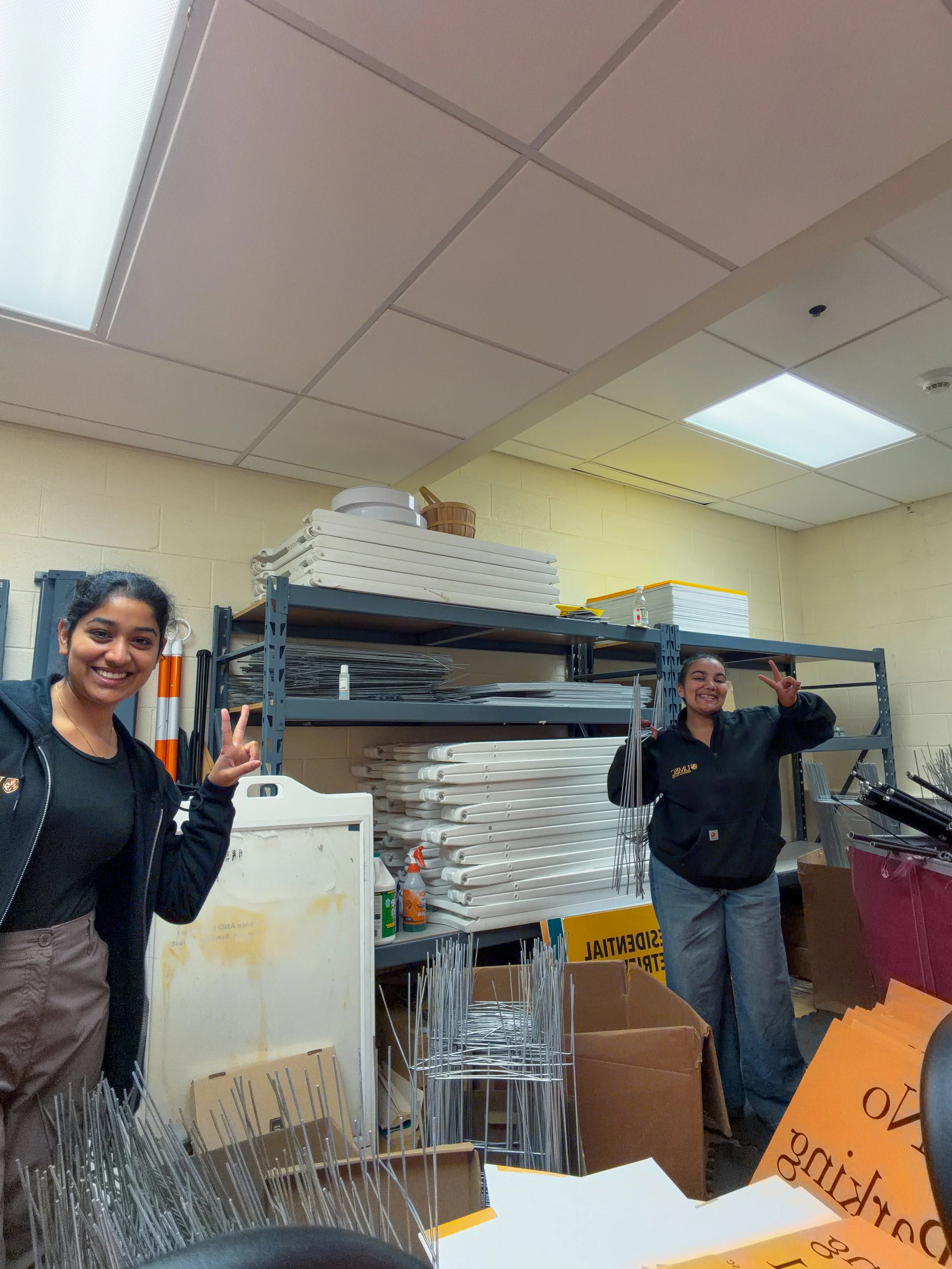
As a maintenance assistant, it is my job to make sure that students around campus feel comfortable and safe in their on campus housing. This picture shows me and my co-worker Kaia at work. It represents the importance of sharing cultures and making meaningful connections despite the different experiences and challenges we face. Oftentimes during work we find ourselves being curious about each other's faiths and religions. During the day this picture was taken, Kaia was asking me about what being Sikh means to me and talking to me about what she had learned in her course on African traditional religion. It always feels so good, it gives joy when you work and learn from each other. Taking the connection on a different level. Having this kind of bond with each other where we can share our stories shows curiosity, and appreciating the differences gives so much meaning to life. It makes the work day go by faster and meaningfully.
— Onkarpreet Kaur, Class of 2028
Cross Necklace
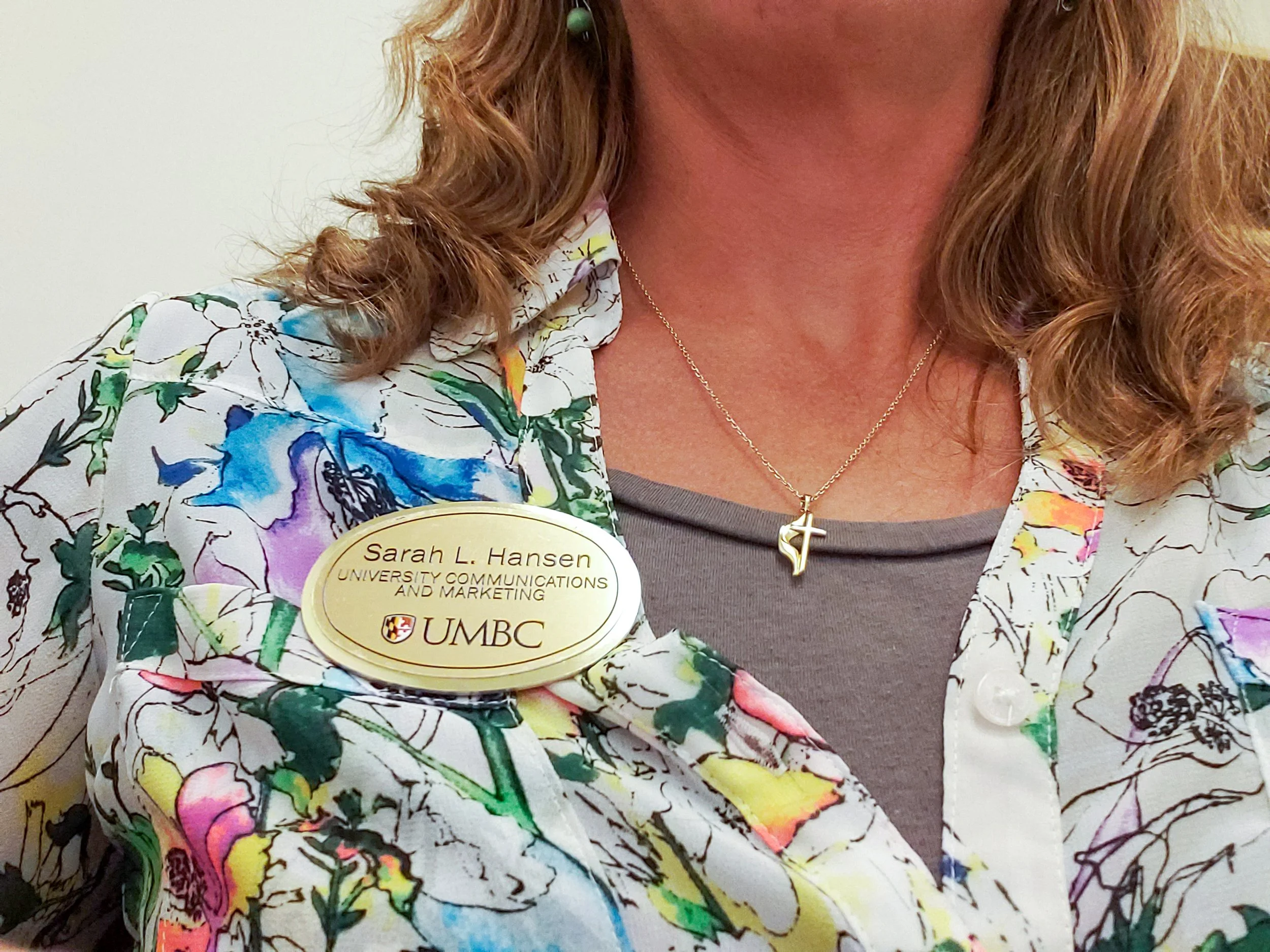
Wearing my cross necklace almost every day is an intentional choice I make to open the possibility for curiosity or connection and to hold myself accountable for serving as an ambassador for Christ in the world—knowing I will fall far short. Despite being a member of the dominant culture, wearing my cross at work, right next to my UMBC nametag, sometimes feels like a small act of courage in an environment that is not always inclusive of traditional Christian beliefs. I’m grateful to have received the gift of boldness in making my faith visible, and I want others to feel comfortable doing the same if they wish.
— Sarah L. Hansen, Communications Manager
Squirrel
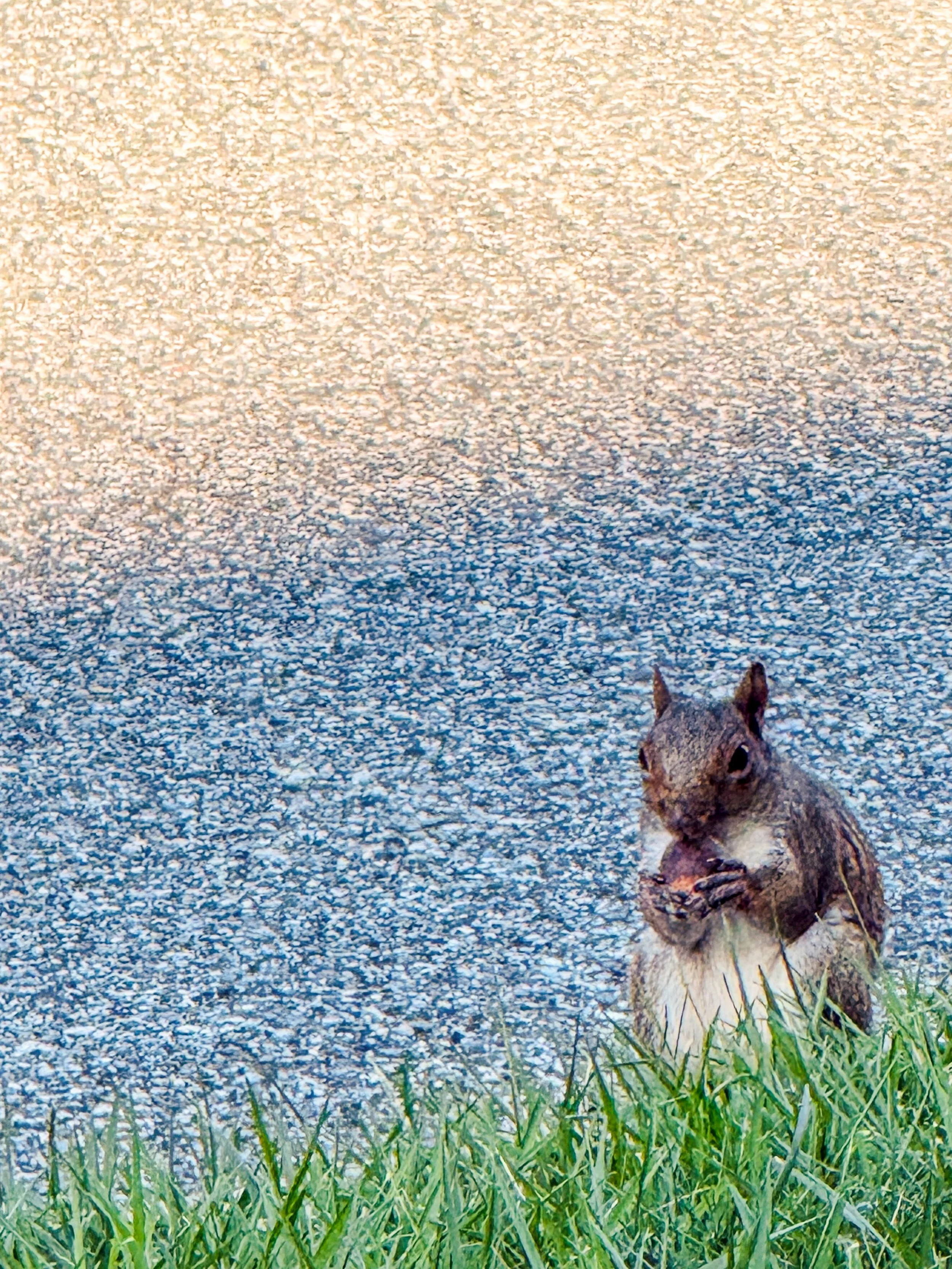
Squirrels are integral to the ecosystem at UMBC. Much of tradition comes from our squirrels. They are like students on campus. Squirrels are another mascot bringing levity, curiosity, and boldness to everyday life on campus.
— Velma F, Class of 2027
Spacemaking
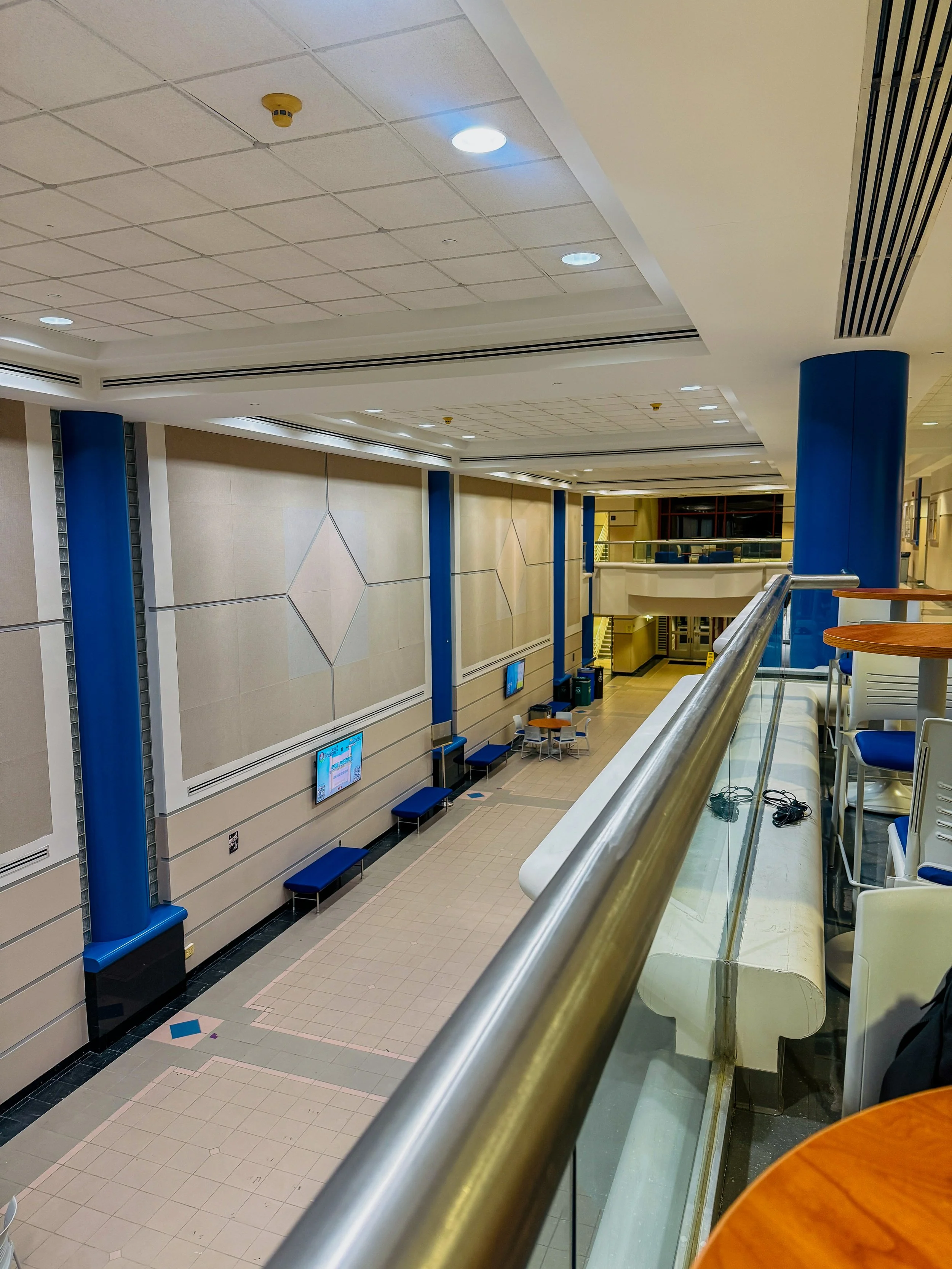
When looking at this image it takes the mind a few minutes to comprehend. From the placement of the railing, the furniture, and colors, it's all so unfamiliar. For me this space was also new. In my final semesters, I've been on a mission to explore and use every building on campus. This photo represents the engineering building from a new perspective. Buildings built to be occupied are left empty when seen as single use. This was the state where I found the study area on the 3rd floor. With state-of-the-art desks, chairs, wall plugs and lighting there was only one student: me. This is a picture I often see at UMBC, buildings not familiar to students’ coursework often go underutilized. My exploration of the engineering building introduced me to labs like the virtual reality center and others that, due to my course of study, I'd never felt invited to. "Inviting people into new spaces can be a small move to make belonging the norm."
— Velma F, Class of 2027
A Friendly Face
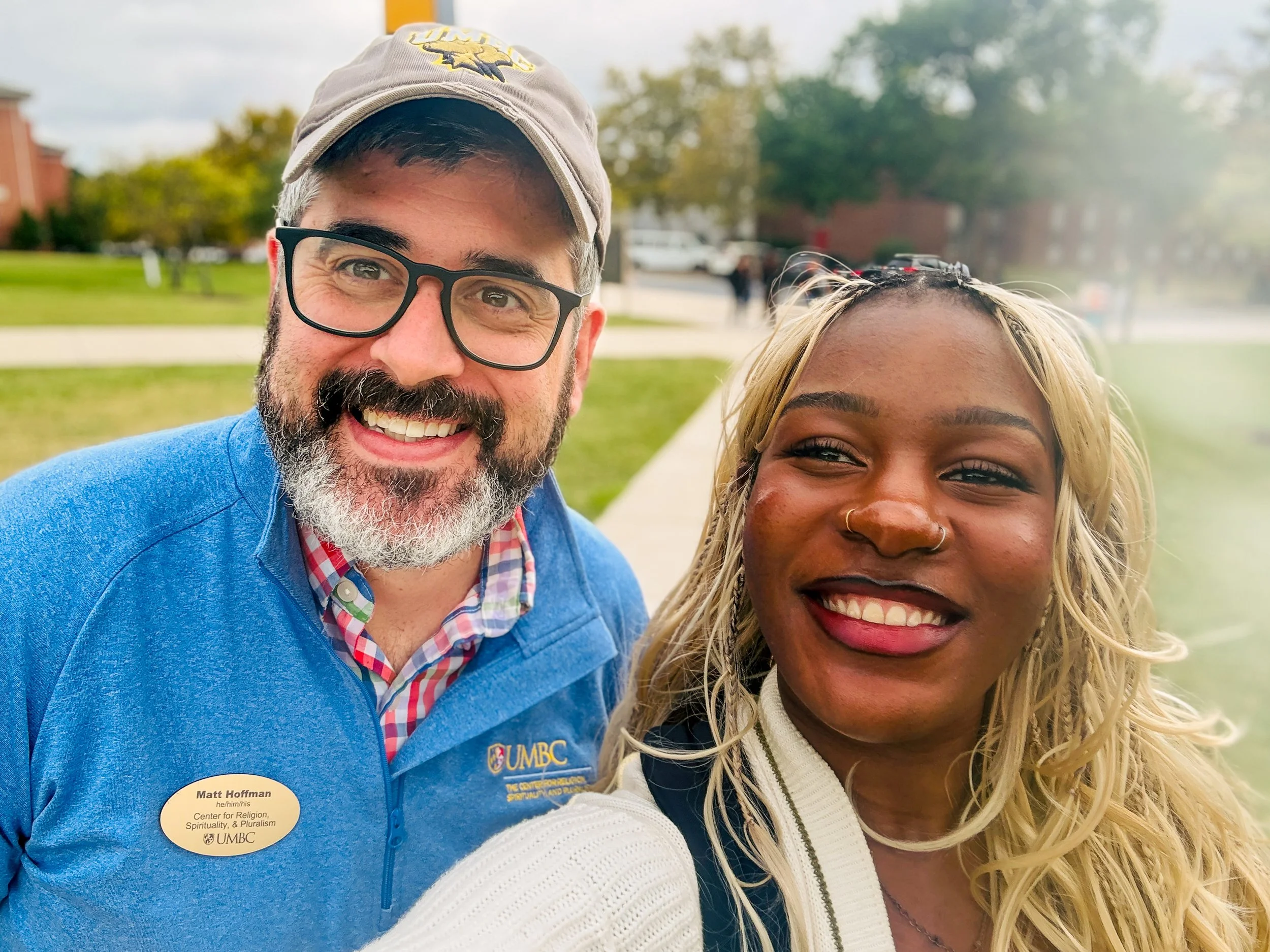
What brings me joy is running into friendly faces on busy days. Seeing others like Matt Hoffman, UMBC’s Director of the Center for Religion, Spirituality, & Pluralism, who have been part of my religious journey at UMBC reminds me of community and the importance of third spaces. To me, the Gathering Space, which is now CRSP, played an important role in the belonging I experienced at UMBC. It gave me space to worship, people to fellowship with, and communities to learn about.
The Center for Well-Being houses so many of my first and last memories at UMBC that I will take with me in the ventures ahead.
— Velma F, Class of 2027
Sunday Mass on Campus (1)
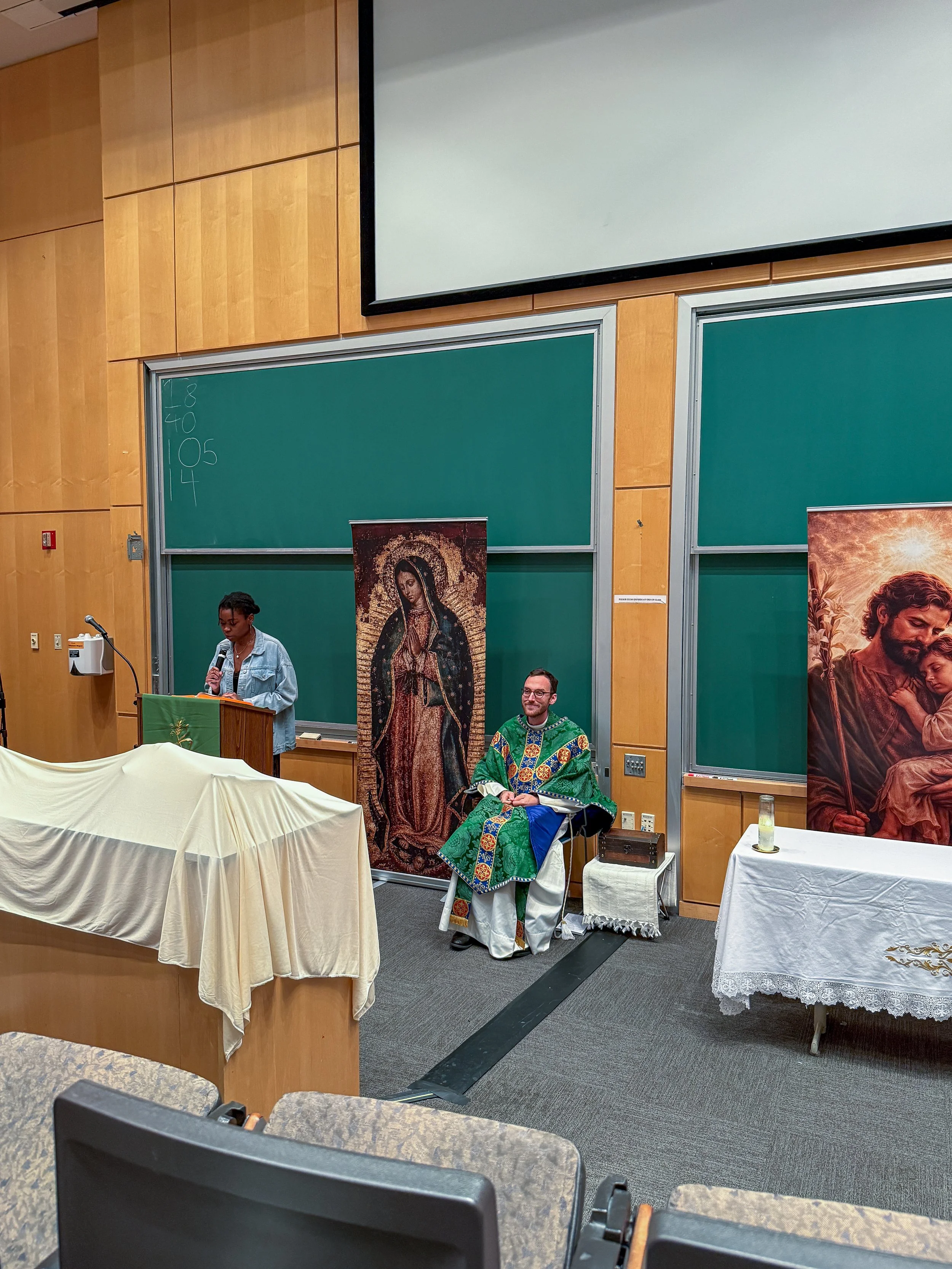
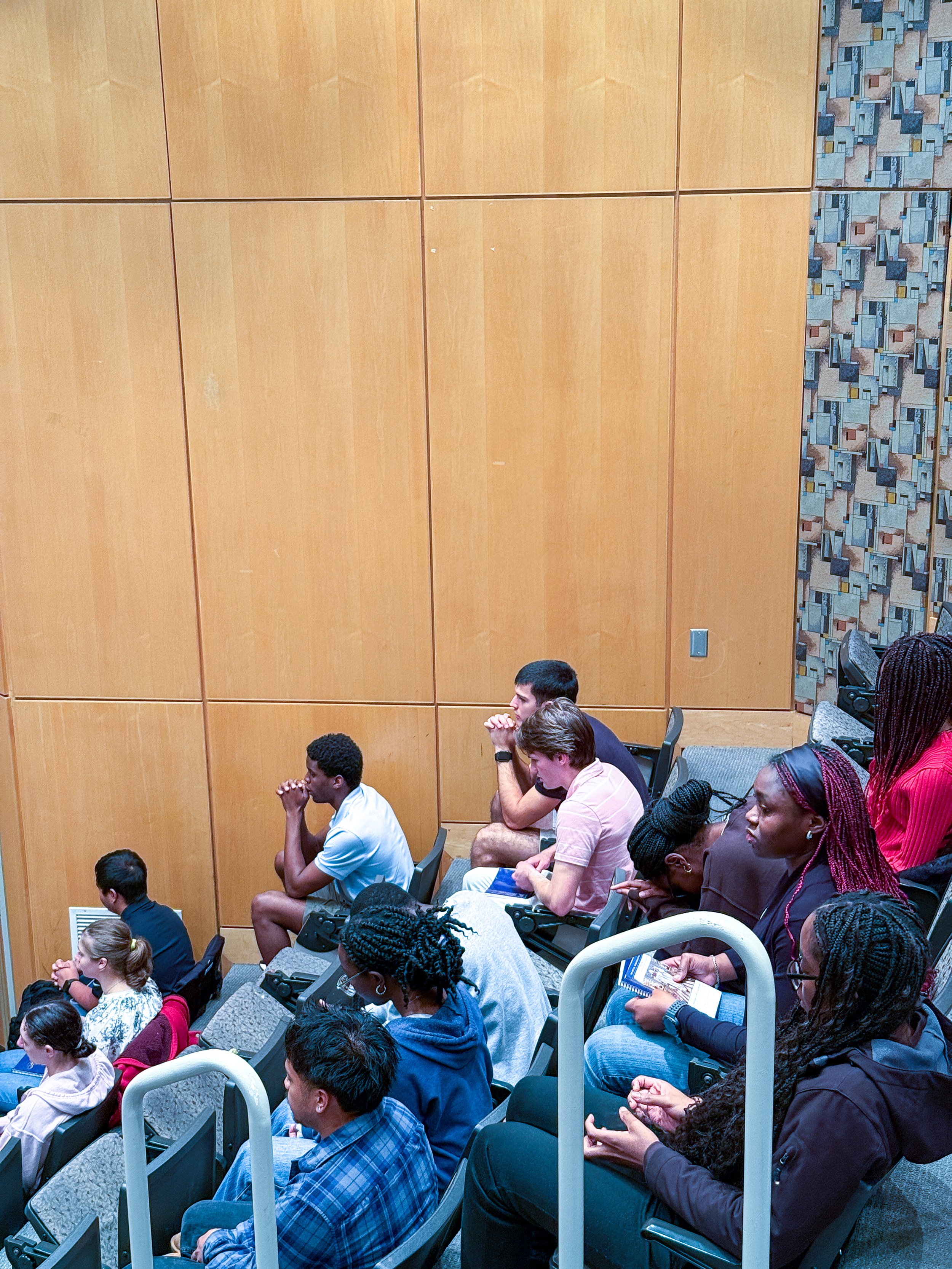
Before coming to college, my relationship with faith was not as strong. I would go to mass with my parents as part of our routine but still felt disconnected. I took these images at a Sunday mass on campus. Although it is not a typical church setting and still has elements of a classroom, this room in the physics building gives me and other college students our space to deepen our faith on our own terms.
— Victoria Beltran, Class of 2027
Sunday Mass on Campus (2)
— Victoria Beltran, Class of 2027
Finding My Community (1)
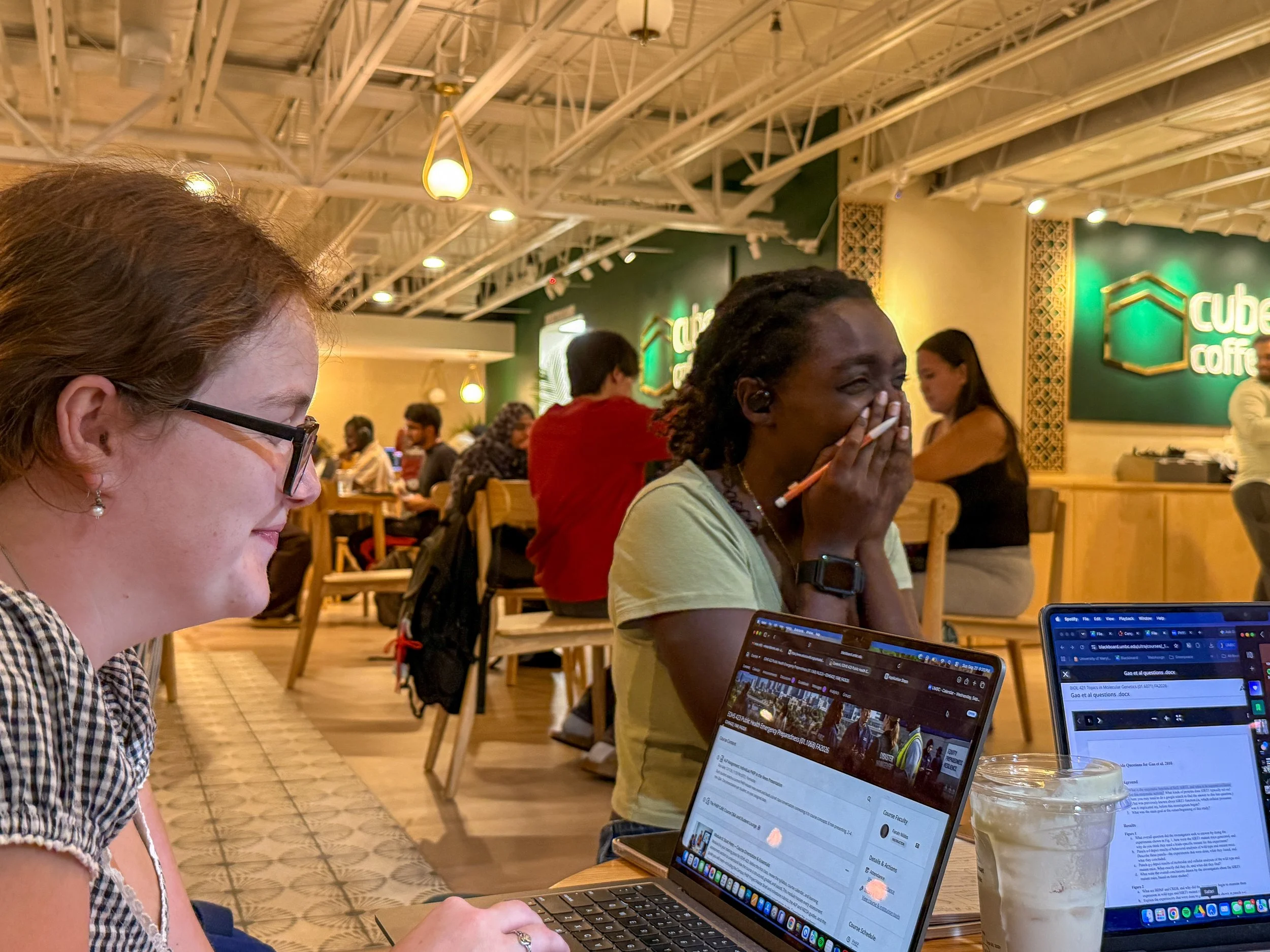
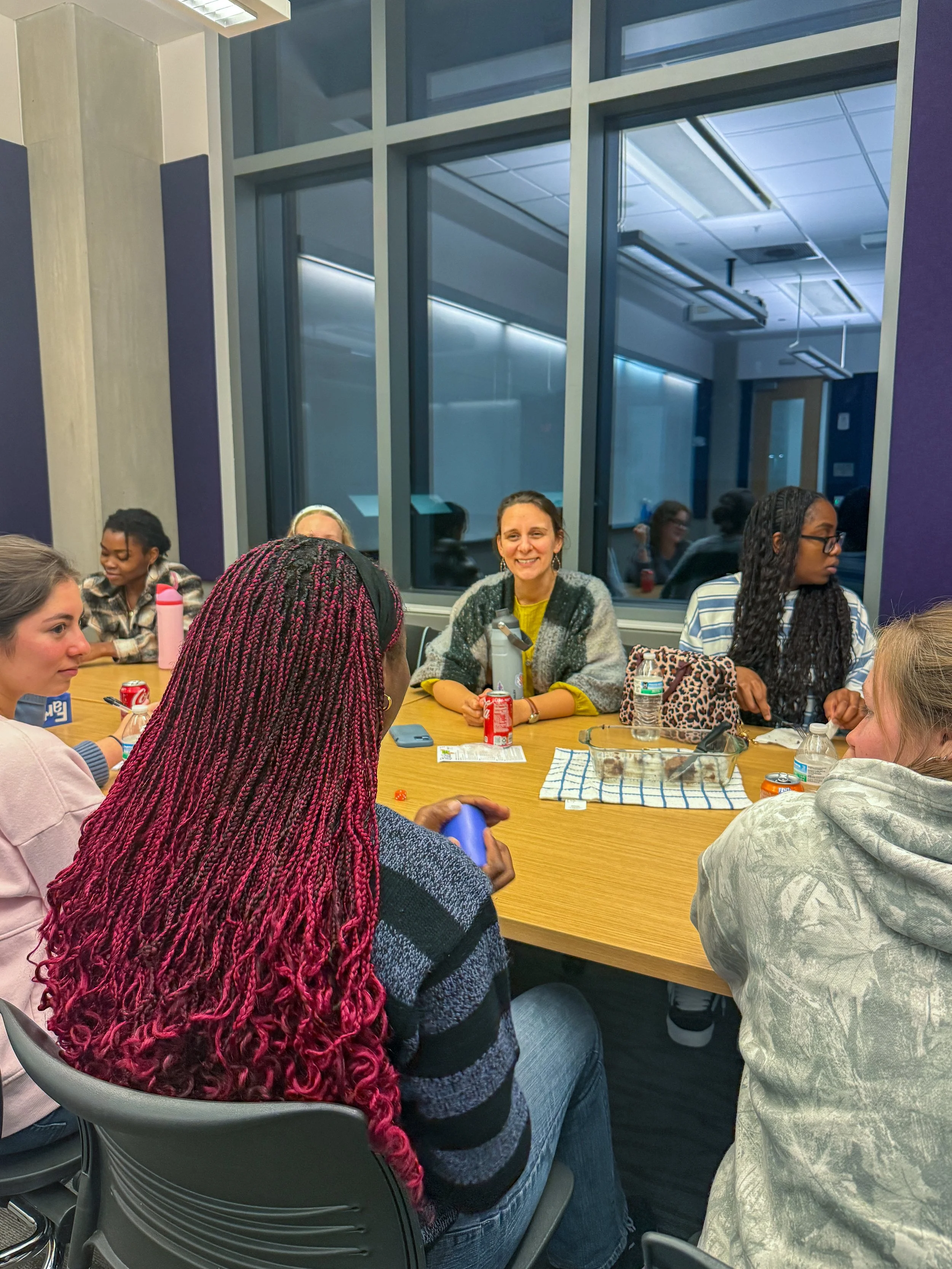
I took the first picture at a Women’s Ministry game night. I wanted to capture a moment in time where I could step away from my heavy schoolwork and meet new people. The second picture captures a few of the meaningful friendships I’ve made through Catholic Retrievers. The Women’s Ministry in Catholic Retrievers has given me life long friends that I could have never thought to have if I asked myself freshman year.
— Victoria Beltran, Class of 2027
Finding My Community (2)
— Victoria Beltran, Class of 2027
Light at the End of the Tunnel
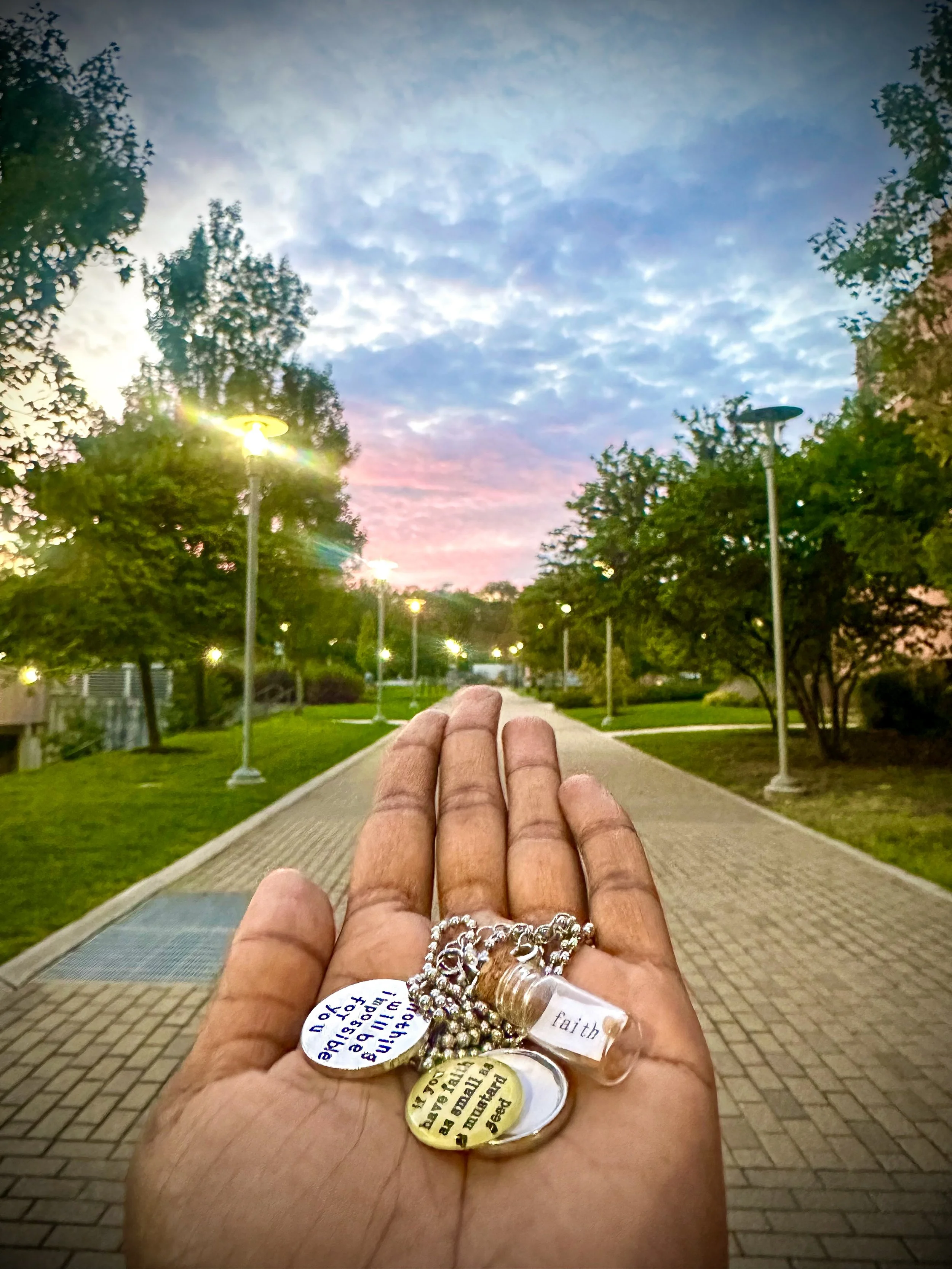
I sometimes think I know what's going on and have clarity of my path. But then along the way, just after a few stops, I am reminded that I actually never left with the map. The confusion grows ever stronger when I can hardly choose or find what path is right or wrong. It all feels right and wrong at the same time, though it only looks right when there's no move. This leaves me in wonder: was it ever right or is it the distance making the heart grow fonder? Is it the silence desiring to hear more than just nothing? Did I just let go of my shooting star when it landed right in my hands or was it simply a cube of ice that melted out of my hands?
My heart grows heavy & weary with every thought. My soul feels so far from my spirit. My body aches at every imagination. All comfort seems too far beyond my reach. Too broken to mend. But with every morning that comes my way, I'm reminded there is a reason I didn't sleep my way to death. So I choose to take a step amidst the confusion with my eyes lifted up unto you.
Thy word is a lamp unto my feet, and light unto my path - Psalm 119:05
— Victoria Merab Akiniyi, Class of 2026
My Fabric of Hope Amidst Chaos, 2026 (1)
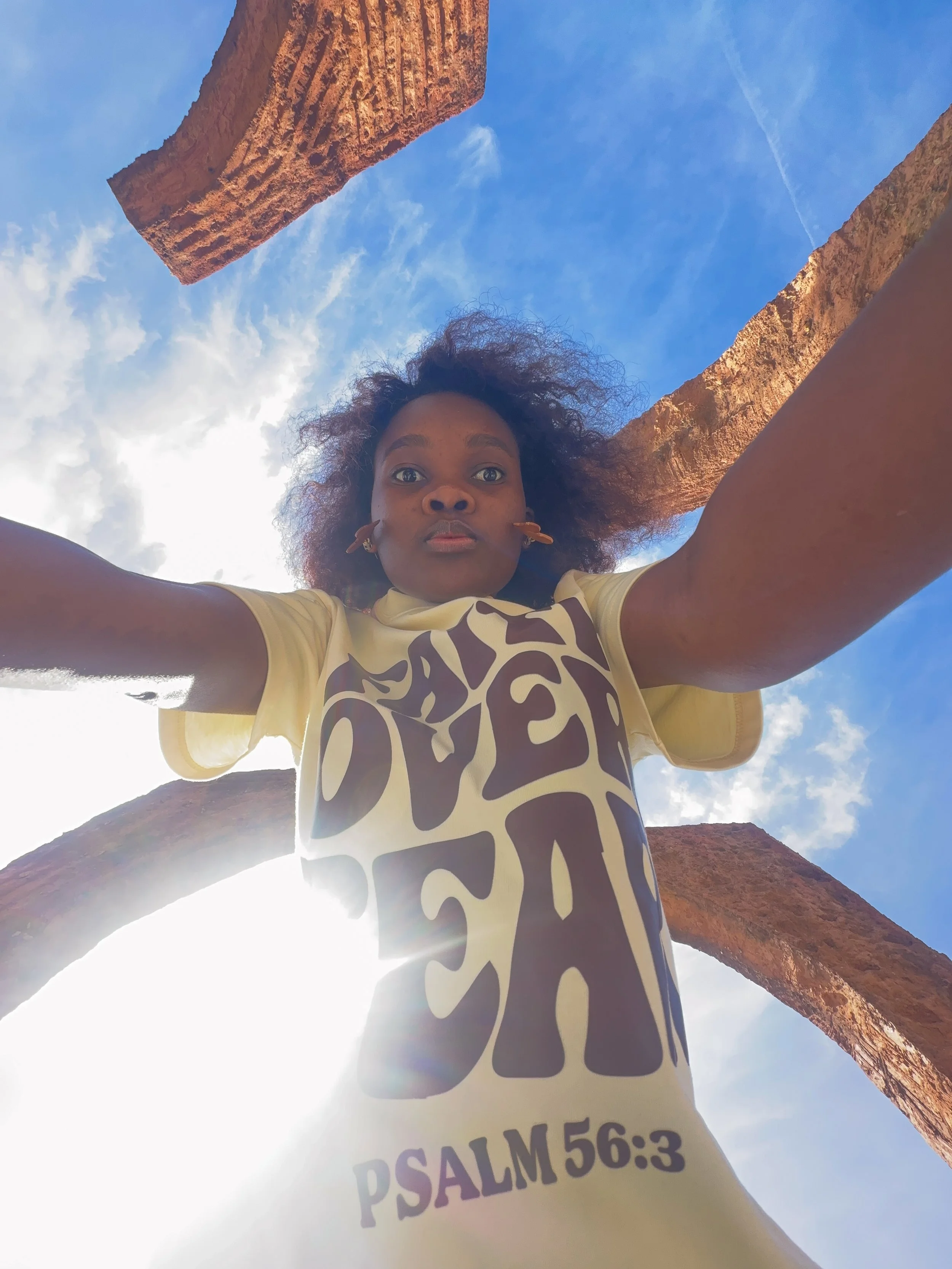
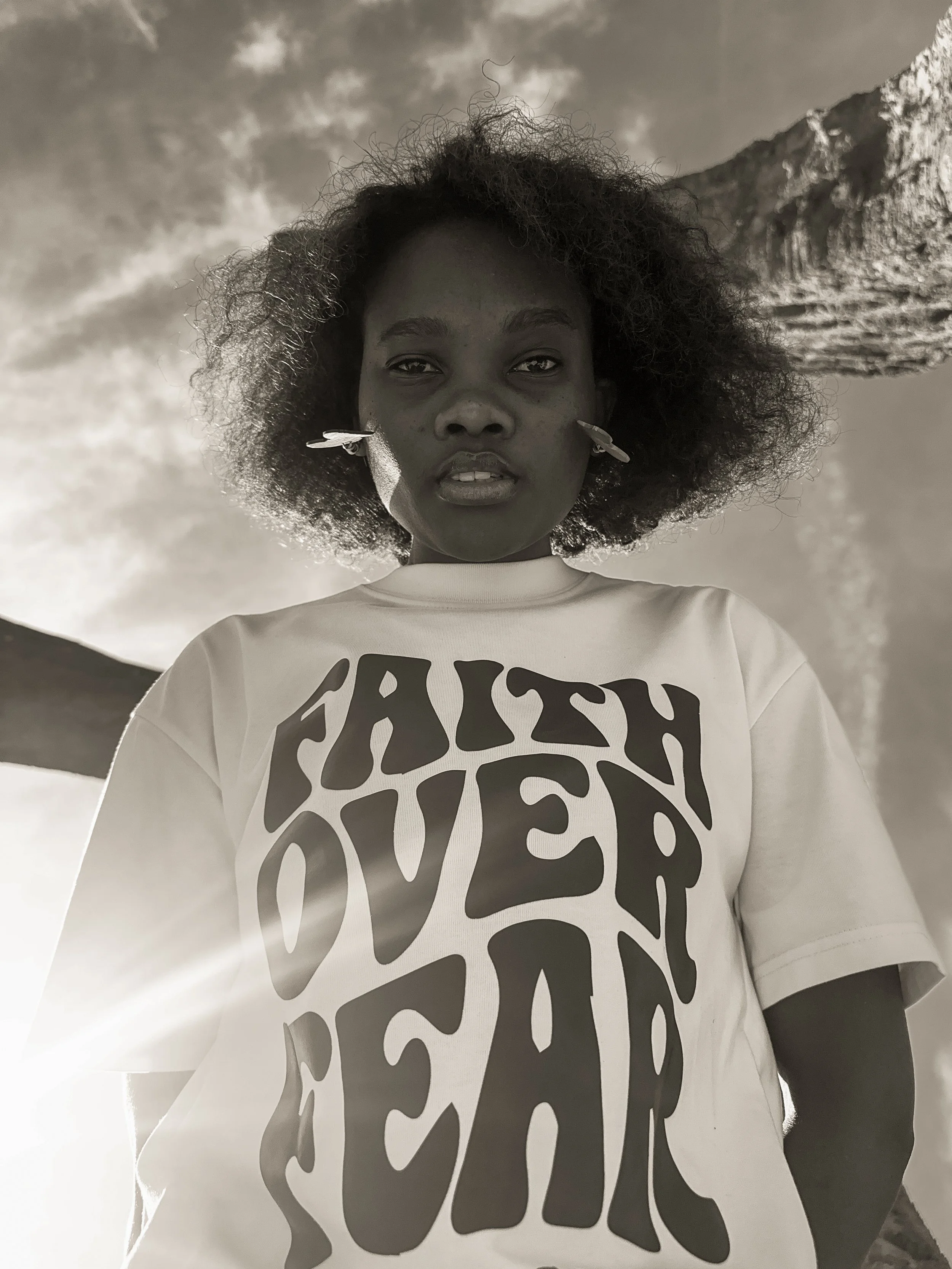
As I navigate life in a new country, surrounded by unique knots of diverse cultures, I find myself standing in a place of both wonder and silent caution. For there have been moments where stepping out in faith meant stepping carefully. Not out of fear for my faith but rather a deep reverence for the perspectives of others. This journey has continuously taught me to listen deeply to the unspoken words, read the unwritten signs and find a way through the walls my eyes can barely see. Navigating the invisible boundaries that were never spoken, yet heavily felt. Amidst this uncertainty of the invisible barriers. I am drawn to fashion, making fabric my invitation to conversations across the unspoken divides.
Yet, even still I am faced with grief of the pain beneath every laughter. The moment when my eyes are blurred to color. As fear creeps its way through my flesh, I chose to step into every moment holding steadfast onto his promises. For my faith is flamed amidst the unknown. It is the confidence I have in that which I hope for and the assurance of that which my eyes can barely see.
When I am afraid, I put my trust in you - Psalm 56:3
— Victoria Merab Akiniyi, Class of 2026
My Fabric of Hope Amidst Chaos, 2026 (2)
— Victoria Merab Akiniyi, Class of 2026